













- What it is: A secondary headache in which pain from the joints, muscles or nerves of the upper neck is felt in the head.
- Common symptoms: One-sided head pain that starts in the neck, often after neck movement, with a stiff or less mobile neck.
- Conventional care: Physical therapy with manual therapy and neck exercises, sometimes nerve blocks, and surgery only in selected cases.
- How integrative care fits: Acupuncture, Ayurvedic therapies and individually prescribed herbs are used alongside medical care and physical therapy to help with pain and neck tension.
- Evidence at a glance: Limited for acupuncture, one meta-analysis of mostly Chinese-database trials with signs of publication bias; very limited for Ayurveda and for herbal medicine.
What is Cervicogenic Headache?
Cervicogenic headache is a headache that is referred from bones, joints or soft tissues of the neck, and it is usually felt on one side.[1] It is classed as a secondary headache because the neck is the source of the pain, not the brain.[2]
Common symptoms
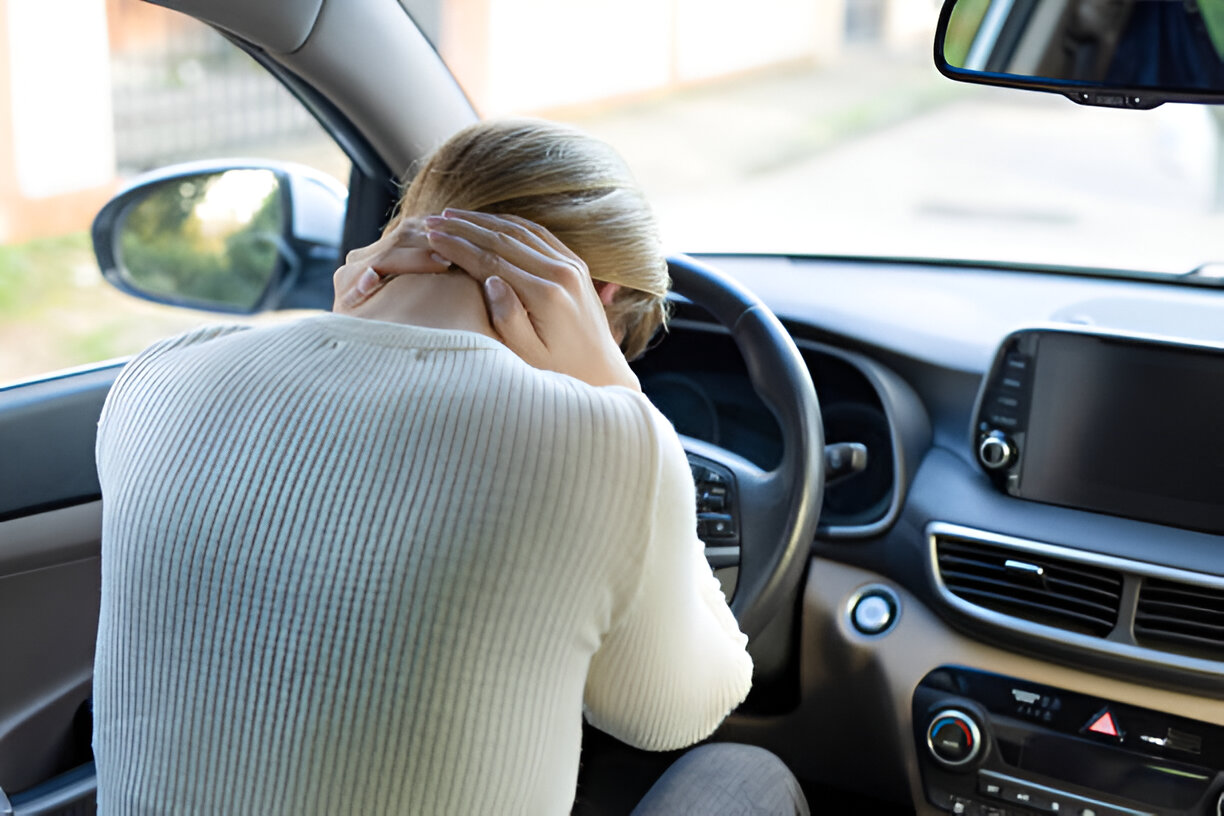
The pain usually starts in the neck and spreads to the head or face, often after neck movement, and the neck often moves less freely.[1] The headache is usually mild to moderate and may come with nausea, sensitivity to light or sound, and dizziness, which is why it is often confused with migraine.[3]
- Pain that stays on one side
- Reduced neck movement and stiffness
- Pain brought on by certain neck positions or movements[1, 3]
Causes and risk factors
Pain signals from the upper neck can feed into the same nerve pathway that carries sensation from the face and head, so neck problems can be felt as headache. This is called trigeminocervical convergence.[3] A history of whiplash injury is common.[3] Examination of a person with this headache often shows reduced neck motion, upper neck joint signs and impaired function of the deep neck flexor muscles.[2]
How it is diagnosed and treated conventionally
Diagnosis is clinical: the pain must come from the neck, there must be signs that implicate the neck, and it should settle within 3 months of successfully treating the neck problem.[1] A pattern of reduced motion, upper neck joint signs and impaired deep neck flexor function helps tell it from migraine and tension-type headache, and nerve blocks can confirm the source.[2]
Conservative care is the first approach, and it includes physiotherapy, with anesthetic nerve blocks and surgery used selectively.[2, 3] A review of 14 trials found moderate-certainty evidence that manual therapy reduces headache frequency in the short term and that neck exercise may help in the long term.[4]
Why Cervicogenic Headache calls for a whole-person approach
Cervicogenic headache is usually described as a mechanical neck problem, but the neck, the nerves and the muscles that support it all contribute. A treatment plan that combines several approaches is therefore reasonable, and a 2026 network meta-analysis of 41 trials found that multimodal non-drug programs worked better in the short term than single treatments or drugs.[5]
Complementary care is best seen as one part of that plan, alongside physical therapy and medical guidance.
Neck joints and muscle control
Reduced neck motion and altered control of the deep neck muscles are typical findings, and combined manual therapy and exercise programs have been tested for them.[2]
Referred pain and nerve sensitivity
Because neck pain signals converge with those from the head and face, nerve pathways can amplify neck pain into headache, and it can mimic migraine.[3]
Previous neck injury
A history of whiplash is common in people with cervicogenic headache, so past injury matters for how the neck is assessed and treated.[3]
Tight muscles and trigger points
Muscle trigger points in the neck and shoulder are a target of several treatments, including dry needling and trigger point therapy.[6, 7]
Acupuncture for Cervicogenic Headache
What the research shows
Research suggests acupuncture may help, but the evidence specific to cervicogenic headache is limited. A 2024 meta-analysis of 20 randomized trials, searched mainly in Chinese databases, found that acupuncture gave better overall response rates, lower pain scores and better quality of life than the comparison treatments. The funnel plot showed signs of publication bias, which means some negative studies may be missing.[8] A trial of 66 people compared two acupuncture techniques at the neck and found pain scores fell in both groups with no significant difference between them, while the response rate was higher for the triple-needling method. It had no sham or no-treatment group.[9]
Related evidence points the same way with more caution. A Cochrane review found moderate-quality evidence that acupuncture relieves mechanical neck pain better than sham acupuncture in the short term, though the effect did not seem to last over the long term.[10] An analysis pooling data from 39 trials found acupuncture superior to sham and to no acupuncture for chronic pain conditions including chronic headache and musculoskeletal pain.[11]
Dry needling, a related needle technique used by some physical therapists, has been reviewed for cervicogenic headache. One review found very low-quality evidence that it was not better than other treatments for pain intensity, though it improved disability.[7] Another found only three studies, with no significant differences between groups, and called for stronger studies.[12]
How acupuncture may work
How acupuncture might relieve cervicogenic headache has not been studied directly, and no mechanism study specific to this condition turned up in our search. Because the headache is thought to arise from the neck, treatments are directed at the neck and its muscles, but this is the rationale for treatment and not proof of how it works.[3]
What treatment involves
Treatment uses fine, sterile, single-use needles placed at points on the neck, scalp, shoulders and hands, usually left in place for about 20 to 40 minutes. A course is several visits with reassessment. In the one trial of two needling methods, patients were treated once a day for two sessions of five treatments.[9]
Serious problems from acupuncture are rare. In prospective studies, about 9 in 100 patients had a minor reaction such as bleeding, pain or redness at a needle site, and serious events occurred in about 1 in 10,000 patients.[13] Tell the practitioner first if you have a bleeding disorder, take blood thinners, are pregnant, or have a pacemaker (relevant to electroacupuncture).
Ayurvedic medicine for Cervicogenic Headache
The Ayurvedic view
Ayurveda has no separate name for cervicogenic headache, which in modern medicine is a headache referred from the neck.[1] Neck stiffness with pain referred to the head is traditionally discussed under disorders of the neck and head in which Vata, the principle said to govern movement, is considered out of balance. This is a traditional framework, not a biomedical diagnosis.
Therapies that may be used
Care is chosen for the individual and traditionally combines:
- Diet and daily routine intended to calm Vata, such as warm, regular meals and steady sleep hours
- Warm oil massage of the neck and shoulders, and local heat
- Gentle neck and shoulder movement and breathing practices; neck exercise has support in physical therapy trials for this headache, though not as an Ayurvedic treatment[4]
- Herbs prescribed by a qualified practitioner
- Panchakarma, only where traditionally appropriate and medically sensible
Panchakarma is not appropriate during pregnancy, acute illness or frailty. Neck massage and heat should be checked first if you have had a recent neck injury or your headache is new.
What the research shows
There is no research on Ayurveda for cervicogenic headache. A PubMed search for cervicogenic headache with Ayurveda, Panchakarma, turmeric or Boswellia found no clinical trials, no case series and no systematic reviews. What Ayurvedic care might offer, such as relaxation, daily routine and muscle comfort, cannot be said to relieve this headache.
Herbal medicine for Cervicogenic Headache
Herbs and formulas that have been studied
The only herbal product that turned up was Jingtong Granules, a Chinese patent medicine traditionally described as promoting blood circulation to remove blood stasis and regulating qi to relieve pain. It is widely used for cervical spondylotic radiculopathy.[14]
What the research shows
The evidence for herbal medicine in cervicogenic headache is very limited. A 2026 review of Jingtong Granules concluded that clinical and mechanistic evidence for this headache is preliminary, and that high-quality, large-scale trials are still needed.[14] No trial of an Ayurvedic or Western herb for cervicogenic headache was found.
Safety and herb-drug interactions
Herbs are active substances and can interact with medicines. Case reports describe bleeding when warfarin was combined with herbs including dang gui (Angelica sinensis), dan shen (Salvia miltiorrhiza), ginger, ginseng and Boswellia.[15] People taking blood thinners need a practitioner's review before using herbs.
In one study, about one fifth of Ayurvedic products bought online contained detectable lead, mercury or arsenic.[16] Herbs should come from tested sources and be prescribed individually. Tell us if you are pregnant or breastfeeding, have liver or kidney disease, or take anti-inflammatory or pain medicines.
Translating traditional medicine into modern biological language
The links drawn here are interpretation, not equivalence. Chinese medicine often describes neck-related headache as blocked flow of qi and blood in the channels of the neck and head, sometimes with wind and cold. Researchers studying this headache look at things that loosely parallel this picture: joint and muscle dysfunction in the upper neck and the way neck pain signals converge with head pain pathways.[2, 3]
Ayurveda's aggravated Vata describes stiffness and pain with limited movement. No study has shown that a dosha or a pattern corresponds to a specific biological process.
How this care fits with your medical care
Integrative care for cervicogenic headache is complementary. Keep your physician and physical therapist, and do not stop or change prescribed medicines without your prescriber. Because the condition is often confused with migraine and tension-type headache, an accurate diagnosis from a physician matters, and we do not diagnose the cause of a headache.[3]
Physical therapy has the best-supported evidence for this headache, and acupuncture can be used alongside it.[4, 5] Please bring your diagnosis, any imaging reports, a full list of medicines and supplements, and notes on any nerve blocks or physical therapy.
When to seek urgent medical care
Some headaches signal a more serious problem and need immediate evaluation.
- Sudden, severe headache that reaches its worst within seconds to minutes (a "thunderclap")
- Headache with fever and a stiff neck
- Headache after a head or neck injury, or with new neck pain after trauma
- Weakness, numbness, confusion, trouble speaking or seeing, or fainting
- Headache that is new after age 50, or that keeps getting worse
- Loss of bladder or bowel control, or arm weakness with neck pain
If any of these occur, call 911 or go to the nearest emergency department.
Frequently asked questions
What is cervicogenic headache?
Cervicogenic headache is a headache that starts from a problem in the neck, such as the joints, muscles or nerves of the upper neck, and is felt in the head, usually on one side. It often follows neck movement and comes with a stiff neck. It can look like migraine or tension-type headache, so a medical diagnosis is important.
Can acupuncture help with cervicogenic headache?
It may help, but the evidence is limited. A 2024 meta-analysis of 20 trials found better pain and response outcomes with acupuncture, but the trials were found mainly in Chinese databases and the funnel plot suggested publication bias. Acupuncture is used alongside physical therapy and medical care, not instead of them.
Does Ayurvedic or herbal medicine work for cervicogenic headache?
There is no clinical research on Ayurvedic treatment for cervicogenic headache and only preliminary research on one Chinese patent medicine, so we cannot say these treatments work. Herbs can interact with medicines such as blood thinners, so they should be prescribed individually and checked against your medicines.
Can I stop my medicines or physical therapy if I have acupuncture?
No. Acupuncture, Ayurveda and herbal medicine are complementary care. Do not stop or change prescribed medicines without talking to your prescriber. Physical therapy is the best-studied treatment for cervicogenic headache and acupuncture can be done alongside it. Sudden severe headache or neurological symptoms need emergency care.
How soon might I notice a change with acupuncture?
It differs from person to person and no result can be promised. In the one trial that described a schedule, treatment was given daily over two sets of five sessions. We reassess after a short course of visits to see whether treatment is helping, and we work alongside your other care.
Does insurance cover acupuncture for cervicogenic headache?
It may. Netra Integrative Health Clinic accepts most major insurance plans that include out-of-network acupuncture benefits, for example Aetna, Blue Cross Blue Shield, Cigna and UnitedHealthcare, and offers a free benefits check. HSA and FSA cards and CareCredit are also accepted. Call (908) 402-7301 to ask about your plan.
References
- Al Khalili Y, Ly NK, Murphy PB. Cervicogenic Headache. StatPearls [Internet]. 2022. PMID 29939639. StatPearls chapter on cervicogenic headache covering the definition, one-sided pain referred from the neck, usual onset after neck movement, and diagnostic criteria.
- Jull G. Cervicogenic headache. Musculoskelet Sci Pract. 2023;66:102787. PMID 37301672. Narrative review on cervicogenic headache as a secondary headache, with the physical findings that distinguish it and evidence for manual therapy plus exercise.
- Piovesan EJ, Utiumi MAT, Grossi DB. Cervicogenic headache - How to recognize and treat. Best Pract Res Clin Rheumatol. 2024;38(1):101931. PMID 38388233. Review of recognizing and treating cervicogenic headache: trigeminocervical convergence, migraine-like features, whiplash history, and physiotherapy, nerve blocks and selective surgery.
- Demont A, Lafrance S, Gaska C, et al. Efficacy of physiotherapy interventions for the management of adults with cervicogenic headache: A systematic review and meta-analyses. PM R. 2023;15(5):613-628. PMID 35596553. Meta-analysis of 14 physiotherapy trials finding moderate-certainty short-term benefit from manual therapy and possible long-term benefit from neck exercise.
- Koonalinthip N, Koonalintip P, Stonsaovapak C. The Comparative Efficacy of Treatments for Cervicogenic Headache: A Systematic Review and Network Meta-Analysis of Randomised Controlled Trials. Eur J Pain. 2026;30(2):e70219. PMID 41569783. 2026 network meta-analysis of 41 trials (1,922 patients) finding multimodal non-drug approaches, including manual therapy with dry needling, superior in the short term.
- Bini P, Hohenschurz-Schmidt D, Masullo V, et al. The effectiveness of manual and exercise therapy on headache intensity and frequency among patients with cervicogenic headache: a systematic review and meta-analysis. Chiropr Man Therap. 2022;30(1):49. PMID 36419164. Meta-analysis of 20 trials (1,439 patients) of manual and exercise therapy, with moderate-quality support for spinal manipulation but high risk of bias overall.
- Pourahmadi M, Dommerholt J, Fernández-de-Las-Peñas C, et al. Dry Needling for the Treatment of Tension-Type, Cervicogenic, or Migraine Headaches: A Systematic Review and Meta-Analysis. Phys Ther. 2021;101(5). PMID 33609358. Meta-analysis of dry needling for tension-type, cervicogenic and migraine headache, finding very low-quality evidence of no extra pain benefit but better short-term disability.
- Liu Z, Gao X, Zhang X, et al. Meta-Analysis of Acupuncture Treatment for Cervicogenic Headache. World Neurosurg. 2024;189:166-173. PMID 38768751. Meta-analysis of 20 randomized trials finding acupuncture improved response rates, pain and quality of life in cervicogenic headache, with publication bias present.
- Chu H, Hu B. [Triple acupuncture method at cervical Jiaji (EX-B 2) for cervicogenic headache: a randomized controlled trial]. Zhongguo Zhen Jiu. 2016;36(1):29-32. PMID 26946730. Randomized trial of 66 patients comparing triple acupuncture at the neck with conventional acupuncture; both reduced pain, with a higher response rate for triple needling.
- Trinh K, Graham N, Irnich D, et al. Acupuncture for neck disorders. Cochrane Database Syst Rev. 2016. PMID 27145001. Cochrane review of acupuncture for neck disorders finding moderate-quality evidence of short-term pain relief over sham acupuncture, with effects not sustained long term.
- Vickers AJ, Vertosick EA, Lewith G, et al. Acupuncture for Chronic Pain: Update of an Individual Patient Data Meta-Analysis. J Pain. 2018;19(5):455-474. PMID 29198932. Individual patient data meta-analysis of 39 trials (20,827 patients) finding acupuncture superior to sham and no-acupuncture for chronic pain including headache.
- France S, Bown J, Nowosilskyj M, et al. Evidence for the use of dry needling and physiotherapy in the management of cervicogenic or tension-type headache: a systematic review. Cephalalgia. 2014;34(12):994-1003. PMID 24623124. Systematic review of dry needling with physiotherapy for cervicogenic or tension-type headache, finding only three studies and insufficient evidence.
- Bäumler P, Zhang W, Stübinger T, et al. Acupuncture-related adverse events: systematic review and meta-analyses of prospective clinical studies. BMJ Open. 2021;11(9):e045961. PMID 34489268. Systematic review of 21 prospective studies finding minor acupuncture reactions in about 9 percent of patients and serious events in about 1 per 10,000.
- Liu WW, Xin M, Ge H, et al. Jingtong Granules for Cervicogenic Headache: Clinical Efficacy, Mechanisms, and Translational Potential. Drug Des Devel Ther. 2026;20:625586. PMID 42741721. 2026 review of Jingtong Granules, a Chinese patent medicine, for cervicogenic headache, concluding evidence is preliminary and high-quality trials are needed.
- Milić N, Milosević N, Golocorbin Kon S, et al. Warfarin interactions with medicinal herbs. Nat Prod Commun. 2014;9(8):1211-6. PMID 25233607. Review of reported interactions between warfarin and medicinal herbs, including bleeding events with dang gui, dan shen, ginger, ginseng and Boswellia.
- Saper RB, Phillips RS, Sehgal A, et al. Lead, mercury, and arsenic in US- and Indian-manufactured Ayurvedic medicines sold via the Internet. JAMA. 2008;300(8):915-23. PMID 18728265. JAMA study finding detectable lead, mercury or arsenic in about one fifth of Ayurvedic medicines purchased over the Internet.
This page is for general education and is not medical advice. Acupuncture, Ayurvedic medicine and herbal medicine are complementary therapies; they do not replace diagnosis or treatment by your physician. Do not stop or change prescribed treatment without talking to your prescriber. In an emergency call 911.