


















- What it is: Damage to the nerves from diabetes, most often starting in the feet and legs and sometimes affecting the nerves that control digestion, heart rate and other body functions.
- Common symptoms: Numbness, tingling, burning or shooting pain, loss of feeling in the feet, and in some people weakness or problems with foot ulcers.
- Conventional care: Blood sugar control, foot care, and pain medicines such as gabapentinoids and duloxetine, with other options for pain that does not respond.
- How integrative care fits: Acupuncture, Ayurvedic therapies and individually prescribed herbs are used alongside medical care to help with pain and symptoms, not to treat the diabetes.
- Evidence at a glance: Moderate for acupuncture, with low-certainty meta-analyses and one large sham-controlled trial; limited for Ayurveda and herbal medicine, with mostly low-quality trials.
What is Diabetic Neuropathy?
Diabetic neuropathy is damage to the nerves caused by diabetes, and the most common form affects the nerves of the feet and legs first. At least half of people with diabetes develop it over time.[1]
Common symptoms
Symptoms usually start in the toes and feet and slowly move upward. They include numbness, tingling, aching, burning, increased sensitivity to touch and, in some people, weakness. The pain is often worse at night.[2]
Loss of feeling in the feet is a serious problem in its own right, because injuries and sores can go unnoticed and lead to infection.[2] About 30 to 40 percent of people with the condition have neuropathic pain.[3] Other forms can affect the nerves that control the heart, stomach, bladder and sexual function.[3]
Causes and risk factors
Long-term high blood sugar is the main driver. It sets off oxidative stress, inflammation and damage to nerve cells and the small vessels that feed them.[2, 4] Smoking and heavy alcohol use are also linked to the condition, and other causes of neuropathy must be ruled out.[2]
How it is diagnosed and treated conventionally
Diagnosis is mainly clinical. A clinician checks light touch, pinprick, temperature and vibration sensation, and tests protection of the feet with a monofilament.[2] Nerve conduction studies are kept for unusual cases.[2]
Blood sugar control slows the condition well in type 1 diabetes, with a more modest effect in type 2.[1] Care also includes foot checks and foot care, and pain treatment. First-line medicines for painful diabetic neuropathy are gabapentinoids (pregabalin, gabapentin) and duloxetine, and opioids are discouraged.[1, 5] Fewer than one in three people with painful neuropathy get enough relief from current drugs.[3]
Why Diabetic Neuropathy calls for a whole-person approach
Diabetic neuropathy has no single cause, and no treatment yet reverses the nerve damage itself, so care focuses on prevention and symptom control.[3] Several factors act together, and several can be addressed at once.
The sections below describe contributors that complementary care may help with, mainly through pain, sleep and stress, not through blood sugar or the nerve damage.
Blood sugar and metabolism
Prolonged high glucose damages nerves through several pathways, including advanced glycation end products and changes in glucose metabolism.[4] Your physician's glucose management remains the foundation, and nothing we offer replaces it.
Inflammation and oxidative stress
Inflammatory and immune-mediated processes, along with oxidative stress, are part of how nerve cells are injured.[2, 4]
Blood supply to the nerves
Abnormal small vessels that supply the peripheral nerves are one proposed mechanism of injury.[4]
Pain sensitization
Persistent pain can lead to central sensitization, in which the nervous system amplifies pain signals.[6] This may help explain why neuropathic pain can be hard to treat.
Acupuncture for Diabetic Neuropathy
What the research shows
Acupuncture may reduce pain from diabetic neuropathy, but the certainty of the evidence is low. A 2025 meta-analysis of 14 trials with 1,169 people found low-certainty evidence that acupuncture reduced pain more than sham acupuncture, and may lower overall symptom severity. It found little to no difference in physical or mental functioning or adverse events.[7]
A 2024 meta-analysis of trials in painful neuropathy likewise found a greater drop in pain scores with real than with sham acupuncture, while calling for higher-quality trials.[8] One German trial of 180 adults with type 2 diabetes compared needle acupuncture, laser acupuncture and placebo laser over 10 weeks. Nerve conduction measures improved more with needle acupuncture than with placebo, and some symptoms improved too.[9] A small pilot trial of electroacupuncture in 18 people found lower scores on a numeric pain scale than with sham treatment, though a neuropathic pain questionnaire did not change significantly, and the authors called the results hypothesis-generating.[10]
A meta-analysis of 11 trials of moxibustion (burning dried mugwort near the skin) found better nerve conduction and symptom scores, but only one trial reported on side effects and the authors asked for more rigorous studies.[11]
How acupuncture may work
Researchers propose that acupuncture strengthens the body's own pain-inhibiting pathways, changes how the spinal cord and brain amplify pain, and lowers local inflammatory signals.[6] One trial team suggested that the nerve conduction gains they saw may reflect nerve regrowth, but this is not proven.[9]
What treatment involves
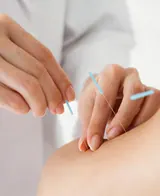
Treatment uses fine, sterile, single-use needles, often at points on the feet, legs and sometimes the body, left in place for about 20 to 40 minutes. We reassess after a short course of visits. The sham-controlled trials above gave 10 sessions over 10 weeks and 16 sessions over 8 weeks.[9, 10] Because feeling in the feet may be reduced, tell the practitioner about any numbness, sores or poor wound healing.
Serious problems are rare. In prospective studies about 9 in 100 patients had a minor reaction such as bleeding, soreness or redness at a needle site, and serious events occurred in about 1 in 10,000.[12] Tell the practitioner first if you have a bleeding disorder, take blood thinners, are pregnant, or have a pacemaker (relevant to electroacupuncture).
Ayurvedic medicine for Diabetic Neuropathy
The Ayurvedic view
In Ayurveda, diabetes is described as Madhumeha, and its nerve complications are understood as a disturbance of Vata, the principle said to govern movement and sensation, often together with other doshas. These are traditional categories used to plan care, not biomedical diagnoses.
Therapies that may be used
Care is individual and traditionally combines:
- Diet and daily routine, such as regular meals and steady sleep hours, alongside the diet your physician or dietitian advises
- Warm oil massage of the legs and feet, done gently and with care for any skin injury
- Herbs chosen by a qualified practitioner, taking your medicines into account, such as Phyllanthus niruri and Sida cordifolia, which one trial tested[13]
- Panchakarma procedures only in selected cases
Panchakarma is not appropriate during pregnancy, acute illness or frailty, and people with poorly controlled diabetes, foot ulcers or open wounds should not have it without medical clearance. Herbal preparations applied to the skin (transdermal medication therapy) may also be used for local symptoms.
What the research shows
The research on Ayurveda for diabetic neuropathy is limited. We found one randomized, placebo-compared trial of 90 people with diabetic sensory polyneuropathy. It tested a combination of Phyllanthus niruri and Sida cordifolia in two preparations, and both reduced symptom scores more than placebo. The trial was small and only partly blinded.[13]
No systematic reviews of Ayurveda for diabetic neuropathy turned up. We did not find clinical trials of other Ayurvedic herbs for diabetic neuropathy.
Herbal medicine for Diabetic Neuropathy
Herbs and formulas that have been studied
Most of the published trials test Chinese herbal formulas, including single herbs, patent medicines and custom prescriptions, compared with placebo, no treatment or conventional treatment.[14] Topical approaches such as a traditional Chinese herbal foot bath combined with acupoint massage have also been studied.[15]
Studies of Western herbs for nerve pain are few. Two small trials of topical nutmeg and oral St John's wort were reviewed in neuropathic pain.[16]
What the research shows
The evidence is limited and of low quality. A Cochrane review of 49 trials with 3,639 people, all from China and testing 38 herbal preparations, found positive results that were of questionable significance because the trials were of very low quality. It concluded that there was no evidence to support the effectiveness or safety of Chinese herbal medicine for diabetic neuropathy.[14]
A later meta-analysis of 10 trials with a lower risk of bias found better nerve conduction and response rates than conventional treatments, but the authors called it premature to conclude that the herbs work, citing small trials and varying formulas.[17] A meta-analysis of foot bath with acupoint massage found better results in 31 trials, with low methodological quality.[15] A Cochrane review of herbs for neuropathic pain could draw no conclusions about nutmeg or St John's wort.[16]
Safety and herb-drug interactions
Herbs can interact with medicines. Several herbs can lower blood sugar, and reviewers advise careful monitoring for low blood sugar when herbs are used with diabetes medicines, because data on these interactions are lacking.[18] Garlic caused low blood sugar when taken with the drug chlorpropamide, and St John's wort lowers blood levels of several medicines.[19]
In one study, about one fifth of Ayurvedic products bought online contained detectable lead, mercury or arsenic.[20] Herbs should come from tested sources and be prescribed individually. Tell us if you are pregnant or breastfeeding, take blood thinners, or have liver or kidney disease. Many people with diabetes also have kidney disease, which affects how herbs and medicines are handled.
Translating traditional medicine into modern biological language
The links drawn here are interpretation, not equivalence. Chinese medicine often describes diabetic neuropathy as a pattern of qi and blood not flowing well in the limbs, with blood stasis and dampness. Researchers studying it look at nerve blood supply, inflammation and the way pain signals are amplified.[4, 6]
Ayurveda's aggravated Vata describes numbness, tingling and burning in the limbs. No study has shown that a dosha corresponds to a specific biological process.
How this care fits with your medical care
Integrative care for diabetic neuropathy is complementary. Keep your physician, endocrinologist, podiatrist and any pain specialist, and do not stop or change prescribed medicines, including diabetes and pain medicines, without your prescriber. We do not diagnose or manage diabetes or neuropathy, and no therapy here replaces blood sugar control or foot care.
For a condition like this, we ask that you are under a physician's care for it and that your treating team knows you are receiving complementary care. Please bring your diagnosis, recent blood sugar results such as HbA1c, a full list of medicines and supplements, and notes on any foot problems.
When to seek urgent medical care
Diabetes and nerve damage can cause serious problems that need prompt medical attention.[2]
- A foot sore, blister or wound that does not heal, or any sign of infection such as redness, warmth, swelling or drainage
- A foot that becomes suddenly red, hot, swollen or misshapen
- Very high or very low blood sugar with confusion, vomiting or extreme thirst
- Sudden weakness, trouble walking or vision changes
- Fainting or dizziness on standing, or a racing or irregular heartbeat
- Severe pain that is new or rapidly worsening
If any of these occur, call 911 or go to the nearest emergency department.
Frequently asked questions
What is diabetic neuropathy?
Diabetic neuropathy is nerve damage caused by diabetes. The most common type starts in the feet and legs, causing numbness, tingling, burning pain and loss of feeling. Other types can affect digestion, heart rate and bladder function. Good blood sugar control and regular foot checks are the foundation of care, and symptoms are treated with medicines and other measures.
Can acupuncture help with diabetic neuropathy?
It may help with pain. A 2025 meta-analysis of 14 trials found low-certainty evidence that acupuncture reduced pain more than sham acupuncture. A larger sham-controlled trial found better nerve conduction results with needle acupuncture. Many studies are small or of low quality, so results are uncertain. Acupuncture is used alongside your medical care, not in place of it.
Does Ayurvedic or herbal medicine work for diabetic neuropathy?
The evidence is thin. One small placebo-compared trial of an Ayurvedic herb combination reported lower symptom scores. Chinese herbal formulas have been tested in many trials, but a Cochrane review judged them to be of very low quality and found no evidence to support their effectiveness or safety. Herbs may affect blood sugar and interact with medicines, so they need individual review.
Can I stop my diabetes or nerve pain medicine if I have acupuncture or take herbs?
No. Acupuncture, Ayurveda and herbal medicine are complementary care. Do not stop or change any prescribed medicine without talking to your prescriber. Blood sugar control is the foundation of preventing nerve damage from getting worse, and herbs can change blood sugar, so tell your physician about everything you use.
How soon might I notice a change with acupuncture?
It differs from person to person and no result can be promised. In the trials, people had 10 to 16 sessions over 8 to 10 weeks, and in the largest trial nerve conduction differences were present after 10 treatments. We reassess after a short course of visits to see whether treatment is helping.
Does insurance cover acupuncture for diabetic neuropathy?
It may. Netra Integrative Health Clinic accepts most major insurance plans that include out-of-network acupuncture benefits, for example Aetna, Blue Cross Blue Shield, Cigna and UnitedHealthcare, and offers a free benefits check. HSA and FSA cards and CareCredit are also accepted. Call (908) 402-7301 to ask about your plan.
References
- Feldman EL, Callaghan BC, Pop-Busui R, et al. Diabetic neuropathy. Nat Rev Dis Primers. 2019;5(1):41. PMID 31197153. Nature Reviews Disease Primers overview of diabetic neuropathy: prevalence, effect of glucose control in type 1 versus type 2, and treatment guidelines.
- Bodman MA, Dreyer MA, Varacallo MA. Diabetic Peripheral Neuropathy. StatPearls [Internet]. 2024. PMID 28723038. StatPearls chapter on diabetic peripheral neuropathy covering symptoms, causes, clinical diagnosis, foot ulcer risk and management.
- Jensen TS, Karlsson P, Gylfadottir SS, et al. Painful and non-painful diabetic neuropathy, diagnostic challenges and implications for future management. Brain. 2021;144(6):1632-1645. PMID 33711103. Brain review of painful and non-painful diabetic neuropathy covering types, prevalence of pain, diagnostic challenges and limits of current drug treatment.
- Strand N, Anderson MA, Attanti S, et al. Diabetic Neuropathy: Pathophysiology Review. Curr Pain Headache Rep. 2024;28(6):481-487. PMID 38558164. Review of the pathophysiology of diabetic neuropathy, including hyperglycemia, glucose metabolism, advanced glycation end products and inflammatory processes.
- D'Souza RS, Barman R, Joseph A, et al. Evidence-Based Treatment of Painful Diabetic Neuropathy: a Systematic Review. Curr Pain Headache Rep. 2022;26(8):583-594. PMID 35716275. Systematic review of evidence-based treatments for painful diabetic neuropathy, including first-line drugs and spinal cord stimulation.
- Lai HC, Lin YW, Hsieh CL. Acupuncture-Analgesia-Mediated Alleviation of Central Sensitization. Evid Based Complement Alternat Med. 2019;2019:6173412. PMID 30984277. Review of how acupuncture analgesia may ease central sensitization through descending inhibition, neurotransmitter pathways and lower inflammatory mediators.
- Lan L, Wang L, Sadeghirad B, et al. Acupuncture for the Management of Chronic Diabetic Peripheral Neuropathy: A Systematic Review and Meta-Analysis of Randomized Controlled Trials. Curr Pain Headache Rep. 2025;29(1):74. PMID 40220243. 2025 meta-analysis of 14 trials (1,169 people) finding low-certainty evidence that acupuncture may reduce diabetic neuropathy pain compared with sham.
- Wang C, Fan Y, Liang G, et al. Acupuncture for the treatment of painful diabetic peripheral neuropathy: A systematic review and meta-analysis. Complement Ther Clin Pract. 2024;57:101889. PMID 39079232. 2024 meta-analysis of acupuncture for painful diabetic neuropathy finding greater pain reduction than sham or routine care, with high heterogeneity and a call for better trials.
- Meyer-Hamme G, Friedemann T, Greten J, et al. Electrophysiologically verified effects of acupuncture on diabetic peripheral neuropathy in type 2 diabetes: The randomized, partially double-blinded, controlled ACUDIN trial. J Diabetes. 2021;13(6):469-481. PMID 33150711. Randomized, partly blinded trial of 180 adults comparing needle acupuncture, laser acupuncture and placebo laser; needle acupuncture improved nerve conduction measures.
- Pérez Hernández MF, Rodríguez Guerrero E, Ocharan Hernández ME, et al. Effect of electroacupuncture for pain relief in diabetic distal symmetric polyneuropathy: a pilot randomized clinical trial. BMC Complement Med Ther. 2025;25(1):438. PMID 41366387. Pilot sham-controlled trial of electroacupuncture in 18 people with painful diabetic polyneuropathy, reporting lower pain scores and calling for larger trials.
- Tan Y, Hu J, Pang B, et al. Moxibustion for the treatment of diabetic peripheral neuropathy: A systematic review and meta-analysis following PRISMA guidelines. Medicine (Baltimore). 2020;99(39):e22286. PMID 32991431. Meta-analysis of 11 trials of moxibustion for diabetic peripheral neuropathy reporting improved nerve conduction and symptom scores, with limited safety reporting.
- Bäumler P, Zhang W, Stübinger T, et al. Acupuncture-related adverse events: systematic review and meta-analyses of prospective clinical studies. BMJ Open. 2021;11(9):e045961. PMID 34489268. Systematic review of 21 prospective studies finding minor acupuncture reactions in about 9 percent of patients and serious events in about 1 per 10,000.
- Patel MV, Patel MM, Patel KB, et al. A randomized placebo-compared study on the efficacy of classical ayurvedic pharmaceutical form versus aqueous alcoholic extracts of Phyllanthus niruri Linn. Plus Sida cordifolia Linn. in patients of diabetic sensory polyneuropathy. J Ayurveda Integr Med. 2022;13(3):100619. PMID 36027804. Randomized, partly blinded, placebo-compared trial of 90 patients testing two forms of Phyllanthus niruri with Sida cordifolia for diabetic sensory polyneuropathy.
- Chen W, Zhang Y, Li X, et al. Chinese herbal medicine for diabetic peripheral neuropathy. Cochrane Database Syst Rev. 2013;2013(10):CD007796. PMID 24096743. Cochrane review of 49 Chinese herbal medicine trials (3,639 people) finding very low quality and no evidence to support effectiveness or safety.
- Fu Q, Yang H, Zhang L, et al. Traditional Chinese medicine foot bath combined with acupoint massage for the treatment of diabetic peripheral neuropathy: A systematic review and meta-analysis of 31 RCTs. Diabetes Metab Res Rev. 2020;36(2):e3218. PMID 31659861. Meta-analysis of 31 trials of a Chinese herbal foot bath with acupoint massage for diabetic neuropathy, with low methodological quality.
- Boyd A, Bleakley C, Hurley DA, et al. Herbal medicinal products or preparations for neuropathic pain. Cochrane Database Syst Rev. 2019;4(4):CD010528. PMID 30938843. Cochrane review of herbal products for neuropathic pain, finding only two small trials and insufficient evidence for nutmeg or St John's wort.
- Hao CZ, Wu F, Lu L, et al. Chinese herbal medicine for diabetic peripheral neuropathy: an updated meta-analysis of 10 high-quality randomized controlled studies. PLoS One. 2013;8(10):e76113. PMID 24146822. Meta-analysis of 10 higher-quality trials (653 people) of Chinese herbs for diabetic neuropathy with better nerve conduction, but small and varied studies.
- Li E, Maunder A, Liu J, et al. The efficacy and safety of herbal medicines for glycaemic control and insulin resistance in individuals with type 2 diabetes: an umbrella review. BMC Complement Med Ther. 2025;25(1):341. PMID 41029669. Umbrella review of herbal medicines for glycemic control in type 2 diabetes, advising monitoring for hypoglycemia when used with diabetes drugs.
- Hu Z, Yang X, Ho PC, et al. Herb-drug interactions: a literature review. Drugs. 2005;65(9):1239-82. PMID 15916450. Literature review of herb-drug interactions, including garlic with chlorpropamide causing low blood sugar and St John's wort lowering levels of many drugs.
- Saper RB, Phillips RS, Sehgal A, et al. Lead, mercury, and arsenic in US- and Indian-manufactured Ayurvedic medicines sold via the Internet. JAMA. 2008;300(8):915-23. PMID 18728265. JAMA study finding detectable lead, mercury or arsenic in about one fifth of Ayurvedic medicines purchased over the Internet.
This page is for general education and is not medical advice. Acupuncture, Ayurvedic medicine and herbal medicine are complementary therapies; they do not replace diagnosis or treatment by your physician. Do not stop or change prescribed treatment without talking to your prescriber. In an emergency call 911.