














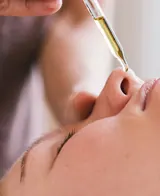


- What it is: A long-term condition in which the tear film on the eye surface is unstable, so the eye becomes dry, irritated and sometimes inflamed.
- Common symptoms: Dryness, burning, grittiness, redness, light sensitivity and blurred vision that comes and goes.
- Conventional care: Artificial tears, lifestyle and environment changes, anti-inflammatory eye drops, and procedures for more severe disease.
- How integrative care fits: Acupuncture, Ayurvedic therapies and individually prescribed herbs are used alongside eye care to help with symptoms and daily comfort.
- Evidence at a glance: Moderate for acupuncture, with mixed sham-controlled results and many low-quality trials; limited for Ayurveda; limited for herbal medicine.
What is Dry Eye?
Dry eye is a multifactorial disease of the eye surface in which the tear film becomes unstable, causing discomfort and sometimes damage to the surface of the eye.[1] It is also called dry eye disease, dry eye syndrome or keratoconjunctivitis sicca, and it is one of the most common reasons people see an eye doctor.[1]
Common symptoms
Dry eye causes dryness, irritation, burning, redness and blurred vision.[1] Many people also describe a gritty or sandy feeling, sensitivity to light and tired eyes late in the day. Because dry eye is a chronic disorder, treatment is most often long term.[2]
Causes and risk factors
Dry eye has two broad types, which often overlap. In the aqueous-deficient type the lacrimal glands make too little of the watery part of tears, and in the evaporative type the oil layer from the eyelid meibomian glands is poor, so tears evaporate too fast.[1]
Older age and female sex raise the risk, as do screen use, contact lens wear, eye surgery including cataract surgery, depression, thyroid disease, arthritis and allergy.[3] Sjögren's disease, diabetes, migraine, low-humidity air, poor sleep, and medicines such as antidepressants and antihistamines are also linked to dry eye.[4]
How it is diagnosed and treated conventionally
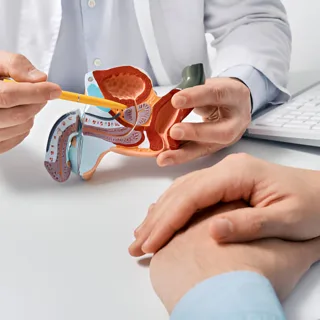
An eye doctor diagnoses dry eye from your symptoms and an exam that checks tear quantity and quality and the surface of the eye.[1] Treatment depends on the cause and severity. It usually starts with artificial tears and changes to habits and surroundings, and may add anti-inflammatory drops or in-office procedures.[1, 2]
Long-term management often needs an eye care specialist, and your other medicines can be part of the problem, so your doctors may review them.[2]
Why Dry Eye calls for a whole-person approach
Dry eye is rarely just a shortage of tears. A cycle of tear instability, higher salt concentration in the tears and inflammation of the eye surface can feed itself, and many body-wide factors feed that cycle.[2]
Care that looks at inflammation, nerve sensitivity, screen habits, sleep and general health is therefore a reasonable addition to the treatment your eye doctor directs.
Inflammation of the eye surface
Inflammation and damage to the eye surface are part of how dry eye is defined.[1] That is why anti-inflammatory drops are a standard option, and why researchers study acupuncture for its effects on inflammatory signals.[1, 5]
Nerve sensitivity of the cornea
Nerve changes on the eye surface play a role in dry eye.[1] Some people have burning pain out of proportion to what the exam shows, which suggests oversensitive corneal nerves, and acupuncture has been studied as an add-on for this pattern, although studies are few and weak.[6]
Screens, blinking and environment
Screen use, incomplete blinking and low-humidity air are modifiable risk factors.[4] A meta-analysis of 48 studies also linked visual display use to higher odds of dry eye.[3]
Sleep, mood and general health
Poor sleep quality and mental health conditions are associated with dry eye, and depression raised the odds of dry eye in a pooled analysis.[3, 4] These studies show association, not that one causes the other.
Autoimmune and hormonal factors
Sjögren's disease, thyroid disease, arthritis and androgen deficiency are linked to dry eye.[3, 4] If dryness of both eyes and mouth appears together, your physician should check for an autoimmune cause.
Acupuncture for Dry Eye
What the research shows
Acupuncture may relieve dry eye symptoms and improve tear stability, but the best-designed trials give mixed results. A systematic review of 394 patients found that acupuncture improved symptom scores, tear breakup time and tear production, and that it outperformed comparison treatments, with no severe adverse effects.[7]
A network meta-analysis of 71 trials with 5,536 patients found acupuncture and moxibustion generally better than artificial tears alone, and the combination with Chinese herbal therapy ranked best.[8] A 2026 evidence map of 319 trials judged the overall quality of the trials to be generally low and called for better study design.[9]
Sham-controlled trials are smaller. In 90 people with dry eye after cataract surgery, true acupuncture improved tear stability more than non-penetrating sham acupuncture, and symptom scores were better at 8 weeks but not at 12 weeks.[10] A trial of 42 people with moderate to severe dry eye found no significant difference between real and sham acupuncture, although both groups improved.[11] In a pilot trial of 84 people, electroacupuncture beat artificial tears for tear stability and symptoms over 4 weeks.[12]
In Sjögren's disease, a small sham-controlled trial found that acupuncture eased dryness scores, but only 27 of 46 participants finished.[13]
How acupuncture may work
Researchers propose that acupuncture calms inflammation and stimulates tear glands, but this is mostly based on animal and laboratory work. In a rabbit model of dry eye, electroacupuncture increased tear secretion and lowered inflammatory molecules in the lacrimal gland through a nerve-based anti-inflammatory pathway.[5]
These are proposed explanations, not settled facts, and rabbit findings may not carry over to people.
What treatment involves
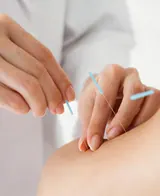
Treatment uses fine, sterile, single-use needles placed at points around the eyes, face, head and sometimes the hands and legs, usually left in place for about 20 to 40 minutes. The trials above gave 3 sessions a week for 3 to 4 weeks, or twice weekly for 8 weeks.[10, 11, 12] We reassess after a short course of visits. Serious problems from acupuncture are rare. In prospective studies, about 9 in 100 patients had a minor reaction such as brief bleeding, soreness or bruising, and serious events occurred in about 1 in 10,000 patients.[14] Tell the practitioner first if you have a bleeding disorder, take blood thinners, are pregnant, or have a pacemaker (relevant to electroacupuncture).
Ayurvedic medicine for Dry Eye
The Ayurvedic view
Ayurveda describes dry eye as Shushkakshipaka, a condition of dryness and inflammation of the eye linked to deficient or disturbed tears.[15] In this traditional framework, aggravated Vata and Pitta are often blamed. These are traditional categories for choosing treatment, not biomedical diagnoses.
Therapies that may be used
Care is chosen for the individual and traditionally combines:
- Cooling, moisturizing food and regular sleep and screen breaks
- Gentle oil massage of the head and around the eyes
- Eye therapies from Ayurvedic ophthalmology, such as Netra Tarpana (a ghee-based pool held around the eye) and Parisheka (an eye wash), which are described in the tradition and were used in the trials below, are not for home use, and need your eye doctor's agreement first[15, 16]
- Herbs such as triphala, used in classical eye preparations[16]
Panchakarma procedures are not appropriate during pregnancy, acute illness or frailty. Anything placed in or around the eye should have your eye doctor's agreement.
What the research shows
The research on Ayurveda for dry eye is limited and comes from small trials. A randomized trial of 32 patients found that Keshanjana applied topically with Netra Parisheka was about as effective as artificial tears, with some measures improving more, but the trial was small.[15] A study of 30 patients given Triphala Ghrita or Goghrita Manda Tarpana for 7 days reported moderate to marked relief of symptoms in both groups, with no placebo or untreated group.[16]
A PubMed search found no large placebo-controlled trials and no systematic reviews of Ayurveda for dry eye.
Herbal medicine for Dry Eye
Herbs and formulas that have been studied
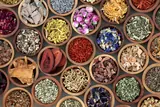
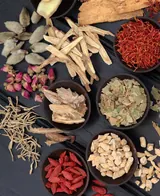
Most research is on Chinese patent and herbal formulas. Qiming granule, a Chinese patent medicine used for dry eye in China, has been studied in trials.[17] Chinese herbal medicine has also been studied for Sjögren's disease, which often includes dry eyes.[18]
What the research shows
The evidence is limited. A meta-analysis of 11 trials of Qiming granule found longer tear breakup time, more tear production and better response rates than comparison treatments, but the studies were of low quality and the authors called it premature to confirm efficacy.[17]
A meta-analysis of 52 trials in Sjögren's disease found Chinese herbal medicine improved symptoms compared with Western medicine, with all trials rated low quality. Reported side effects were mostly digestive, such as diarrhea.[18] This evidence is for Sjögren's disease, not dry eye in general.
Safety and herb-drug interactions
Herbs are active substances and can interact with medicines. A literature review, mostly of case reports, found enhanced warfarin effect or bleeding with herbs such as dan shen (Salvia miltiorrhiza), garlic and ginkgo, and bleeding when ginkgo was combined with aspirin.[19] People taking blood thinners need a practitioner's review before using herbs.
In one study, about one fifth of Ayurvedic products bought online contained detectable lead, mercury or arsenic.[20] Herbs should come from tested sources and be prescribed individually. Tell us if you are pregnant or breastfeeding, have liver or kidney disease, or have surgery planned. Do not put herbal preparations in your eyes unless your eye doctor agrees.
Translating traditional medicine into modern biological language
The links drawn here are interpretation, not equivalence. Chinese medicine often describes dry eye as a pattern of yin deficiency, most commonly liver-kidney yin deficiency, meaning insufficient moisture and nourishment of the eyes.[9] Researchers studying acupuncture for dry eye measure things that loosely parallel this picture: tear production, tear film stability, nerve-mediated inflammatory signaling and inflammatory signals in the tear glands.[5]
Ayurveda's Vata and Pitta describe dryness and heat or irritation in the eye.[15] No study has shown that a dosha corresponds to a specific biological process.
How this care fits with your medical care
Integrative care for dry eye is complementary. Keep your eye doctor and primary care physician, and do not stop or change prescribed drops or medicines without your prescriber. We do not diagnose the cause of dry eye, so new or worsening symptoms should be evaluated by an eye doctor.
Please bring your eye doctor's diagnosis, a list of eye drops, medicines and supplements, and results of any tear tests. If you have Sjögren's disease or another autoimmune condition, we ask that you are under a physician's care for it and that your treating team knows you are receiving complementary care.
When to seek urgent medical care
Some eye symptoms point to injury, infection or another serious problem that needs prompt examination.
- Sudden loss of vision or sudden blurring that does not clear with blinking
- Severe eye pain
- A red eye with discharge, or a feeling that something is stuck in the eye that does not go away
- Marked sensitivity to light with pain
- Eye symptoms after a chemical splash, injury or eye surgery
- Sudden double vision, or eye symptoms with facial weakness or confusion
If any of these occur, call 911 or go to the nearest emergency department.
Frequently asked questions
What is dry eye?
Dry eye is a long-lasting condition in which the tear film that protects the eye surface is unstable or too thin. It can cause dryness, burning, grittiness, redness and blurred vision. It may come from too few tears or from tears that evaporate too fast, and it is linked to age, screen use, some medicines and conditions such as Sjögren’s disease.
Can acupuncture help with dry eye?
Research suggests it may help. Reviews of many trials find better symptom scores and tear measures with acupuncture, and a sham-controlled trial after cataract surgery found better tear stability. Another sham-controlled trial found no difference from sham, and most trials are of low quality. Acupuncture is used alongside eye care, not in place of it.
Does Ayurvedic or herbal medicine work for dry eye?
The evidence is thinner. Ayurvedic eye therapies have been tested only in small studies, mostly without placebo groups. A Chinese patent medicine has shown benefit in low-quality trials. Herbs should be prescribed individually and checked against your medicines, and nothing should go in your eyes without your eye doctor’s agreement.
Can I stop my eye drops if I have acupuncture?
No. Acupuncture, Ayurveda and herbal medicine are complementary care. Do not stop or change prescribed eye drops or other medicines without talking to your prescriber. If you have eye pain, vision changes or redness with discharge, you need prompt examination by an eye doctor.
How soon might I notice a change with acupuncture?
It differs from person to person and no result can be promised. In the trials, people had sessions two to three times a week for 3 to 8 weeks. In the post-cataract trial, the difference in symptoms had faded by 12 weeks. We reassess after a short course of visits to see whether treatment is helping.
Does insurance cover acupuncture for dry eye?
It may. Netra Integrative Health Clinic accepts most major insurance plans that include out-of-network acupuncture benefits, for example Aetna, Blue Cross Blue Shield, Cigna and UnitedHealthcare, and offers a free benefits check. HSA and FSA cards and CareCredit are also accepted. Call (908) 402-7301 to ask about your plan.
References
- Golden MI, Meyer JJ, Zeppieri M, et al. Dry Eye Syndrome. StatPearls [Internet]. 2024. PMID 29262012. StatPearls chapter on dry eye syndrome covering the definition, tear film, symptoms, classification, diagnosis and standard treatment.
- Sheppard J, Shen Lee B, Periman LM. Dry eye disease: identification and therapeutic strategies for primary care clinicians and clinical specialists. Ann Med. 2023;55(1):241-252. PMID 36576348. Review of dry eye disease for primary care and specialists covering the cycle of tear instability and inflammation, contributing factors and long-term management.
- Qian L, Wei W. Identified risk factors for dry eye syndrome: A systematic review and meta-analysis. PLoS One. 2022;17(8):e0271267. PMID 35984830. Meta-analysis of 48 studies identifying risk factors for dry eye, including age, female sex, screen use, eye surgery, depression and thyroid disease.
- Britten-Jones AC, Wang MTM, Samuels I, et al. Epidemiology and Risk Factors of Dry Eye Disease: Considerations for Clinical Management. Medicina (Kaunas). 2024;60(9). PMID 39336499. Review of dry eye epidemiology and risk factors, including age, sex, systemic disease, medicines, screen use, sleep and low humidity.
- Ding N, Wei Q, Deng W, et al. Electroacupuncture Alleviates Inflammation of Dry Eye Diseases by Regulating the α7nAChR/NF-κB Signaling Pathway. Oxid Med Cell Longev. 2021;2021:6673610. PMID 33897942. Rabbit study finding electroacupuncture raised tear secretion and lowered inflammation in the lacrimal gland through an anti-inflammatory nerve pathway.
- Mittal R, Patel S, Galor A. Alternative therapies for dry eye disease. Curr Opin Ophthalmol. 2021;32(4):348-361. PMID 34010229. Review of alternative and adjunct dry eye therapies, noting that acupuncture studies for corneal neuropathic pain are fewer and weaker than for other approaches.
- Prinz J, Maffulli N, Fuest M, et al. Acupuncture for the management of dry eye disease. Front Med. 2022;16(6):975-983. PMID 36152126. Systematic review of acupuncture for dry eye (394 patients) finding better symptom scores, tear breakup time and Schirmer scores, with no severe adverse effects.
- Wang TN, Zhao JY, Yang YC, et al. [Acupuncture and moxibustion treatment for dry eye disease: a network Meta-analysis of rando-mized controlled trial]. Zhen Ci Yan Jiu. 2021;46(12):1057-66. PMID 34970884. Network meta-analysis of 71 trials (5,536 patients) finding acupuncture and moxibustion generally better than artificial tears, with the combination with Chinese herbal therapy ranked best.
- Liu Q, Yang X, Hong Y, et al. Evidence map for randomized controlled trials of treatment of acupuncture and moxibustion for dry eye disease. Front Med (Lausanne). 2026;13:1829981. PMID 42094950. 2026 evidence map of 319 trials of acupuncture and moxibustion for dry eye, finding some advantages but generally low methodological quality.
- Kong X, Long J, Liu H, et al. Randomized, sham-controlled trial of acupuncture for post-cataract surgery dry eye disease. Complement Ther Clin Pract. 2022;49:101680. PMID 36347150. Sham-controlled trial of 90 people with dry eye after cataract surgery; true acupuncture improved tear film stability more than sham.
- Shin MS, Kim JI, Lee MS, et al. Acupuncture for treating dry eye: a randomized placebo-controlled trial. Acta Ophthalmol. 2010;88(8):e328-33. PMID 21070615. Sham-controlled trial of 42 people with dry eye; both groups improved, but real acupuncture was not better than sham.
- Yang G, Kong X, Guo X, et al. Effects of electroacupuncture on dry eye: A pilot randomized controlled trial. Acta Ophthalmol. 2023;101(3):e315-e326. PMID 36245315. Pilot trial of 84 people comparing electroacupuncture with artificial tears; electroacupuncture improved tear stability and symptoms more at 4 and 8 weeks.
- Gomes-Silva JM, Torres CP, Teixeira LR, et al. Prospective Sham-Controlled trial: acupuncture for symptom-relieving in patients with Sjögren's disease. Clin Rheumatol. 2025;44(5):1971-1982. PMID 40178679. Small sham-controlled trial in Sjögren's disease with dry eyes and mouth; acupuncture improved dryness scores, with many dropouts.
- Bäumler P, Zhang W, Stübinger T, et al. Acupuncture-related adverse events: systematic review and meta-analyses of prospective clinical studies. BMJ Open. 2021;11(9):e045961. PMID 34489268. Systematic review of 21 prospective studies finding minor acupuncture reactions in about 9 percent of patients and serious events in about 1 per 10,000.
- Vardhan P, Dhiman KS. Clinical study to assess the efficacy of Keshanjana and Netra Parisheka in the management of Shushkakshipaka (dry eye syndrome). Ayu. 2014;35(3):277-82. PMID 26664237. Randomized trial of 32 patients comparing Keshanjana with Netra Parisheka against artificial tears for Ayurvedic Shushkakshipaka; results were equivalent overall.
- Timmapur GM, Fiaz S. Efficacy of Triphala Ghrita and Goghrita Manda Tarpana in the management of Shushkakshipaka w.s.r. to dry eye syndrome: An open labelled randomized comparative clinical trial. Ayu. 2020;41(1):52-57. PMID 34566385. Open-label randomized comparison of two Ayurvedic Tarpana therapies in 30 dry eye patients, reporting symptom relief without a placebo group.
- Yang M, Hu Z, Yue R, et al. The Efficacy and Safety of Qiming Granule for Dry Eye Disease: A Systematic Review and Meta-Analysis. Front Pharmacol. 2020;11:580. PMID 32425798. Meta-analysis of 11 trials of Qiming granule for dry eye; positive results but low study quality, with the authors calling confirmation premature.
- Luo H, Han M, Liu JP. [Systematic review and meta-analysis of randomized controlled trials of Chinese herbal medicine in the treatment of Sjogren's syndrome]. Zhong Xi Yi Jie He Xue Bao. 2011;9(3):257-74. PMID 21419078. Meta-analysis of 52 low-quality trials of Chinese herbal medicine in Sjögren's disease, finding symptom improvement over Western medicine.
- Hu Z, Yang X, Ho PC, et al. Herb-drug interactions: a literature review. Drugs. 2005;65(9):1239-82. PMID 15916450. Literature review of herb-drug interactions, mostly case reports, including enhanced warfarin effect or bleeding with dan shen, garlic and ginkgo, and bleeding with ginkgo plus aspirin.
- Saper RB, Phillips RS, Sehgal A, et al. Lead, mercury, and arsenic in US- and Indian-manufactured Ayurvedic medicines sold via the Internet. JAMA. 2008;300(8):915-23. PMID 18728265. JAMA study finding detectable lead, mercury or arsenic in about one fifth of Ayurvedic medicines purchased over the Internet.
This page is for general education and is not medical advice. Acupuncture, Ayurvedic medicine and herbal medicine are complementary therapies; they do not replace diagnosis or treatment by your physician. Do not stop or change prescribed treatment without talking to your prescriber. In an emergency call 911.