


















- What it is: Heartburn is the burning feeling; acid reflux is the backward flow of stomach contents into the esophagus that usually causes it.
- Common symptoms: Burning behind the breastbone, a sour or bitter taste, regurgitation, and sometimes a sore throat or cough.
- Conventional care: Meal and lifestyle changes, antacids, alginates, acid-reducing medicines, and further testing if symptoms persist.
- How integrative care fits: Acupuncture, Ayurvedic care and individually prescribed herbs are used alongside medical care to help with reflux symptoms.
- Evidence at a glance: Limited for acupuncture and for Chinese herbal medicine, with small, mostly Chinese trials; very limited for Ayurveda. Most research is on GERD, the chronic form of reflux.
- Role of care: acupuncture, Ayurvedic medicine and herbal medicine are offered as complementary care alongside your physician's diagnosis and treatment, not as a replacement.
- First visit: a 60-minute consultation about your history, symptoms and goals. Treatment generally starts at a later visit.
- Follow-up: treatment sessions and follow-up consultations are about 30 minutes each. Progress is reviewed at follow-up visits and the plan is adjusted as needed.
- Where: in person at 5001 Hadley Rd, Ste 210, South Plainfield, NJ, by appointment only. See what to expect at your first visit.
What is Heartburn and Acid Reflux?
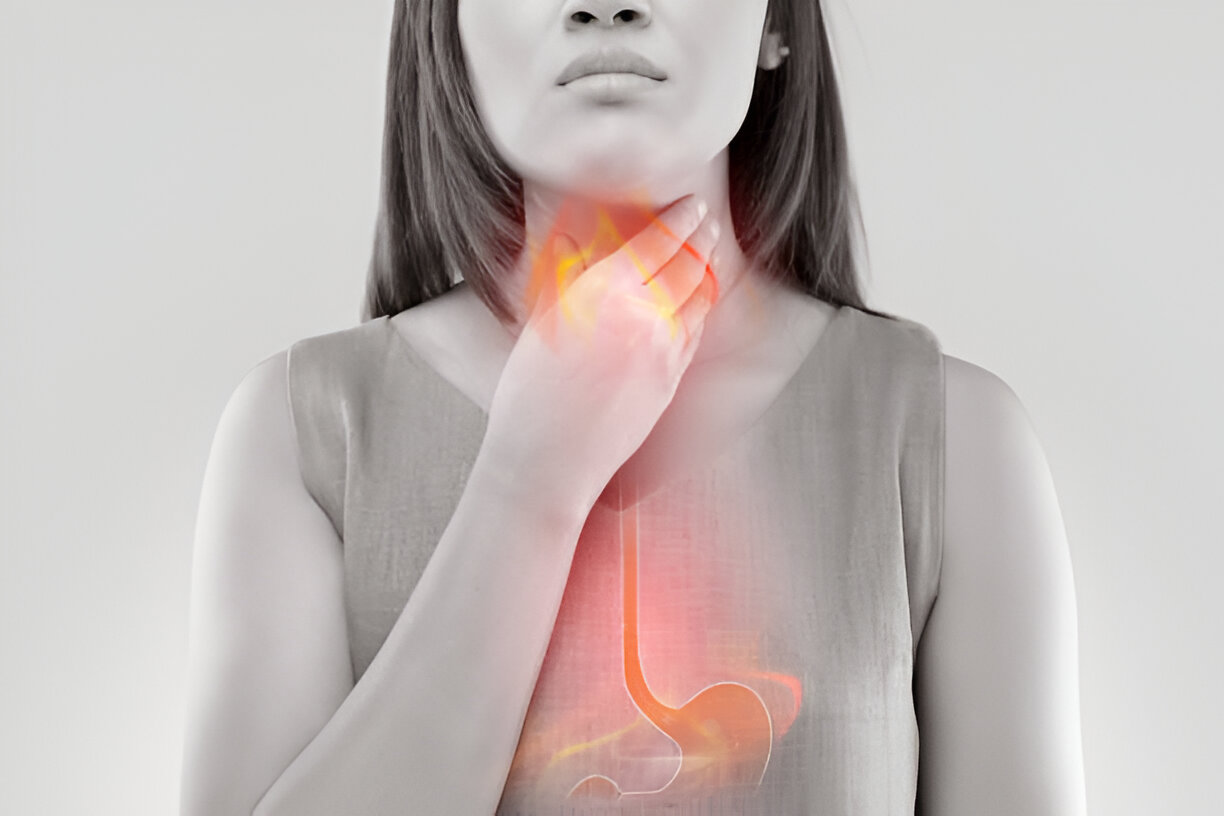
Heartburn is a burning feeling behind the breastbone, and acid reflux is the backward flow of stomach contents into the esophagus that most often causes it. Heartburn and regurgitation are the typical symptoms of gastroesophageal reflux disease (GERD), the chronic form of reflux.[1, 2] Occasional heartburn is common, and the research on complementary care is mostly done in people with GERD.
Common symptoms
Heartburn, regurgitation and chest pain that does not come from the heart are the most common symptoms.[1] Some people notice a sour or bitter taste, a sore throat, hoarseness or a cough that is worse at night. Because chest pain can come from the heart, any new or unexplained chest pain needs a physician's assessment first.
Causes and risk factors
Reflux happens when the valve at the bottom of the esophagus lets stomach contents through. In a meta-analysis of population studies, reflux symptoms were more common with age 50 or older, smoking, NSAID or aspirin use and obesity, although the associations were modest.[3]
Many people report that large meals, fatty or spicy foods, chocolate, coffee or alcohol bring on symptoms. Late evening meals increase time with acid in the esophagus when lying down, and weight loss and quitting smoking are advised when they apply.[4] Triggers differ from person to person.
How it is diagnosed and treated conventionally
Heartburn that happens often is usually diagnosed from the symptoms, and a physician may suggest a short trial of a proton pump inhibitor (PPI). Testing such as endoscopy and pH monitoring is used when symptoms do not respond or when warning signs are present.[1, 5]
Treatment starts with meal and lifestyle changes, including avoiding late meals and raising the head of the bed.[4] Antacids give short relief, alginates (which work by displacing the pocket of acid that collects after meals) relieved reflux symptoms more than placebo or antacids in a meta-analysis, and acid-reducing medicines are used when symptoms are frequent.[2, 6] Up to half of people with suspected GERD do not benefit from acid suppression, which is one reason a physician may look for other explanations.[5]
Why Heartburn and Acid Reflux calls for a whole-person approach
Heartburn does not depend on acid alone. Meal timing, body weight, stress, and how the esophagus and stomach move can all affect it, and some people keep having symptoms despite acid-reducing medicine.[5, 7]
Complementary care is aimed at some of these other factors and is used together with medical advice and acid-reducing treatment.
Meals, weight and daily habits
Lifestyle changes have the best support among self-care steps. Weight loss in people who are overweight, stopping smoking, avoiding late meals and raising the head of the bed each have evidence in reviews of trials and cohort studies.[4]
Stress, mood and the brain-gut link
A meta-analysis of 36 studies found anxiety and depressive symptoms were more common in people with GERD than in healthy controls, and the link appeared to go both ways.[8] An expert review from the American Gastroenterological Association advises relaxation strategies and awareness of the brain-gut relationship for people with reflux symptoms.[5]
How the esophagus and stomach move
Weak esophageal contractions and slow stomach relaxation after eating can contribute to reflux. In a 30-patient sham-controlled trial, 4 weeks of acupoint electrical stimulation through the skin improved these functions and reflux symptom scores.[9]
Acupuncture for Heartburn and Acid Reflux
What the research shows
Acupuncture may help reflux symptoms, but the evidence is limited. A meta-analysis of 12 trials with 1,235 patients found better overall symptom improvement when acupuncture was added to Western medicine than with Western medicine alone, and less recurrence with acupuncture alone than with medication, while global symptom improvement with acupuncture alone was similar to medication. Its authors noted small samples and poor methods.[10] A 2025 meta-analysis rated the certainty of its findings very low to low, found global symptom improvement was lower with acupuncture than with PPIs, and did not recommend manual acupuncture alone as the main treatment.[11] A network meta-analysis found acupoint stimulation with Chinese medicine improved lower esophageal sphincter pressure and acid exposure, but not quality-of-life scores.[12]
In one trial of 72 adults whose symptoms persisted on a daily PPI, acupuncture plus the standard dose gave a greater reduction in heartburn than a doubled PPI dose, while the doubled dose worked better for regurgitation and sleep disturbance. Total reflux scores did not differ between groups. The trial had no sham group.[7]
How acupuncture may work
Researchers propose that acupoint stimulation may act through the vagus nerve to improve how the esophagus and stomach move. In a small sham-controlled trial, vagal activity increased with stimulation and was correlated with sphincter pressure and esophageal contractions.[9] These are proposed mechanisms from small studies, not settled facts.
What treatment involves
Treatment uses fine, sterile, single-use needles at points on the abdomen, wrist and lower leg, usually left in place for about 20 to 40 minutes. The trials above lasted about four weeks or longer, and we reassess after a short course of visits.[7]
Serious problems are rare. In prospective studies, about 9 in 100 patients had a minor reaction such as soreness, bleeding or redness at a needle site, and serious events occurred in about 1 in 10,000 patients.[13] Tell the practitioner first if you have a bleeding disorder, take blood thinners, are pregnant, or have a pacemaker (relevant to electroacupuncture).
Ayurvedic medicine for Heartburn and Acid Reflux
The Ayurvedic view
In Ayurveda, heartburn with sour belching is described as Amlapitta, and the upward form as Urdhwaga Amlapitta. It is traditionally seen as an aggravation of Pitta, the principle linked to heat and digestion, tied to diet and lifestyle.[14] These are traditional categories, not biomedical diagnoses.
Therapies that may be used
Care is chosen for the individual and traditionally combines:
- Regular, moderate meals with cooling, bland foods, and less very spicy, sour, fried or late-evening food, which matches the medical advice above[4]
- Daily routine and relaxation practices such as slow breathing
- Herbs such as licorice root (Yashtimadhu), used traditionally for Amlapitta[15]
- Individually prescribed formulas from tested sources, since some Ayurvedic products contain heavy metals[16]
Panchakarma procedures, especially vomiting or purgation therapies, are not routinely suited to reflux. They are not appropriate in pregnancy, acute illness, frailty, or before warning symptoms have been medically assessed.
What the research shows
The research on Ayurveda for heartburn is very limited. Studies mostly concern Amlapitta or non-ulcer dyspepsia, not reflux confirmed by testing. A single-arm study of 30 patients given individualized herbo-mineral treatment for 28 days reported symptom relief, but had no control group.[14] A 40-patient study of two licorice-type roots reported that burning in the chest and throat eased in both groups, without a placebo arm.[15] Evidence for heartburn itself is uncertain.
Herbal medicine for Heartburn and Acid Reflux
Herbs and formulas that have been studied
Most research is on Chinese herbal formulas for GERD, including Jianpi (spleen-strengthening) and Ligan Hewei (liver-soothing, stomach-harmonizing) approaches and the formula Wu Zhu Yu Tang.[17, 18]
What the research shows
The evidence is limited. A network meta-analysis of 17 trials with 1,441 participants suggested Jianpi and Ligan Hewei approaches, alone or with PPIs, may be useful complementary options, and called for better-designed trials.[17] In a double-blind trial of 204 people with nonerosive reflux, a Jianpi Qinghua granule plus half-dose PPI gave more complete symptom resolution at 4 weeks than a standard-dose PPI, though sufficient relief did not differ.[19] In a 90-patient double-blind trial (77 completed), Wu Zhu Yu Tang gave symptom scores similar to omeprazole, and the authors asked for larger studies.[18] Nearly all of this work is from East Asia.
Safety and herb-drug interactions
Herbs can cause side effects. In the Jianpi Qinghua trial, three people in the herb-plus-PPI group developed liver dysfunction, two of them moderate to severe.[19] Tell us if you have liver or kidney disease, are pregnant or breastfeeding, take blood thinners, or have surgery planned. Herbs should be checked against all your medicines.
Licorice, which is used traditionally for reflux, can raise blood pressure and lower potassium and needs caution in pregnancy.[20] About one fifth of Ayurvedic products bought online contained detectable lead, mercury or arsenic.[16] Herbs should come from tested sources and be prescribed individually.
Translating traditional medicine into modern biological language
This is interpretation, not equivalence. Chinese medicine often describes reflux as stomach qi rising when it should descend, sometimes with liver qi stagnation or spleen weakness. Researchers studying acupuncture measure things that loosely parallel this: vagal nerve activity, lower esophageal sphincter pressure and esophageal and stomach movement.[9, 12]
Ayurveda's aggravated Pitta describes heat and burning in the upper digestive tract, linked to diet and lifestyle.[14] No study has shown that a dosha corresponds to a specific biological process.
How this care fits with your medical care
Integrative care for heartburn is complementary. Do not stop, reduce or change a PPI, antacid or any prescribed medicine without your prescriber. Heartburn that is frequent, has lasted weeks, or is not controlled by medicine should be evaluated by a physician, because we do not diagnose the cause of reflux.
Please bring your diagnosis, any endoscopy or pH results, and a full list of medicines and supplements, including over-the-counter antacids.
When to seek urgent medical care
Some symptoms point to a complication or to a different, more serious problem such as a heart condition.[1]
- Chest pain or pressure, especially with shortness of breath, sweating, or pain spreading to the arm or jaw
- Trouble or pain with swallowing, or food that feels stuck
- Vomiting blood, material that looks like coffee grounds, or black or bloody stools
- Persistent vomiting
If you have chest pain with these symptoms or any emergency, call 911 or go to the nearest emergency department. See your physician promptly for unplanned weight loss, or for heartburn that is frequent, getting worse, or not controlled by medicine.
Frequently asked questions
What is heartburn and acid reflux?
Heartburn is a burning feeling in the chest or throat. Acid reflux is the backward flow of stomach contents into the esophagus that usually causes it. When it happens often, it may be diagnosed as GERD. Triggers include large or late meals, certain foods, alcohol, smoking and extra weight, and a physician should check frequent symptoms.
Can acupuncture help with heartburn and acid reflux?
It may help some people, but the evidence is limited. Meta-analyses of mostly Chinese GERD trials found better symptom outcomes when acupuncture was added to medicine, though trials were small and low in quality. Authors do not recommend it as the only treatment. It is used alongside medical care, not in place of it.
Do Ayurvedic or herbal medicines work for heartburn?
Evidence is thin. Ayurvedic studies are small and mostly lack placebo groups. Chinese herbal formulas have been tested in double-blind trials of reflux with some positive results, but the studies are few and mostly from East Asia. Herbs can cause side effects, including liver problems, and must be reviewed with your medicines.
Can I stop my antacids or reflux medicine if I try acupuncture or herbs?
No. Acupuncture, Ayurveda and herbal medicine are complementary care. Do not stop or change prescribed or over-the-counter reflux medicines without talking to your prescriber. If you have trouble swallowing, bleeding, weight loss or chest pain, you need prompt medical assessment.
How soon might I notice a change with acupuncture?
It differs from person to person and no result can be promised. In the trials, courses ran for about four weeks of regular sessions. We reassess after a short course of visits to see whether treatment is helping, and we ask you to keep your physician informed.
Does insurance cover acupuncture for heartburn?
It may. Netra Integrative Health Clinic is in-network with Blue Cross Blue Shield, Cigna and UnitedHealthcare. Other plans may cover acupuncture through out-of-network benefits, and we offer a free benefits check. Insurance coverage applies to acupuncture only; all other treatments, including Ayurvedic and herbal medicine, are self-pay. HSA and FSA cards and CareCredit are also accepted. Call (908) 402-7301 to ask about your plan.
References
- Goosenberg E, Vadakekut ES. Gastroesophageal Reflux Disease (GERD). StatPearls [Internet]. 2025. PMID 32119349. StatPearls chapter on GERD covering definition, typical symptoms, complications, risk factors, diagnosis from symptoms and PPI response, and alarm features.
- Katz PO, Dunbar KB, Schnoll-Sussman FH, et al. ACG Clinical Guideline for the Diagnosis and Management of Gastroesophageal Reflux Disease. Am J Gastroenterol. 2022;117(1):27-56. PMID 34807007. American College of Gastroenterology guideline on diagnosis and management of GERD, covering lifestyle, medicines, surgery and the role of PPIs.
- Eusebi LH, Ratnakumaran R, Yuan Y, et al. Global prevalence of, and risk factors for, gastro-oesophageal reflux symptoms: a meta-analysis. Gut. 2018;67(3):430-440. PMID 28232473. Meta-analysis of 102 studies of reflux symptoms showing higher prevalence with age 50 or over, smoking, NSAID use and obesity, and wide variation between countries.
- Ness-Jensen E, Hveem K, El-Serag H, et al. Lifestyle Intervention in Gastroesophageal Reflux Disease. Clin Gastroenterol Hepatol. 2016;14(2):175-82.e1-3. PMID 25956834. Systematic review of lifestyle interventions in GERD supporting weight loss, smoking cessation, avoiding late meals and raising the head of the bed.
- Yadlapati R, Gyawali CP, Pandolfino JE, et al. AGA Clinical Practice Update on the Personalized Approach to the Evaluation and Management of GERD: Expert Review. Clin Gastroenterol Hepatol. 2022;20(5):984-994.e1. PMID 35123084. AGA expert review on personalized GERD care, noting up to half do not benefit from acid suppression and advising relaxation strategies and a PPI trial.
- Leiman DA, Riff BP, Morgan S, et al. Alginate therapy is effective treatment for GERD symptoms: a systematic review and meta-analysis. Dis Esophagus. 2017;30(5):1-9. PMID 28375448. Meta-analysis of 14 trials (2,095 subjects) finding alginate therapy more effective than placebo or antacids for GERD symptoms.
- Ghadiani Z, Gorjizadeh N, Azadvari M, et al. Acupuncture provides a safe strategy to minimize proton pump inhibitor dose in resistant gastroesophageal reflux disease: randomized controlled trial. Dis Esophagus. 2026;39(1). PMID 41609334. Randomized trial of 72 adults with PPI-resistant GERD comparing acupuncture plus standard PPI dose with double PPI dose, with greater heartburn reduction for acupuncture and similar total scores.
- Zamani M, Alizadeh-Tabari S, Chan WW, et al. Association Between Anxiety/Depression and Gastroesophageal Reflux: A Systematic Review and Meta-Analysis. Am J Gastroenterol. 2023;118(12):2133-2143. PMID 37463429. Meta-analysis of 36 studies finding anxiety and depressive symptoms common in GERD, with evidence of a two-way relationship.
- Zhang B, Hu Y, Shi X, et al. Integrative Effects and Vagal Mechanisms of Transcutaneous Electrical Acustimulation on Gastroesophageal Motility in Patients With Gastroesophageal Reflux Disease. Am J Gastroenterol. 2021;116(7):1495-1505. PMID 34183577. Sham-controlled trial of 30 patients finding acupoint electrical stimulation improved GERD scores, esophageal contractions, gastric accommodation and vagal activity.
- Zhu J, Guo Y, Liu S, et al. Acupuncture for the treatment of gastro-oesophageal reflux disease: a systematic review and meta-analysis. Acupunct Med. 2017;35(5):316-323. PMID 28689187. Meta-analysis of 12 trials (1,235 patients) of acupuncture for GERD finding better global improvement as an add-on and lower recurrence, with poor study quality.
- Yin J, Yin M, Liu T, et al. Does Manual Acupuncture Improve Gastroesophageal Reflux Disease Symptoms? A Trial Sequential Meta-Analysis. Complement Med Res. 2025;32(3):233-243. PMID 40127634. 2025 trial sequential meta-analysis of 12 studies of manual acupuncture for GERD finding lower symptom scores and recurrence with very low-certainty evidence.
- Huang M, Yu Z, Wu L, et al. Efficacy of Nonpharmacological Interventions and Combination With Pharmacological Interventions for Gastroesophageal Reflux Disease: A Systematic Review and Network Meta-Analysis. J Clin Gastroenterol. 2025;59(10):943-953. PMID 40838809. Network meta-analysis of 33 studies of non-drug treatments for GERD, including acupoint stimulation, finding benefit for sphincter pressure but not quality of life.
- Bäumler P, Zhang W, Stübinger T, et al. Acupuncture-related adverse events: systematic review and meta-analyses of prospective clinical studies. BMJ Open. 2021;11(9):e045961. PMID 34489268. Systematic review of 21 prospective studies finding minor acupuncture reactions in about 9 percent of patients and serious events in about 1 per 10,000.
- Meenakshi K, Vinteshwari N, Minaxi J, et al. Effectiveness of Ayurveda treatment in Urdhwaga Amlapitta: A clinical evaluation. J Ayurveda Integr Med. 2021;12(1):87-92. PMID 33546994. Single-arm study of 30 patients with Urdhwaga Amlapitta given individualized Ayurvedic treatment, describing the Ayurvedic concept and reporting symptom relief.
- Prajapati SM, Patel BR. A comparative clinical study of Jethimala (Taverniera nummularia Baker.) and Yashtimadhu (Glycyrrhiza glabra Linn.) in the management of Amlapitta. Ayu. 2015;36(2):157-62. PMID 27011716. Comparison of two licorice-type roots in 40 patients with Amlapitta, with relief of chest and throat burning in both and no placebo group.
- Saper RB, Phillips RS, Sehgal A, et al. Lead, mercury, and arsenic in US- and Indian-manufactured Ayurvedic medicines sold via the Internet. JAMA. 2008;300(8):915-23. PMID 18728265. JAMA study finding detectable lead, mercury or arsenic in about one fifth of Ayurvedic medicines purchased over the Internet.
- Dai YK, Wu YB, Wen H, et al. Different Traditional Herbal Medicines for the Treatment of Gastroesophageal Reflux Disease in Adults. Front Pharmacol. 2020;11:884. PMID 32765255. Network meta-analysis of 17 trials (1,441 participants) of traditional herbal medicines for GERD, favoring Jianpi and Ligan Hewei approaches, with calls for better trials.
- Shih YS, Tsai CH, Li TC, et al. Effect of wu chu yu tang on gastroesophageal reflux disease: Randomized, double-blind, placebo-controlled trial. Phytomedicine. 2019;56:118-125. PMID 30668332. Double-blind trial of 90 GERD patients comparing the Chinese formula Wu Zhu Yu Tang with omeprazole, finding similar symptom scores.
- Zhang J, Che H, Zhang B, et al. JianpiQinghua granule reduced PPI dosage in patients with nonerosive reflux disease: A multicenter, randomized, double-blind, double-dummy, noninferiority study. Phytomedicine. 2021;88:153584. PMID 34119741. Double-blind trial of 204 patients with nonerosive reflux disease testing Jianpi Qinghua granules plus half-dose PPI versus PPI alone, with three liver dysfunction cases.
- Nazari S, Rameshrad M, Hosseinzadeh H. Toxicological Effects of Glycyrrhiza glabra (Licorice): A Review. Phytother Res. 2017;31(11):1635-1650. PMID 28833680. Review of the toxicity of licorice (Glycyrrhiza glabra), identifying high blood pressure and low potassium as main adverse effects and caution in pregnancy.
This page is for general education and is not medical advice. Acupuncture, Ayurvedic medicine and herbal medicine are complementary therapies; they do not replace diagnosis or treatment by your physician. Do not stop or change prescribed treatment without talking to your prescriber. In an emergency call 911.