













- What it is: Swollen vascular cushions in the anal canal (internal) or under the skin around the anus (external), also called piles.
- Common symptoms: Bright red bleeding with bowel movements, itching, discomfort, swelling, a tender lump, and tissue that protrudes from the anus.
- Conventional care: Fiber, fluids and avoiding straining, creams and sitz baths, office procedures such as rubber band ligation, and surgery for severe cases.
- How integrative care fits: Acupuncture, Ayurvedic care and individually prescribed herbs are used alongside medical care for symptom relief and bowel regularity, after bleeding has been medically evaluated.
- Evidence at a glance: Limited for acupuncture, mainly for pain after hemorrhoid surgery; very limited for Ayurveda, with small studies; limited for herbal medicine, mostly plant-derived flavonoid drugs.
- Role of care: acupuncture, Ayurvedic medicine and herbal medicine are offered as complementary care alongside your physician's diagnosis and treatment, not as a replacement.
- First visit: a 60-minute consultation about your history, symptoms and goals. Treatment generally starts at a later visit.
- Follow-up: treatment sessions and follow-up consultations are about 30 minutes each. Progress is reviewed at follow-up visits and the plan is adjusted as needed.
- Where: in person at 5001 Hadley Rd, Ste 210, South Plainfield, NJ, by appointment only. See what to expect at your first visit.
What is Hemorrhoids?
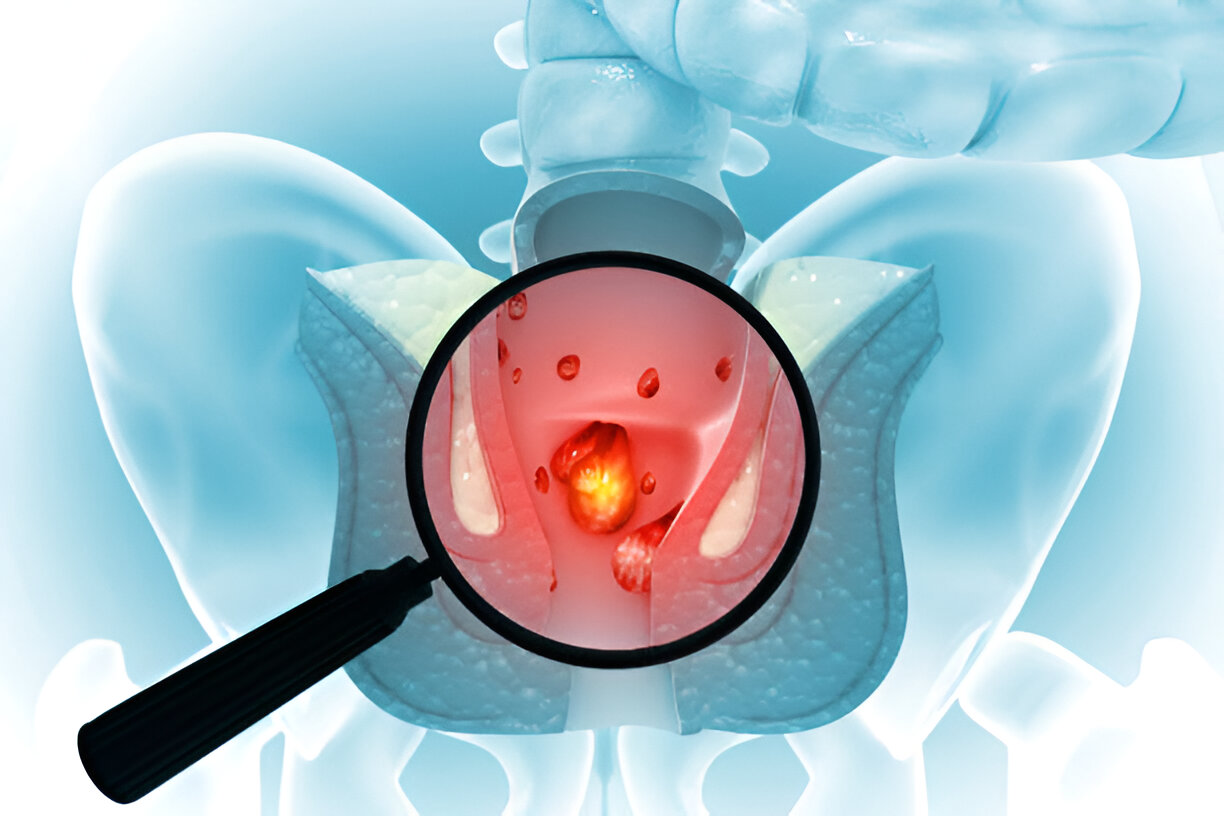
Hemorrhoids are swollen vascular cushions in the anal canal that cause symptoms such as bleeding, itching, pain and prolapse. Everyone has these cushions, which are normal tissue made of connective tissue, smooth muscle and blood vessels. The word hemorrhoids, or piles, refers to the state in which they cause symptoms.[1] They are one of the most common reasons for outpatient gastroenterology visits in the United States.[2]
Common symptoms
The classic symptom is bright red blood with a bowel movement, because hemorrhoidal tissue has many connections between arteries and veins.[1] Other symptoms include itching or irritation, anal discomfort, mucus discharge, swelling and prolapse.[2]
Internal hemorrhoids are inside the anal canal and are graded from I to IV by how far they prolapse and whether they go back in on their own. External hemorrhoids sit under the skin around the anus. A clot inside an external hemorrhoid (thrombosed hemorrhoid) can cause sudden, severe pain and a hard lump.[1]
Causes and risk factors
Straining, chronic constipation or diarrhea, long periods of sitting on the toilet, obesity, pregnancy, a low-fiber diet and aging are commonly listed causes. Persistently raised pressure in the veins of the anal area is thought to contribute.[3] The exact cause is not well established, and the link between constipation, low fiber and hemorrhoids has been assumed more than proven.[2]
How it is diagnosed and treated conventionally
Diagnosis starts with the history, a look at the anal area and a digital rectal exam, sometimes with anoscopy. Accuracy even among surgeons is only about 70 percent, which is one reason a proper evaluation matters.[4]
Treatment is chosen by symptom severity and anatomy, after addressing modifiable risk factors.[5] Fiber has the best-studied supportive role. A meta-analysis of 7 trials with 378 patients found fiber reduced persisting symptoms and bleeding.[6] Office procedures such as rubber band ligation and infrared coagulation are widely used, and surgery effectively removes hemorrhoids but can be painful.[2]
Why Hemorrhoids calls for a whole-person approach
Hemorrhoids are rarely just a local problem. Bowel habits, diet, venous pressure and recovery after procedures all play a part, and the cause of symptoms is not always clear.[2]
Care that also looks at digestion, daily routine and comfort is therefore a reasonable addition to the medical treatment of the anal area.
Bowel habits and fiber
Hard stools and straining are the factors most often blamed for hemorrhoid symptoms. In trials of symptomatic hemorrhoids, fiber supplements improved symptoms and bleeding, with moderate-quality studies overall.[6] Bowel regularity is therefore an obvious target for diet and lifestyle advice.
Venous pressure and tissue support
Hemorrhoids are often described as developing when pressure in the anal veins stays high.[3] This is one reason plant-derived venous tonic medicines have been tested for hemorrhoids.
Pain and recovery after procedures
Pain is the main problem after hemorrhoid surgery. A review of 157 trials found that pain reduction relies on a combination of anesthetic methods, surgical technique, topical medicines and postoperative measures, including laxatives and flavonoids.[7]
What remains uncertain
Research on hemorrhoids is thin. One review points out that symptoms commonly attributed to hemorrhoids were reported equally by people with and without them, and that medical therapies apart from fiber have hardly been formally studied.[2] This is a reminder that new symptoms need medical assessment rather than self-diagnosis.
Acupuncture for Hemorrhoids
What the research shows
The research on acupuncture is limited, and the studies we found are about pain after hemorrhoid surgery, not hemorrhoid symptoms in general. We found no trials of acupuncture for untreated hemorrhoids.
A systematic review of 4 trials with 275 patients found that electroacupuncture lowered pain after hemorrhoidectomy at some time points, especially during the first bowel movement. Studies of manual acupuncture against pain medicines gave inconsistent results, study quality varied, and the authors judged the evidence not conclusive.[8] In a single-center trial of 72 patients, electroacupuncture after surgery gave lower pain scores than sham acupuncture at several time points.[9]
How acupuncture may work
For postoperative pain, acupuncture is thought to act on how the nervous system processes pain. We did not find a hemorrhoid-specific mechanism study to cite, so this is a general proposal and not a settled explanation.
What treatment involves
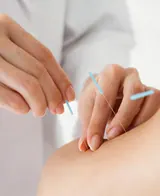
Treatment uses fine, sterile, single-use needles placed at points on the body, usually left in place for about 20 to 40 minutes. Care is given as a course of several visits with reassessment. The trial above applied electroacupuncture for 30 minutes right after surgery.[9]
In prospective studies, about 9 in 100 patients had a minor reaction such as soreness, bleeding or bruising at a needle site, and serious events occurred in about 1 in 10,000 patients.[10] Tell the practitioner first if you have a bleeding disorder, take blood thinners, are pregnant, or have a pacemaker, which matters for electroacupuncture.
Ayurvedic medicine for Hemorrhoids
The Ayurvedic view
Ayurveda calls hemorrhoids Arsha and describes them as arising from improper diet, long standing and faulty bowel habits that disturb the doshas, mainly Vata, and the digestive fire.[11] These are traditional explanations, not biomedical diagnoses.
Therapies that may be used
Care is individualized and traditionally includes:
- Diet and routine advice to keep stools soft and regular, such as warm cooked meals, enough fluids and regular meal times
- Triphala and similar herbal preparations for digestion and bowel regularity, prescribed individually
- Warm sitz baths and soothing herbal topical preparations, which may be a transdermal application
- Kshara Sutra and other procedures, which are surgical or minor surgical methods done by specialist Ayurvedic surgeons, not by us[11]
Panchakarma is not appropriate during pregnancy, acute illness, frailty, or while rectal bleeding has not been medically assessed.
What the research shows
The research on Ayurveda is very limited, and most of it is small, from India, and not placebo-controlled. A trial of 90 patients compared a marketed polyherbal kit with fiber powder plus lidocaine gel for 14 days. More patients in the kit group reached a symptom score of zero, and side effects were similar, though the kit was a commercial product and the trial was not placebo-controlled.[12]
Other studies compared Kshara Sutra ligation with hemorrhoidectomy in 61 patients, and Apamarga Kshara, infrared coagulation and an herbal tablet in 30 patients. Both were small and reported mainly favorable results, and the second was open-label with no blinding.[11, 13] Studies without blinding or a placebo group cannot establish that a treatment caused the improvement.
Herbal medicine for Hemorrhoids
Herbs and formulas that have been studied
The best-studied plant-derived products are flavonoids, often a micronized purified flavonoid fraction made from citrus, used as venous tonics.[3, 14] Ayurvedic polyherbal products and Chinese topical ointments are also used. We found no systematic reviews of Chinese herbal formulas for hemorrhoids.
What the research shows
The evidence is limited. A Cochrane review of 20 trials with 2,344 participants found venous tonics (plant extracts such as flavonoids and synthetic compounds) reduced bleeding, itching, discharge and overall symptoms against control, with no clear effect on pain. The authors noted methodological limitations.[3] A systematic review of 11 trials of one micronized flavonoid product found benefit for bleeding and overall improvement, with a trend toward less pain. That review covered a single branded product.[14]
Evidence on herbal products beyond these flavonoid medicines is thin, and trials of Ayurvedic herbal products are covered above.[12]
Safety and herb-drug interactions
Herbs can interact with medicines. Case reports describe bleeding or clotting problems when warfarin was combined with herbs including dan shen, dang gui, ginkgo, ginseng and garlic.[15] Anyone taking blood thinners needs a practitioner's review first, particularly since hemorrhoids themselves can bleed.
In one study, about one fifth of Ayurvedic products bought online contained detectable lead, mercury or arsenic.[16] Herbs should come from tested sources and be prescribed individually. Tell us if you are pregnant or breastfeeding, or have liver or kidney disease.
Translating traditional medicine into modern biological language
This is interpretation, not equivalence. Ayurveda ties Arsha to a disordered digestion and Vata, which governs downward movement. Researchers study related ideas such as stool consistency, straining, venous tone and local inflammation.[3, 6]
Traditional Chinese medicine often describes hemorrhoids as damp-heat or sinking qi in the lower body. No study we found has shown that these patterns match a specific biological process.
How this care fits with your medical care
Integrative care for hemorrhoids is complementary. Keep your primary physician, gastroenterologist or colorectal surgeon, and do not stop or change prescribed treatment, including recommended procedures. We do not diagnose the cause of rectal bleeding, so any bleeding should be medically evaluated first.
Please bring your diagnosis, any colonoscopy or other test results, a full list of medicines and supplements, and details of any procedures, planned or past.
When to seek urgent medical care
Rectal bleeding can come from conditions other than hemorrhoids, some of them serious.
- Rectal bleeding that is heavy, does not stop, or comes with dizziness or fainting
- Black, tarry or maroon stools
- Bleeding that is new after age 45 or that changes your bowel habits, or comes with unexplained weight loss or anemia
- Severe, sudden anal pain or a hard, very painful lump
- A prolapsed hemorrhoid that will not go back in and turns dark or very painful
- Fever with anal pain or swelling
If any of these occur, call 911 or go to the nearest emergency department.
Frequently asked questions
What are hemorrhoids?
Hemorrhoids, also called piles, are swollen vascular cushions in the lower rectum and anus that cause bleeding, itching, discomfort or a lump. They can be internal or external. Everyone has these cushions, and they are called hemorrhoids when they cause symptoms. Rectal bleeding should always be checked by a physician, because other causes can look similar.
Can acupuncture help with hemorrhoids?
Evidence is limited. Small trials suggest electroacupuncture may lower pain after hemorrhoid surgery, but a review judged the evidence not conclusive. We found no trials of acupuncture for hemorrhoid symptoms in people who have not had surgery. Acupuncture is used alongside medical care, not in place of it.
Does Ayurvedic or herbal medicine work for hemorrhoids?
The evidence is thin. Ayurvedic treatments have been tested in small, mostly unblinded studies. Plant-derived flavonoid medicines have the most research and may reduce bleeding and itching, with a trend toward less pain, according to a Cochrane review. Herbs can interact with blood thinners and should be prescribed individually and reviewed against your medicines.
Can I skip a procedure or surgery if I use acupuncture or herbs?
No. These are complementary care, not alternatives to medical treatment. Follow your physician’s advice about rubber band ligation, surgery or other procedures. Rectal bleeding, severe pain or a lump that will not go back in needs prompt medical assessment.
What should I bring to my first visit?
Bring your diagnosis, any colonoscopy or other test results, a list of all medicines and supplements, especially blood thinners, and any notes about past or planned procedures. This helps us check acupuncture and herbs against your medical care.
Does insurance cover acupuncture for hemorrhoids?
It may. Netra Integrative Health Clinic is in-network with Blue Cross Blue Shield, Cigna and UnitedHealthcare. Other plans may cover acupuncture through out-of-network benefits, and we offer a free benefits check. Insurance coverage applies to acupuncture only; all other treatments, including Ayurvedic and herbal medicine, are self-pay. HSA and FSA cards and CareCredit are also accepted. Call (908) 402-7301 to ask about your plan.
References
- Fontem RF, Eyvazzadeh D. Internal Hemorrhoid. StatPearls [Internet]. 2023. PMID 30725867. StatPearls chapter on internal hemorrhoids covering vascular anatomy, why bleeding is bright red, the four grades of prolapse and the definition of hemorrhoidal disease.
- Sandler RS, Peery AF. Rethinking What We Know About Hemorrhoids. Clin Gastroenterol Hepatol. 2019;17(1):8-15. PMID 29601902. Review noting hemorrhoids are common but poorly researched, with symptoms reported equally by people without them and fiber the only medical therapy formally studied.
- Perera N, Liolitsa D, Iype S, et al. Phlebotonics for haemorrhoids. Cochrane Database Syst Rev. 2012;2012(8):CD004322. PMID 22895941. Cochrane review of 20 trials (2,344 participants) finding plant-derived and synthetic venous tonics reduced bleeding, itching and discharge, with methodological limitations and no clear pain effect.
- Akinmoladun O, Oh W. Management of Hemorrhoids and Anal Fissures. Surg Clin North Am. 2024;104(3):473-490. PMID 38677814. Surgical Clinics review of hemorrhoid and anal fissure management, noting diagnostic accuracy of about 70 percent among surgeons and covering medical and procedural treatment.
- Egawa F, Gologorsky RC. Hemorrhoids. Surg Clin North Am. 2026;106(1):11-21. PMID 41241446. 2026 Surgical Clinics review of hemorrhoid pathophysiology, diagnosis and treatment, stressing care tailored to anatomy, symptoms and comorbidities after addressing modifiable risk factors.
- Alonso-Coello P, Mills E, Heels-Ansdell D, et al. Fiber for the treatment of hemorrhoids complications: a systematic review and meta-analysis. Am J Gastroenterol. 2006;101(1):181-8. PMID 16405552. Meta-analysis of 7 trials (378 patients) finding fiber reduced persisting symptoms and bleeding in symptomatic hemorrhoids, with moderate-quality studies.
- Lohsiriwat V, Jitmungngan R. Strategies to Reduce Post-Hemorrhoidectomy Pain: A Systematic Review. Medicina (Kaunas). 2022;58(3). PMID 35334594. Systematic review of 157 trials of strategies to reduce pain after hemorrhoidectomy, covering anesthesia, surgical technique, topical agents, laxatives and flavonoids.
- Chen H, Zhang W, Sun Y, et al. The Role of Acupuncture in Relieving Post-Hemorrhoidectomy Pain: A Systematic Review of Randomized Controlled Trials. Front Surg. 2022;9:815618. PMID 35419404. Systematic review of 4 trials (275 patients) of acupuncture for pain after hemorrhoidectomy, finding benefit at some time points but inconclusive evidence.
- Wu J, Chen B, Yin X, et al. Effect of acupuncture on post-hemorrhoidectomy pain: a randomized controlled trial. J Pain Res. 2018;11:1489-1496. PMID 30122979. Single-center sham-controlled trial of 72 patients finding electroacupuncture lowered pain scores after hemorrhoidectomy at several time points.
- Bäumler P, Zhang W, Stübinger T, et al. Acupuncture-related adverse events: systematic review and meta-analyses of prospective clinical studies. BMJ Open. 2021;11(9):e045961. PMID 34489268. Systematic review of 21 prospective studies finding minor acupuncture reactions in about 9 percent of patients and serious events in about 1 per 10,000.
- Gupta ML, Gupta SK, Bhuyan C. Comparative clinical evaluation of Kshara Sutra ligation and hemorrhoidectomy in Arsha (hemorrhoids). Ayu. 2011;32(2):225-9. PMID 22408307. Comparative study of Kshara Sutra ligation versus hemorrhoidectomy in 61 patients that also describes the Ayurvedic view of Arsha.
- Tripathi RK, Bolegave SS, Shetty PA, et al. Efficacy and safety of a polyherbal formulation in hemorrhoids. J Ayurveda Integr Med. 2015;6(4):225-32. PMID 26834421. Randomized trial of 90 patients comparing a marketed polyherbal kit with fiber powder and lidocaine gel for 14 days, favoring the kit without placebo control.
- Sudarmi K, Dudhamal TS. Comparative clinical study of Apamarga Kshara application, infrared coagulation and Arshohara Vati in the management of Arsha (1st and 2nd degree hemorrhoids). Ayu. 2017;38(3-4):122-126. PMID 30254391. Open-label study of 30 patients comparing Apamarga Kshara, infrared coagulation and an Ayurvedic tablet for early hemorrhoids, with encouraging but unblinded results.
- Sheikh P, Lohsiriwat V, Shelygin Y. Micronized Purified Flavonoid Fraction in Hemorrhoid Disease: A Systematic Review and Meta-Analysis. Adv Ther. 2020;37(6):2792-2812. PMID 32399811. Meta-analysis of 11 trials of micronized purified flavonoid fraction finding benefit for bleeding, leakage and overall improvement in hemorrhoid disease.
- Milić N, Milosević N, Golocorbin Kon S, et al. Warfarin interactions with medicinal herbs. Nat Prod Commun. 2014;9(8):1211-6. PMID 25233607. Review of reported interactions between warfarin and medicinal herbs, including bleeding events with dan shen, dang gui, ginkgo, ginseng and garlic.
- Saper RB, Phillips RS, Sehgal A, et al. Lead, mercury, and arsenic in US- and Indian-manufactured Ayurvedic medicines sold via the Internet. JAMA. 2008;300(8):915-23. PMID 18728265. JAMA study finding detectable lead, mercury or arsenic in about one fifth of Ayurvedic medicines purchased over the Internet.
This page is for general education and is not medical advice. Acupuncture, Ayurvedic medicine and herbal medicine are complementary therapies; they do not replace diagnosis or treatment by your physician. Do not stop or change prescribed treatment without talking to your prescriber. In an emergency call 911.