









- What it is: A chronic condition of bladder pain, pressure or discomfort with urinary urgency and frequency, lasting more than 6 weeks, not caused by infection or another clear cause.
- Common symptoms: Pelvic or bladder pain that builds as the bladder fills and eases after urinating, urgency, frequent urination day and night, and sometimes pain with sex.
- Conventional care: Urologist-led care including diet and behavioral changes, pelvic floor physical therapy, oral medicines, bladder instillations, and procedures or surgery in selected cases.
- How integrative care fits: Acupuncture, Ayurvedic therapies and individually prescribed herbs are used alongside medical care for pain, stress and quality of life.
- Evidence at a glance: Limited for acupuncture, with a few small trials; very limited for Ayurveda, with one two-patient case series; none for herbal medicine in people, only laboratory and animal studies.
What is Interstitial Cystitis?
Interstitial cystitis/bladder pain syndrome (IC/BPS) is a chronic pelvic condition, lasting more than 6 weeks, in which people have bladder discomfort, pressure or pain with lower urinary tract symptoms, and no infection or other clear cause is found.[1] The condition is a diagnosis of exclusion and is sometimes missed or mistaken for overactive bladder, or in men for chronic prostatitis.[1]
Common symptoms
Pain in the bladder or lower abdomen that worsens as the bladder fills and eases briefly after passing urine is typical.[1] Many people also have:
- An intense urge to urinate and frequent urination, by day and at night
- Pain or burning when passing urine
- Pain during sex in women, or painful ejaculation in men
These symptoms can strongly affect emotional wellbeing, relationships and quality of life.[1]
Causes and risk factors
The cause is not well understood. IC/BPS is considered a heterogeneous syndrome, and different people appear to fall into different subgroups.[2] Chronic bladder inflammation is described, and the protective lining of the bladder may be involved.[1] Many people find that symptoms flare with certain foods and drinks or with stress, which is why dietary management is a common part of care.[3, 4]
How it is diagnosed and treated conventionally
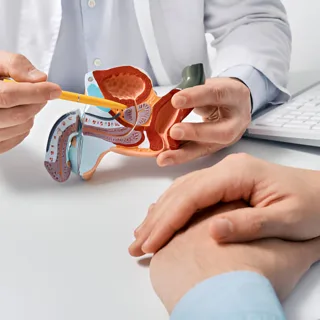
Diagnosis rests on the symptoms and on ruling out other causes such as infection, and a urologist may also use cystoscopy.[1, 2] Treatment is individualized and grouped into behavioral and non-drug measures, oral medicines, bladder instillations, procedures and, rarely, major surgery. For most people without Hunner lesions, initial treatment is non-surgical, and several approaches can be combined.[2]
Why Interstitial Cystitis calls for a whole-person approach
IC/BPS does not have one cause or one treatment. Current guidelines stress that management should be individualized and that more than one approach may be offered at the same time.[2]
That is the setting where supportive care has a place. It can address pain, stress, sleep and daily habits next to the treatment your urologist directs.
Diet and flare triggers
Many people with IC/BPS notice that particular foods or drinks bring on a flare. In a small trial of women with IC/BPS, a year-long supervised diet that limited items such as tomatoes, citrus, spices and highly acidic foods improved symptom and pain scores compared with a less intensive approach.[3] Triggers differ from person to person, so changes are best made with your treating team.
Pelvic floor muscles and chronic pelvic pain
Tight, tender pelvic floor muscles often accompany bladder pain. A systematic review of 38 trials in women with chronic pelvic pain found that multimodal physical therapy lowered pain intensity with high-certainty evidence in the short term.[5] That review is about chronic pelvic pain in general, not IC alone.
Stress and coping
Stress is thought to make IC/BPS worse, and living with chronic pain takes a toll.[4] In a small randomized trial of 20 women, an 8-week mindfulness-based stress reduction course added to usual care improved symptom problem scores and was well accepted, though it was a pilot study.[4]
Mood and mental health
Mental health matters in IC/BPS. A population study in Taiwan found that people with IC/BPS had about twice the rate of later mental disorders compared with matched people without it.[6]
Acupuncture for Interstitial Cystitis
What the research shows
Research on acupuncture for IC/BPS is limited to a handful of small studies. A systematic review of complementary therapies for bladder pain syndrome found 11 studies, only 4 of them randomized, and judged dietary management, acupuncture and physical therapy as having potential for benefit while warning that the studies were small.[7]
A randomized trial of 21 women compared electroacupuncture with minimal acupuncture over 6 weekly sessions. Worst pain improved in both groups with no difference between them. Pain interference improved more with electroacupuncture at 6 weeks, but that difference was not kept at 12 weeks, and only the electroacupuncture group had less pelvic floor tenderness. There were no adverse events.[8] A trial of 68 patients in China reported that electroacupuncture nerve stimulation gave better symptom scores than bladder instillations, but it was not a sham-controlled trial and long-term results were not known.[9] A study of 12 women with refractory IC/BPS reported good short-term response to ten sessions that faded by 6 to 12 months, and it had no control group.[10]
For broader chronic pelvic pain, a meta-analysis of 17 trials suggested acupuncture may lower pain.[11] A larger review of women's chronic pelvic pain could not rate the certainty of acupuncture's effect because the results were imprecise and not statistically significant.[5] Another study found that acupuncture or Chinese herbs did not lower the later risk of mental disorders in people with IC/BPS.[6]
How acupuncture may work
Animal research suggests that electroacupuncture can act on pain pathways. The proposed mechanisms include releasing the body's natural opioids, reducing inflammatory signaling molecules in tissue and the spinal cord, and changing neurotransmitter activity in the spinal cord and brain.[12] These findings come mostly from laboratory studies, not from people with IC/BPS, and they are proposed explanations only.
What treatment involves
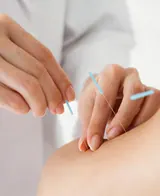
Treatment uses fine, sterile, single-use needles placed on the lower abdomen, lower back, legs and sometimes other points, usually left in place for about 20 to 40 minutes. In two small studies, the course was 6 weekly or 10 twice-weekly sessions, with pain and urinary symptoms reassessed along the way.[8, 10] Electroacupuncture adds a gentle electrical current through the needles.
In prospective studies, about 9 in 100 patients had a minor reaction such as brief bleeding or soreness at a needle site, and serious events occurred in about 1 in 10,000 patients.[13] Tell the practitioner first if you have a bleeding disorder, take blood thinners, are pregnant, or have a pacemaker (relevant to electroacupuncture).
Ayurvedic medicine for Interstitial Cystitis
The Ayurvedic view
Ayurveda has no single equivalent of IC/BPS. Burning, painful and frequent urination is traditionally grouped under Mutrakrichra, difficult or painful urination, and is usually described as involving aggravated Pitta (heat) with Vata (pain and urgency). This is a traditional framework, not a biomedical diagnosis.
Therapies that may be used
Care is individualized and traditionally includes:
- Cooling, simple foods and avoiding spicy, sour and fermented foods, which is similar to the trigger-avoidance diets that have been tested in IC/BPS[3]
- Regular meals, hydration and a steady sleep routine
- Gentle breathing, relaxation and yoga-style practices for stress
- Individually prescribed herbs that are traditionally used for the urinary tract, such as gokshura and punarnava
Panchakarma procedures are not appropriate during pregnancy, acute illness, active infection or frailty. Basti or bladder-directed procedures should never replace an examination by a urologist, and we do not perform intravesical instillations.
What the research shows
The research on Ayurveda for IC/BPS is very limited. A PubMed search found no controlled trials. A 2026 case series of two patients with Hunner ulcers described improvement after a combination of an intravesical oil instillation, purgation therapy and oral formulas, with stable results over two years.[14] Two cases cannot show that a treatment works, and instillation into the bladder is a medical procedure that we do not perform.
Herbal medicine for Interstitial Cystitis
Herbs and formulas that have been studied
Research in IC/BPS has mostly looked at laboratory and animal models. Frankincense and myrrh, a combination used in Chinese medicine, was studied in cultured bladder lining cells and in rats with chemically induced cystitis.[15] Reviews of complementary treatment for IC/BPS list nutraceuticals and traditional Chinese herbal medicine among the options people use.[16]
What the research shows
We found no clinical studies of herbal medicine for IC/BPS in people. In the frankincense and myrrh study, rats with induced cystitis voided less frequently and had better pain tolerance after treatment, but this does not show the same effect in people.[15] A review of Chinese complementary approaches states that randomized trials are needed to confirm the benefit of these therapies in people.[16]
In an online survey of nearly 2,000 people with IC, most had tried complementary approaches, and the therapies patients rated helpful included dietary management, physical therapy, relaxation and acupuncture. Perceived benefit is not proof of effect, and the authors called for placebo-controlled studies.[17]
Safety and herb-drug interactions
Herbs are active substances and can interact with medicines. A literature review found that herb-drug interactions can be serious, including with blood thinners, antidepressants and immunosuppressants.[18] Bring a full medicine list, including any pain, bladder or antidepressant drugs, so a practitioner can check for interactions.
Herbal and dietary supplements are also a known cause of liver injury, often from multi-ingredient products.[19] About one fifth of Ayurvedic medicines bought online contained detectable lead, mercury or arsenic, so herbs should come from tested sources.[20] Some herbs, such as strong diuretics or irritating spices, may also be poorly suited to a sensitive bladder. Tell us if you are pregnant or breastfeeding or have liver or kidney disease.
Translating traditional medicine into modern biological language
This section is interpretation, not equivalence. Chinese medicine often describes bladder pain with urgency as damp-heat in the lower body, or as qi and blood stagnation in the pelvis. Researchers studying acupuncture look at pain signaling in the spinal cord and brain, inflammation and the sensitivity of the nervous system.[12]
The Ayurvedic ideas of aggravated Pitta and Vata may loosely parallel the inflammation and heightened nerve sensitivity discussed in IC/BPS research. No study has shown that a dosha or a TCM pattern corresponds to a specific bladder process.
How this care fits with your medical care
Complementary care is an addition to, not a substitute for, your urologist's plan. Keep your appointments and do not stop or change prescribed medicines, instillations or procedures without your prescriber. We do not diagnose IC/BPS, so new or changing urinary symptoms should be checked by a physician.
For a condition like this, we ask that you are under a physician's care for it and that your treating team knows you are receiving complementary care. Please bring your diagnosis, any cystoscopy or urine test results, and a list of all medicines and supplements.
When to seek urgent medical care
Bladder pain with certain symptoms needs prompt medical evaluation.
- Blood in the urine
- Fever, chills or flank pain with urinary symptoms, which can signal a kidney or bladder infection
- Being unable to pass urine
- Severe or suddenly worsening pelvic pain
- Thoughts of self-harm, since chronic pain can affect mood (call or text 988)
If any of these occur, call 911 or go to the nearest emergency department.
Frequently asked questions
What is interstitial cystitis?
Interstitial cystitis, also called bladder pain syndrome (IC/BPS), is a long-lasting condition with bladder pain or pressure, a strong urge to urinate and frequent urination. Symptoms last more than 6 weeks and are not caused by infection or another clear cause. It is diagnosed by a physician after other conditions are ruled out, and treatment is individualized.
Can acupuncture help with interstitial cystitis?
It may help some people with pain, but the evidence is limited. A small randomized trial and a few other small studies reported improvements, while a larger review of women’s pelvic pain could not rate acupuncture’s effect. Acupuncture is used alongside your urologist’s care, not in place of it.
Does Ayurvedic or herbal medicine work for interstitial cystitis?
Evidence is very limited for Ayurveda and absent for herbs in people. We found no controlled trials of either in IC/BPS, only a two-patient Ayurvedic case series and laboratory or animal studies of herbs. Traditional diet advice overlaps with trigger-avoidance, but herbs can interact with medicines and affect the liver, so they should be reviewed with your physician first.
Can I stop my bladder medicine or avoid treatment if I have acupuncture?
No. Acupuncture, Ayurveda and herbal medicine are complementary care. Do not stop or change prescribed medicines, instillations or procedures without talking to your prescriber. New blood in the urine, fever or inability to urinate needs prompt medical assessment.
How soon might I notice a change with acupuncture?
It differs from person to person, and no result can be promised. In two small studies, people had 6 to 10 sessions, and in one study early benefit faded by 6 to 12 months. We reassess after a short course of visits to see whether treatment is helping.
Does insurance cover acupuncture for interstitial cystitis?
It may. Netra Integrative Health Clinic accepts most major insurance plans that include out-of-network acupuncture benefits, for example Aetna, Blue Cross Blue Shield, Cigna and UnitedHealthcare, and offers a free benefits check. HSA and FSA cards and CareCredit are also accepted. Call (908) 402-7301 to ask about your plan.
References
- Lim Y, Leslie SW, O'Rourke S. Interstitial Cystitis/Bladder Pain Syndrome. StatPearls [Internet]. 2024. PMID 34033350. StatPearls chapter on interstitial cystitis/bladder pain syndrome covering definition, symptoms, diagnosis of exclusion, inflammation and bladder lining, and impact on quality of life.
- Clemens JQ, Erickson DR, Varela NP, et al. Diagnosis and Treatment of Interstitial Cystitis/Bladder Pain Syndrome. J Urol. 2022;208(1):34-42. PMID 35536143. 2022 American Urological Association guideline and systematic review: IC/BPS is heterogeneous, treatment is individualized, initial care is non-surgical and multimodal therapy may be used.
- Oh-Oka H. Clinical Efficacy of 1-Year Intensive Systematic Dietary Manipulation as Complementary and Alternative Medicine Therapies on Female Patients With Interstitial Cystitis/Bladder Pain Syndrome. Urology. 2017;106:50-54. PMID 28435032. Trial of a year-long intensive dietary program in women with IC/BPS, reporting improved symptom, pain and quality-of-life scores.
- Kanter G, Komesu YM, Qaedan F, et al. Mindfulness-based stress reduction as a novel treatment for interstitial cystitis/bladder pain syndrome: a randomized controlled trial. Int Urogynecol J. 2016;27(11):1705-1711. PMID 27116196. Pilot randomized trial of 20 women finding 8-week mindfulness-based stress reduction improved symptom problem scores and global response compared with usual care.
- Starzec-Proserpio M, Frawley H, Bø K, et al. Effectiveness of nonpharmacological conservative therapies for chronic pelvic pain in women: a systematic review and meta-analysis. Am J Obstet Gynecol. 2025;232(1):42-71. PMID 39142363. Systematic review of 38 trials in women with chronic pelvic pain: physical therapy lowered pain with high certainty, acupuncture results were imprecise and could not be rated.
- Hung HH, Chen WC, Chen YH, et al. Evaluation of the efficacy of Chinese herbal medicine and acupuncture for the prevention of mental disorders in interstitial cystitis patients: A nationwide population-based study. Medicine (Baltimore). 2020;99(30):e21422. PMID 32791761. Taiwanese population cohort showing IC/BPS patients had higher rates of mental disorders and that acupuncture or Chinese herbs did not lower that risk.
- Verghese TS, Riordain RN, Champaneria R, et al. Complementary therapies for bladder pain syndrome: a systematic review. Int Urogynecol J. 2016;27(8):1127-36. PMID 26642800. Systematic review of 11 studies of complementary therapies for bladder pain syndrome, finding possible benefit from diet, acupuncture and physical therapy in small studies.
- Bresler L, Westbay LC, Hekman L, et al. Acupuncture for female bladder pain syndrome: a randomized controlled trial. Can J Urol. 2022;29(3):11154-11161. PMID 35691037. Randomized trial of 21 women comparing electroacupuncture with minimal acupuncture; both groups improved in worst pain, with greater improvement in pain interference and pelvic floor tenderness with electroacupuncture.
- Lv TT, Lv JW, Wang SY, et al. [Efficacy of electroacupuncture nerve stimulation therapy for interstitial cystitis/bladder pain syndrome]. Zhongguo Zhen Jiu. 2019;39(5):467-72. PMID 31099215. Randomized trial of 68 Chinese patients finding electroacupuncture nerve stimulation gave better symptom scores than bladder instillations, without a sham control.
- Sönmez MG, Kozanhan B. Complete response to acupuncture therapy in female patients with refractory interstitial cystitis/bladder pain syndrome. Ginekol Pol. 2017;88(2):61-67. PMID 28326514. Uncontrolled study of 12 women with refractory IC/BPS reporting early response to ten acupuncture sessions that mostly faded by 6 to 12 months.
- Lin KY, Chang YC, Lu WC, et al. Analgesic Efficacy of Acupuncture on Chronic Pelvic Pain: A Systemic Review and Meta-Analysis Study. Healthcare (Basel). 2023;11(6). PMID 36981487. Meta-analysis of 17 randomized trials suggesting acupuncture lowers pain in chronic pelvic pain, mostly using prostatitis and pelvic pain scores.
- Zhang R, Lao L, Ren K, et al. Mechanisms of acupuncture-electroacupuncture on persistent pain. Anesthesiology. 2014;120(2):482-503. PMID 24322588. Review of preclinical studies on how electroacupuncture relieves persistent and visceral pain through opioid, inflammatory and neurotransmitter pathways.
- Bäumler P, Zhang W, Stübinger T, et al. Acupuncture-related adverse events: systematic review and meta-analyses of prospective clinical studies. BMJ Open. 2021;11(9):e045961. PMID 34489268. Systematic review of 21 prospective studies finding minor acupuncture reactions in about 9 percent of patients and serious events in about 1 per 10,000.
- Patel K, Patel M, Bhatt C. Interstitial cystitis with Hunner's ulcers managed with Jatyadi Taila Uttarabasti - A case series. J Ayurveda Integr Med. 2026;17(4):101358. PMID 42497785. 2026 case series of two patients with Hunner ulcers reporting improvement after Ayurvedic oil instillation, purgation and oral formulas.
- Chen YH, Chen WC, Tsai KS, et al. Efficacy of Frankincense and Myrrha in Treatment of Acute Interstitial Cystitis/Painful Bladder Syndrome. Chin J Integr Med. 2020;26(7):519-526. PMID 32279153. Laboratory and rat study of frankincense and myrrh, which improved voiding interval and pain tolerance in induced cystitis.
- Pang R, Ali A. The Chinese approach to complementary and alternative medicine treatment for interstitial cystitis/bladder pain syndrome. Transl Androl Urol. 2015;4(6):653-61. PMID 26816867. Review of complementary and Chinese approaches to IC/BPS, including diet, nutraceuticals, acupuncture and Chinese herbs, noting that randomized trials are needed.
- O'Hare PG, Hoffmann AR, Allen P, et al. Interstitial cystitis patients' use and rating of complementary and alternative medicine therapies. Int Urogynecol J. 2013;24(6):977-82. PMID 23149598. Survey of about 2,000 people with IC finding most tried complementary therapies; diet, physical therapy, relaxation and acupuncture were rated helpful.
- Hu Z, Yang X, Ho PC, et al. Herb-drug interactions: a literature review. Drugs. 2005;65(9):1239-82. PMID 15916450. Literature review of herb-drug interactions with clinical significance, including with warfarin, antidepressants and immunosuppressants.
- Navarro VJ, Khan I, Björnsson E, et al. Liver injury from herbal and dietary supplements. Hepatology. 2017;65(1):363-373. PMID 27677775. Hepatology review of liver injury from herbal and dietary supplements, mostly multi-ingredient products.
- Saper RB, Phillips RS, Sehgal A, et al. Lead, mercury, and arsenic in US- and Indian-manufactured Ayurvedic medicines sold via the Internet. JAMA. 2008;300(8):915-23. PMID 18728265. JAMA study finding detectable lead, mercury or arsenic in about one fifth of Ayurvedic medicines purchased over the Internet.
This page is for general education and is not medical advice. Acupuncture, Ayurvedic medicine and herbal medicine are complementary therapies; they do not replace diagnosis or treatment by your physician. Do not stop or change prescribed treatment without talking to your prescriber. In an emergency call 911.