

















- What it is: A term for increased intestinal permeability, meaning a gut barrier that lets more through; it is established in some diseases but is not a recognized stand-alone diagnosis.
- Common symptoms: There is no specific set; people attribute bloating, gas, cramps, food sensitivity, fatigue and other symptoms to it, and these have many other possible causes.
- Conventional care: Finding and treating the underlying condition, such as celiac disease or inflammatory bowel disease, and reviewing medicines, alcohol and diet.
- How integrative care fits: Acupuncture, Ayurvedic diet and routine advice, and individually prescribed herbs are offered only as supportive care for digestive symptoms.
- Evidence at a glance: No clinical trials of acupuncture, Ayurveda or herbal medicine for leaky gut in people were found; acupuncture effects on the gut barrier have only been shown in animals.
What is Leaky Gut?
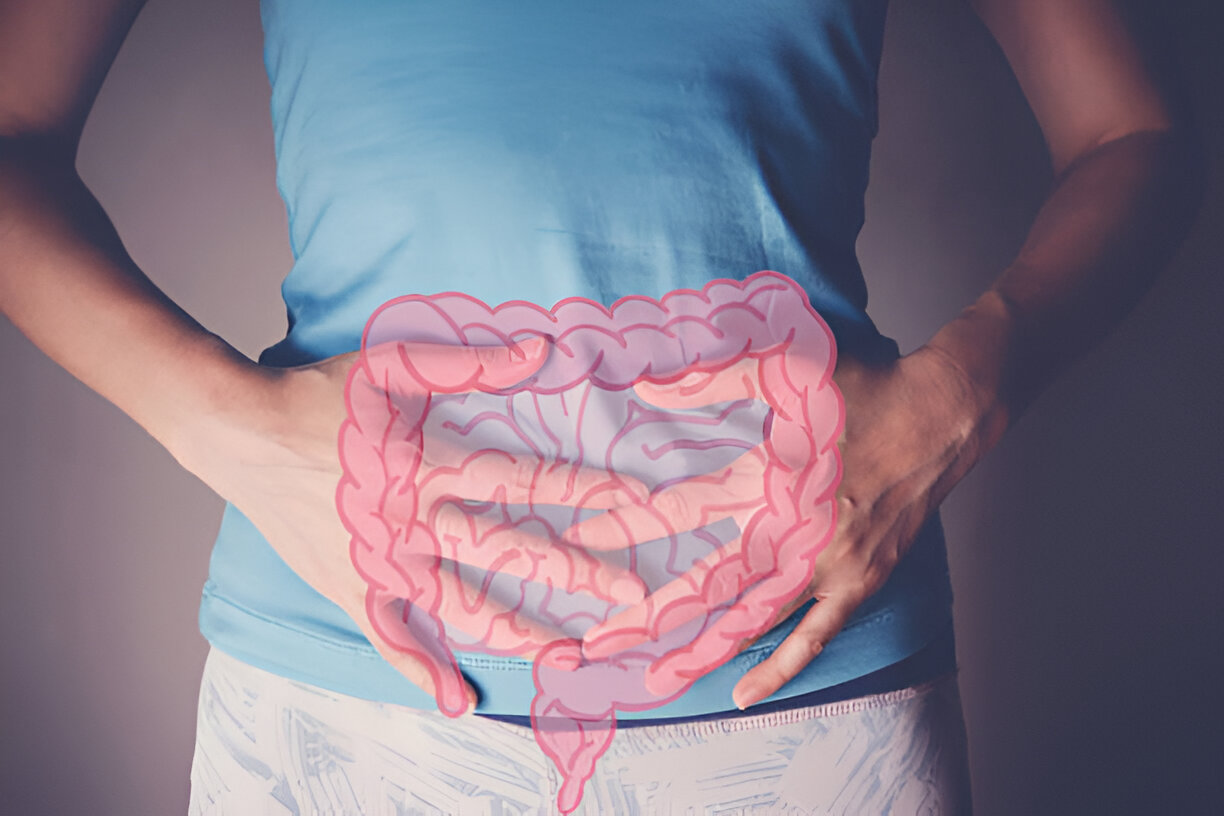
Leaky gut is a popular term for increased intestinal permeability, a gut barrier that lets more than normal pass through. The intestinal barrier has to stay open enough to absorb nutrients and fluid while keeping microbes and toxins out.[1]
Increased permeability is well documented in some diseases, such as inflammatory bowel disease and celiac disease.[1] However, it is not an established stand-alone diagnosis, and it is still unproven that restoring barrier function improves symptoms of gut or whole-body diseases.[1, 2]
Common symptoms
There is no agreed symptom pattern for leaky gut, and no single test that doctors use to diagnose it in routine care, since the clinical significance of increased permeability is not clearly established and the ways of measuring it vary widely.[1] Online sources link it to bloating, gas, cramps, food sensitivities, fatigue, brain fog and skin problems, but these symptoms have many other causes that need medical evaluation.
Causes and risk factors
Barrier disruption is described with infections, oxidative stress, a high-fat diet, alcohol, chronic allergens and an imbalance of gut bacteria (dysbiosis).[3] Non-steroidal anti-inflammatory drugs, endurance exercise, pregnancy and certain food additives such as emulsifiers can also increase permeability.[2] Inflammatory or ulcerating bowel diseases cause leakiness.[2]
How it is diagnosed and treated conventionally
Barrier function can be measured in research using swallowed probe molecules or tissue samples, but the methods vary widely, and they probably assess different parts of the barrier.[1, 2] For this reason physicians generally focus on diagnosing and treating the underlying disease rather than permeability itself.[2]
Reviews note that information in the public domain about a "leaky" gut needs confirmation before endorsing diet exclusions or supplements to repair it.[2] Dietary components can affect permeability in research settings. Alcohol and emulsifiers increase it, while fiber, short-chain fatty acids and vitamin D appear to decrease it.[4]
Why Leaky Gut calls for a whole-person approach
Intestinal permeability is influenced by diet, gut bacteria, infection, inflammation and the nervous and immune systems, so no single factor explains it.[3] The relationships are often circular. A damaged barrier can promote dysbiosis and inflammation, which can damage the barrier further.[5]
For this reason, supportive care focuses on overall digestive comfort and daily habits, alongside the work of finding and treating any underlying condition.
Because the science is still developing, claims that a particular diet, supplement or program can "fix" the gut lining go beyond what current research shows.[2] A careful, step-by-step approach with your physician is safer than a long list of supplements.
Diet
Dietary components can affect the barrier, with alcohol and emulsifiers increasing permeability.[4] A review found that probiotics improved markers of barrier function in 26 randomized trials, though the authors called for higher-quality trials.[6]
Gut bacteria and immunity
The gut microbiota helps regulate the barrier and immune activity, and dysbiosis is linked to autoimmune disease. The pathways connecting them are not fully understood.[7] Causal links between a leaky barrier and many diseases remain unclear.[5]
Medicines and other stressors
Anti-inflammatory painkillers and endurance exercise are examples of stressors that increase permeability.[2] If you take these regularly, tell your physician, who can weigh the benefits against the effect on your gut. Do not stop a prescribed medicine on your own.
Acupuncture as supportive care in Leaky Gut
What the research shows
No clinical trials of acupuncture for leaky gut or increased intestinal permeability in people were found in a PubMed search. Its benefit for this condition is therefore unknown.
Related findings come from animals. Electroacupuncture preserved the gut barrier and reduced permeability in mice with experimental colitis, and in a rat model of diarrhea-predominant IBS it was linked to improved tight junction proteins.[8, 9] Findings in animals do not show the same effect in people.
For digestive symptoms, acupuncture has been studied in irritable bowel syndrome (IBS), a different condition. In a 2025 trial in China, 280 adults with diarrhea-predominant IBS had 15 sessions of real or sham acupuncture over 6 weeks, and about 58 percent of the acupuncture group improved in belly pain and diarrhea days, compared with about 41 percent of the sham group.[10] An earlier meta-analysis of 17 trials found no benefit over credible sham acupuncture for symptom severity.[11]
How acupuncture may work
A review of acupuncture in IBS lists effects on gut movement, gut sensitivity, immune activity, neurotransmitters and the gut-brain-microbiota axis as possible mechanisms.[12] These are proposed explanations, and none have been shown for leaky gut in people.
What treatment involves
Treatment would use fine, sterile, single-use needles on the abdomen, limbs and sometimes the back, usually left in place for about 20 to 40 minutes. The IBS trial above used 15 sessions over 6 weeks.[10] We reassess after a short course of visits.
In prospective studies, about 9 in 100 patients had a minor reaction such as bleeding, soreness or redness at a needle site, and serious events occurred in about 1 in 10,000 patients.[13] Tell the practitioner first if you have a bleeding disorder, take blood thinners, are pregnant, or have a pacemaker (relevant to electroacupuncture).
Ayurvedic medicine as supportive care in Leaky Gut
The Ayurvedic view
Ayurveda does not describe leaky gut as such. Weak digestion (mandagni) and the buildup of undigested material (ama) are the traditional ideas closest to what people mean by it. These are traditional frameworks and do not correspond to a measured gut barrier.
Therapies that may be used
Care is chosen for the individual and traditionally includes:
- Regular meal times, warm cooked foods and fewer heavily processed foods
- Attention to personal food triggers
- Daily routines for sleep and stress
- Herbs prescribed individually by a qualified practitioner
Panchakarma is not appropriate during pregnancy, acute illness or frailty, or before warning symptoms have been medically assessed. It has not been shown to change gut permeability.
What the research shows
No clinical trials of Ayurvedic treatment for leaky gut were found. For digestive symptoms more broadly, a trial of 69 people with IBS found Ayurvedic nutritional therapy reduced symptom scores more than conventional nutritional therapy including a low FODMAP diet, though the authors called it exploratory.[14] That is evidence for IBS, not leaky gut.
Ayurvedic food advice overlaps with research interest in diet, since dietary components such as alcohol, emulsifiers and fiber are known to affect gut permeability in research settings.[4] That does not show that an Ayurvedic diet changes the gut barrier, and no study has measured it. Ayurvedic advice should not replace medical testing, and it should not lead to dropping whole food groups without a plan to meet your nutritional needs.
Herbal medicine as supportive care in Leaky Gut
Herbs and formulas that have been studied
No herbs have been shown in human clinical trials to treat leaky gut. Peppermint oil has been studied for IBS symptoms.[15] Glutamine, an amino acid supplement and not an herb, has also been tested for gut permeability.[16]
What the research shows
A meta-analysis of 10 IBS trials found peppermint oil beat placebo for global symptoms and abdominal pain, but rated the evidence very low quality and found more adverse events.[15] A meta-analysis of 10 trials of glutamine found it did not significantly change gut permeability overall, although a subgroup analysis at higher intakes did suggest a reduction.[16] Neither result shows that herbs help leaky gut.
Safety and herb-drug interactions
Herbs can interact with medicines, sometimes with serious results, including enhanced bleeding with blood thinners.[17, 18] Tell us about all prescribed medicines and supplements.
In one study, about one fifth of Ayurvedic products bought online contained detectable lead, mercury or arsenic.[19] Herbs should come from tested sources and be prescribed individually. Tell us if you are pregnant or breastfeeding or have liver or kidney disease.
Translating traditional medicine into modern biological language
The links drawn here are interpretation, not equivalence. Chinese medicine would describe digestive weakness with bloating as spleen deficiency with dampness. Ayurveda describes weak agni and ama. Both can loosely parallel research on the gut barrier, gut bacteria and inflammation.[3]
No study has shown that these traditional patterns correspond to intestinal permeability, and the idea that traditional therapies repair the gut lining is a hypothesis, not a finding.
How this care fits with your medical care
Our care is supportive only and does not diagnose or treat leaky gut or any bowel disease. Keep your physician or gastroenterologist involved, and do not stop or change prescribed medicines, or begin restrictive diets, without talking to them. Persistent digestive symptoms, fatigue or skin changes should be medically evaluated first to rule out celiac disease, inflammatory bowel disease and other conditions.
Please bring your diagnosis, test results, and a full list of medicines and supplements.
When to seek urgent medical care
Some digestive symptoms suggest a serious condition and need prompt evaluation.
- Blood in the stool or black stools
- Unintended weight loss
- Persistent diarrhea or severe or constant belly pain
- Fever with digestive symptoms
- Repeated vomiting or signs of dehydration
If you have severe belly pain, vomiting blood, or heavy bleeding, call 911 or go to the nearest emergency department.
Frequently asked questions
What is leaky gut?
Leaky gut is a popular term for increased intestinal permeability, meaning the gut lining lets more through than usual. Higher permeability is well documented in diseases such as inflammatory bowel disease and celiac disease. As a stand-alone diagnosis it is not established, and it is unproven that restoring barrier function relieves symptoms.
Can acupuncture help people with leaky gut?
This is unknown. No clinical trials of acupuncture for leaky gut in people were found. Animal studies suggest electroacupuncture may protect the gut barrier, but that does not prove the same in humans. Acupuncture has been studied for irritable bowel symptoms, with mixed results, and would be supportive care only.
Do Ayurvedic or herbal treatments work for leaky gut?
No human trials have tested them for leaky gut, so benefit is unknown. Ayurvedic nutrition has been studied for irritable bowel syndrome in a small exploratory trial, and peppermint oil for IBS with very low-quality evidence. Herbs can interact with medicines and should be prescribed individually.
Can I stop my medicine or start a restrictive diet to treat leaky gut?
No. Do not stop or change prescribed medicines, or cut out whole food groups, without talking to your physician or dietitian. Symptoms like these need a proper medical evaluation, since other conditions can look the same. Our care is complementary and supportive only.
What should I bring to a first visit?
Bring your diagnosis if you have one, results of any blood, stool or endoscopy tests, a list of foods that trigger symptoms, and all medicines and supplements. Tell us about any bleeding disorders, blood thinners, pregnancy or pacemaker. We work alongside your physician and do not replace medical care.
Does insurance cover acupuncture for digestive symptoms?
It may. Netra Integrative Health Clinic accepts most major insurance plans that include out-of-network acupuncture benefits, for example Aetna, Blue Cross Blue Shield, Cigna and UnitedHealthcare, and offers a free benefits check. HSA and FSA cards and CareCredit are also accepted. Call (908) 402-7301 to ask about your plan.
References
- Bischoff SC, Barbara G, Buurman W, et al. Intestinal permeability--a new target for disease prevention and therapy. BMC Gastroenterol. 2014;14:189. PMID 25407511. Review defining the intestinal barrier and permeability, their regulation by diet and bacteria, measurement problems, and associated diseases.
- Camilleri M. Leaky gut: mechanisms, measurement and clinical implications in humans. Gut. 2019;68(8):1516-1526. PMID 31076401. Gut review by Camilleri on leaky gut mechanisms, measurement and clinical implications, noting that restoring barrier function is unproven to improve disease.
- Di Vincenzo F, Del Gaudio A, Petito V, et al. Gut microbiota, intestinal permeability, and systemic inflammation: a narrative review. Intern Emerg Med. 2024;19(2):275-293. PMID 37505311. Narrative review linking gut microbiota, intestinal permeability and systemic inflammation, and listing causes of barrier disruption.
- Khoshbin K, Camilleri M. Effects of dietary components on intestinal permeability in health and disease. Am J Physiol Gastrointest Liver Physiol. 2020;319(5):G589-G608. PMID 32902315. Review of how dietary components such as alcohol, emulsifiers, fiber and vitamin D affect intestinal permeability.
- Macura B, Kiecka A, Szczepanik M. Intestinal permeability disturbances: causes, diseases and therapy. Clin Exp Med. 2024;24(1):232. PMID 39340718. Review of causes, associated diseases and therapy of increased intestinal permeability, noting that causal links to many diseases remain unclear.
- Zheng Y, Zhang Z, Tang P, et al. Probiotics fortify intestinal barrier function: a systematic review and meta-analysis of randomized trials. Front Immunol. 2023;14:1143548. PMID 37168869. Meta-analysis of 26 randomized trials finding probiotics improved markers of gut barrier function, with a call for higher-quality trials.
- Kinashi Y, Hase K. Partners in Leaky Gut Syndrome: Intestinal Dysbiosis and Autoimmunity. Front Immunol. 2021;12:673708. PMID 33968085. Review of how dysbiosis, leaky gut and autoimmune diseases may be connected, noting that pathways are not fully elucidated.
- Wang L, An J, Song S, et al. Electroacupuncture preserves intestinal barrier integrity through modulating the gut microbiota in DSS-induced chronic colitis. Life Sci. 2020;261:118473. PMID 32971101. Mouse study finding electroacupuncture preserved gut barrier integrity and lowered permeability in experimental chronic colitis.
- Hou Y, Luo F, Wang K, et al. Electroacupuncture restores intestinal mucosal barrier in IBS-D rats by modulating mast cell-derived exosomal MiR-149-5p. Front Immunol. 2025;16:1641484. PMID 41041343. Rat study finding electroacupuncture improved tight junction proteins and barrier function in an IBS-D model through mast cell pathways.
- Yang JW, Qi LY, Yan SY, et al. Efficacy of ACupuncTure in Irritable bOwel syNdrome (ACTION): A Multicenter Randomized Controlled Trial. Gastroenterology. 2025;169(5):958-969.e5. PMID 40441496. 2025 multicenter sham-controlled trial of 280 adults with IBS-D finding acupuncture gave a higher response rate than sham over 6 weeks.
- Manheimer E, Wieland LS, Cheng K, et al. Acupuncture for irritable bowel syndrome: systematic review and meta-analysis. Am J Gastroenterol. 2012;107(6):835-47; quiz 848. PMID 22488079. Meta-analysis of 17 trials finding no benefit of acupuncture over sham for IBS symptom severity but better results than drugs in non-sham trials.
- Yaklai K, Pattanakuhar S, Chattipakorn N, et al. The Role of Acupuncture on the Gut-Brain-Microbiota Axis in Irritable Bowel Syndrome. Am J Chin Med. 2021;49(2):285-314. PMID 33622207. Review of proposed mechanisms of acupuncture in IBS including gut movement, sensitivity, immune function and the gut-brain-microbiota axis.
- Bäumler P, Zhang W, Stübinger T, et al. Acupuncture-related adverse events: systematic review and meta-analyses of prospective clinical studies. BMJ Open. 2021;11(9):e045961. PMID 34489268. Systematic review of 21 prospective studies finding minor acupuncture reactions in about 9 percent of patients and serious events in about 1 per 10,000.
- Jeitler M, Wottke T, Schumann D, et al. Ayurvedic vs. Conventional Nutritional Therapy Including Low-FODMAP Diet for Patients With Irritable Bowel Syndrome-A Randomized Controlled Trial. Front Med (Lausanne). 2021;8:622029. PMID 34552937. Randomized exploratory trial of 69 patients finding Ayurvedic nutritional therapy reduced IBS symptom scores more than conventional nutritional therapy.
- Ingrosso MR, Ianiro G, Nee J, et al. Systematic review and meta-analysis: efficacy of peppermint oil in irritable bowel syndrome. Aliment Pharmacol Ther. 2022;56(6):932-941. PMID 35942669. Meta-analysis of 10 trials finding peppermint oil beat placebo for IBS symptoms, with more adverse events and very low quality evidence.
- Abbasi F, Haghighat Lari MM, Khosravi GR, et al. A systematic review and meta-analysis of clinical trials on the effects of glutamine supplementation on gut permeability in adults. Amino Acids. 2024;56(1):60. PMID 39397201. Meta-analysis of 10 trials finding glutamine supplementation did not significantly change gut permeability overall.
- Hu Z, Yang X, Ho PC, et al. Herb-drug interactions: a literature review. Drugs. 2005;65(9):1239-82. PMID 15916450. Literature review of herb-drug interactions including enhanced bleeding with warfarin and serious consequences from some combinations.
- Milić N, Milosević N, Golocorbin Kon S, et al. Warfarin interactions with medicinal herbs. Nat Prod Commun. 2014;9(8):1211-6. PMID 25233607. Review of reported interactions between warfarin and medicinal herbs, including bleeding events with several herbs.
- Saper RB, Phillips RS, Sehgal A, et al. Lead, mercury, and arsenic in US- and Indian-manufactured Ayurvedic medicines sold via the Internet. JAMA. 2008;300(8):915-23. PMID 18728265. JAMA study finding detectable lead, mercury or arsenic in about one fifth of Ayurvedic medicines purchased over the Internet.
This page is for general education and is not medical advice. Acupuncture, Ayurvedic medicine and herbal medicine are complementary therapies; they do not replace diagnosis or treatment by your physician. Do not stop or change prescribed treatment without talking to your prescriber. In an emergency call 911.