

















- What it is: Sudden one-sided facial weakness or paralysis from dysfunction of the facial nerve, with no other cause found.
- Common symptoms: A drooping face, trouble closing one eye, a dry eye, drooling, altered taste, and sometimes pain behind the ear.
- Conventional care: Prompt medical assessment, usually a corticosteroid started early, eye protection, and sometimes an antiviral or facial exercise therapy.
- How integrative care fits: Acupuncture, Ayurvedic therapies and individually prescribed herbs are used alongside medical care, after a doctor has ruled out other causes.
- Evidence at a glance: Limited for acupuncture, with many small, low-quality trials; very limited for Ayurveda (a single case report) and for herbal medicine (one observational study).
What is Bell's Palsy?
Bell's palsy is the most common cause of sudden paralysis of the facial nerve, which controls the muscles of facial expression on one side of the face.[1] It is diagnosed after other causes of facial weakness, such as stroke, infection or tumor, have been excluded.[2]
Common symptoms
Weakness on one side of the face usually appears over a day or two. Many people notice a dull ache behind the ear first, followed by a drooping face, difficulty closing the eye, drooling, and sometimes numbness or a change in taste.[1]
- Dry or watery eye on the affected side
- Trouble smiling, chewing or drinking without spilling
- Sensitivity to sound in the affected ear[1]
Causes and risk factors
The exact cause is unclear. Viral infection, inflammation, reduced blood supply to the nerve and an immune reaction have all been proposed.[2, 3] The nerve swells inside a narrow bony canal, which is thought to compress it.[2]
How it is diagnosed and treated conventionally
Diagnosis rests on history and examination, and it is a diagnosis of exclusion because 25 to 40 percent of facial palsies are not idiopathic.[4] Most people recover on their own, and recovery is more likely with timely medical care.[1]
Treatment is a corticosteroid started early, which improves the chance of full recovery. Antivirals are optional in severe cases and required if shingles virus is involved.[4] Protecting the eye with artificial tears, lid taping or a night eye shield is the most important early step when the eye does not close.[1, 4] Some people recover incompletely and develop synkinesis, in which parts of the face move together involuntarily. Physiotherapy, botulinum toxin and surgery can help.[1, 3]
Why Bell's Palsy calls for a whole-person approach
Bell's palsy is a nerve problem, but recovery involves more than the nerve itself. Inflammation, infection, the blood supply to the nerve and the way the facial muscles are used may all affect how the face feels and moves during recovery.[2, 3]
Medical care comes first and should start within days. Complementary care is then aimed at supporting function, comfort and well-being while the nerve recovers.
Inflammation and swelling of the nerve
Inflammation of the facial nerve is a leading explanation for the palsy, which is why corticosteroids are the standard treatment.[2, 4]
Infection and the immune system
Viral infection is among the proposed triggers, and shingles virus must be excluded because it needs antiviral treatment.[3, 4]
Facial muscles and movement retraining
After a palsy, facial exercise therapy tailored to the person has low-quality evidence of benefit, mostly in moderate and chronic cases.[5] A later review of newer trials agreed that exercise therapy helps early in recovery and in chronic cases, and called for standardized studies.[6]
Recovery of the brain's control of the face
Facial paralysis changes how the brain controls the face. In one small imaging study of patients with facial paralysis after cancer surgery, acupuncture was associated with changes in brain connectivity, but this does not show that it improves recovery.[7]
Acupuncture for Bell's Palsy
What the research shows
Acupuncture is widely used for Bell's palsy, but the evidence that it helps is limited because many trials were small and poorly designed. A Cochrane review of 6 trials with 537 participants judged the trial quality too poor to draw any conclusion about acupuncture.[8]
Later meta-analyses found higher response rates with acupuncture, with caveats. One pooled 14 trials (1,541 people) and found a higher response rate with acupuncture than with comparison treatments, but reported a high risk of bias and very uneven results across trials.[9] Another pooled 11 trials (1,258 people) and found better recovery and response rates than drug treatment, again warning of poor quality and inconsistency.[10] A review of 8 trials concluded that evidence was limited and too weak for firm conclusions.[11] A 2021 meta-analysis of 17 trials compared acupuncture and moxibustion in the acute and non-acute phases and found a shorter time to full recovery and fewer sequelae when treatment began in the acute phase, although the full-recovery rate was lower than in the non-acute phase. Its authors called for larger, higher-quality trials.[12]
For people left with lasting weakness, a trial of 39 people compared 8 weeks of acupuncture with a waiting list. The acupuncture group improved more on facial disability and facial nerve grading scores, with no severe adverse events. Because the control group received nothing, expectation may account for part of the difference.[13] In 60 people whose palsy had not improved after 12 months, electroacupuncture improved facial symmetry more than electrical stimulation through the skin over 6 weeks, and the difference lasted through 24 weeks of follow-up. A second scoring system showed no significant difference at 6 weeks.[14]
How acupuncture may work
How acupuncture might help facial paralysis is not established. One proposal is that it affects how the brain controls facial movement.[7] In the one imaging study above, the group receiving acupuncture showed brain changes that a comparison group receiving a "pseudo intervention" did not, but the study was small and in a different type of facial paralysis.[7] This remains a hypothesis.
What treatment involves
Treatment uses fine, sterile, single-use needles placed on the face, scalp, hands and legs, usually left in place for about 20 to 40 minutes. A course is several visits with reassessment. The trial in people with lasting weakness used treatments over 8 weeks, and the chronic electroacupuncture trial gave 18 sessions over 6 weeks.[13, 14]
Acupuncture is generally safe in trained hands. In prospective studies, about 9 in 100 patients had a minor reaction such as bleeding, pain or redness at the needle site, and serious events occurred in about 1 in 10,000 patients.[15] Tell the practitioner first if you have a bleeding disorder, take blood thinners, are pregnant, or have a pacemaker (relevant to electroacupuncture). Acupuncture should not delay seeing a physician or starting prescribed treatment.
Ayurvedic medicine for Bell's Palsy
The Ayurvedic view
Ayurveda describes a condition called Ardita, one of the Vata disorders, as the closest match to Bell's palsy.[16] In this traditional framework Vata is the principle said to govern movement and nerve function. This is a traditional category, not a biomedical diagnosis.
Therapies that may be used
Care is chosen for the individual and traditionally combines:
- Diet and daily routine intended to calm Vata, such as warm, regular meals and steady sleep hours
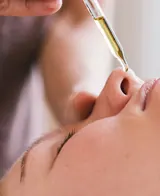
- Gentle warm oil massage of the head, neck and face, and nasal oil application (nasya)
- Herbal preparations chosen by a qualified practitioner
- Panchakarma procedures, only where traditionally appropriate and medically sensible
Panchakarma is not appropriate during pregnancy, acute illness or frailty. Because Bell's palsy usually begins as an acute illness, such procedures would only be considered after medical assessment and when you are stable.
What the research shows
The research on Ayurveda for Bell's palsy is very limited. A PubMed search found no clinical trials and no systematic reviews, only a single case report. It described one man treated in hospital in India for 14 days with a package that included therapeutic vomiting, oral medicines, nasal oil and physiotherapy, who recovered fully.[16] One case cannot show that the treatment caused the recovery, because most people with Bell's palsy improve on their own.[1]
Herbal medicine for Bell's Palsy
Herbs and formulas that have been studied
No trial of a specific herb or formula for Bell's palsy was found. Chinese herbal medicine is traditionally combined with acupuncture in some East Asian clinics. A Korean hospital program describes using acupuncture and herbal medicine, with moxibustion and cupping, alongside corticosteroids.[17]
What the research shows
The evidence for herbal medicine for Bell's palsy is very limited. In a Taiwanese database study of 238 patients, those who used Chinese herbal medicine and acupuncture had a lower risk of later stroke than those who did not. The authors warned that the retrospective design and database limits restrict what can be concluded.[18] Observational data like this cannot show that the treatment lowered the risk.
Safety and herb-drug interactions
Herbs are active substances and can interact with medicines. Case reports describe bleeding when warfarin was combined with herbs including dang gui (Angelica sinensis), dan shen (Salvia miltiorrhiza), ginger, ginseng and Boswellia.[19] People taking blood thinners need a practitioner's review before using herbs.
In one study, about one fifth of Ayurvedic products bought online contained detectable lead, mercury or arsenic.[20] Herbs should come from tested sources and be prescribed individually. Tell us if you are pregnant or breastfeeding, have liver or kidney disease, or take prescription medicines such as the steroids commonly used for Bell's palsy.
Translating traditional medicine into modern biological language
The links drawn here are interpretation, not equivalence. Chinese medicine often describes facial paralysis as wind and cold invading the channels of the face and blocking the flow of qi and blood. Researchers study things that loosely parallel this picture: nerve inflammation and swelling, reduced local blood supply, and how the brain controls facial muscles.[2, 7]
Ayurveda's aggravated Vata describes loss of normal movement in one side of the face.[16] No study has shown that a dosha or a pattern corresponds to a specific biological process.
How this care fits with your medical care
Integrative care for Bell's palsy is complementary. See a physician promptly, since corticosteroid treatment is recommended early, and follow your eye-care instructions.[1, 4] Do not stop or change prescribed medicines without your prescriber. We do not diagnose the cause of facial weakness.
Facial exercise therapy from a trained therapist has some supporting evidence, though mostly of low quality, and acupuncture can be used alongside it.[5, 6] Please bring your diagnosis, a list of all medicines and supplements, any test results, and notes from your eye doctor or physical therapist.
When to seek urgent medical care
Facial weakness can be a sign of stroke or another serious condition, so it needs prompt evaluation.[1]
- Facial weakness together with arm or leg weakness, trouble speaking, confusion or sudden severe headache
- Weakness that does not involve the forehead, or that began suddenly with other neurological symptoms
- A painful rash in or around the ear, or hearing loss or vertigo with facial weakness (possible shingles virus infection)[4]
- An eye that will not close, or eye pain, redness or blurred vision
- Facial weakness after head injury or with fever or a tick bite
- Weakness that is getting worse after several weeks or has not begun to improve after a few months (contact your physician promptly)
For any of the other signs above, call 911 or go to the nearest emergency department.
Frequently asked questions
What is Bell’s palsy?
Bell’s palsy is a sudden weakness or paralysis of the muscles on one side of the face from dysfunction of the facial nerve. It usually causes a drooping face and trouble closing the eye, and often comes after a day or two of ear pain. It is diagnosed once other causes are excluded. Most people recover, especially with timely medical care.
Can acupuncture help with Bell’s palsy?
It may, but the evidence is limited. Several meta-analyses found better response rates with acupuncture, but the trials were small, varied and often of poor quality, and a Cochrane review found the evidence too weak to conclude. Acupuncture is used alongside medical care, never in place of it or in place of early steroid treatment.
Does Ayurvedic or herbal medicine work for Bell’s palsy?
There is very little evidence. A search found one Ayurvedic case report and one observational study of Chinese herbal medicine with acupuncture, and neither can show the treatment works. Herbs can interact with medicines such as blood thinners, so they should be prescribed individually and reviewed with your physician.
Can I skip steroids or other treatment if I have acupuncture?
No. Complementary care does not replace medical treatment. Corticosteroids are recommended early, so see a physician as soon as facial weakness appears, and do not stop or change prescribed medicines without your prescriber. Eye protection is also important if your eye does not close.
How soon might I notice a change?
It differs from person to person and no result can be promised. Many people with Bell’s palsy improve on their own over weeks to months. In the trials, acupuncture courses ran from 6 to 8 weeks, and we reassess after a short course of visits to see whether treatment is helping.
Does insurance cover acupuncture for Bell’s palsy?
It may. Netra Integrative Health Clinic accepts most major insurance plans that include out-of-network acupuncture benefits, for example Aetna, Blue Cross Blue Shield, Cigna and UnitedHealthcare, and offers a free benefits check. HSA and FSA cards and CareCredit are also accepted. Call (908) 402-7301 to ask about your plan.
References
- Hohman MH, Warner MJ, Varacallo MA. Bell Palsy. StatPearls [Internet]. 2024. PMID 29493915. StatPearls chapter on Bell palsy covering presentation, the usually good recovery, steroid and eye-protection management, and synkinesis in incomplete recovery.
- Zhang W, Xu L, Luo T, et al. The etiology of Bell's palsy: a review. J Neurol. 2020;267(7):1896-1905. PMID 30923934. Review of the etiology and diagnosis of Bell's palsy, covering viral infection, ischemia, inflammation and cold exposure as proposed causes.
- Eviston TJ, Croxson GR, Kennedy PG, et al. Bell's palsy: aetiology, clinical features and multidisciplinary care. J Neurol Neurosurg Psychiatry. 2015;86(12):1356-61. PMID 25857657. Review of Bell's palsy covering proposed causes, steroid-based acute treatment, and multidisciplinary care for lasting sequelae.
- Heckmann JG, Urban PP, Pitz S, et al. The Diagnosis and Treatment of Idiopathic Facial Paresis (Bell's Palsy). Dtsch Arztebl Int. 2019;116(41):692-702. PMID 31709978. German guideline-based review of idiopathic facial paresis: corticosteroid treatment, antivirals in severe or shingles cases, eye care, and the need to exclude non-idiopathic causes.
- Teixeira LJ, Valbuza JS, Prado GF. Physical therapy for Bell's palsy (idiopathic facial paralysis). Cochrane Database Syst Rev. 2011;2011(12):CD006283. PMID 22161401. Cochrane review of physical therapy for Bell's palsy finding no high-quality evidence, low-quality support for facial exercises, and unusable acupuncture data.
- Khan AJ, Szczepura A, Palmer S, et al. Physical therapy for facial nerve paralysis (Bell's palsy): An updated and extended systematic review of the evidence for facial exercise therapy. Clin Rehabil. 2022;36(11):1424-1449. PMID 35787015. Systematic review of facial exercise therapy for facial palsy that supported benefit early in recovery and in chronic cases.
- Yu LQ, Ma H, Cao LY, et al. Noninvasive Evaluation of Acupuncture-Induced Cortical Plasticity in Advanced Rehabilitation of Facial Paralysis. J Craniofac Surg. 2024;35(7):2015-2020. PMID 39178417. Imaging study of 55 patients with facial paralysis after cancer surgery reporting acupuncture-related changes in brain connectivity and white matter.
- Chen N, Zhou M, He L, et al. Acupuncture for Bell's palsy. Cochrane Database Syst Rev. 2010;2010(8):CD002914. PMID 20687071. Cochrane review of 6 acupuncture trials (537 participants) that found trial quality too poor to allow any conclusion.
- Li P, Qiu T, Qin C. Efficacy of Acupuncture for Bell's Palsy: A Systematic Review and Meta-Analysis of Randomized Controlled Trials. PLoS One. 2015;10(5):e0121880. PMID 25974022. Meta-analysis of 14 trials (1,541 people) finding higher response rates with acupuncture but high bias risk and heterogeneity.
- Zhang R, Wu T, Wang R, et al. Compare the efficacy of acupuncture with drugs in the treatment of Bell's palsy: A systematic review and meta-analysis of RCTs. Medicine (Baltimore). 2019;98(19):e15566. PMID 31083225. Meta-analysis of 11 trials (1,258 people) finding better recovery and response rates with acupuncture than drugs, with poor quality and heterogeneity.
- Kim JI, Lee MS, Choi TY, et al. Acupuncture for Bell's palsy: a systematic review and meta-analysis. Chin J Integr Med. 2012;18(1):48-55. PMID 21994030. Meta-analysis of 8 trials finding favorable response rates for acupuncture but concluding that the evidence is limited by number and quality.
- Zou Z. Comparison of Efficacy and Safety of Acupuncture and Moxibustion in Acute Phase and Non-acute Phase of Bell's Palsy: a meta-analysis. Neuro Endocrinol Lett. 2021;42(7):438-445. PMID 34847316. Meta-analysis of 17 trials (2,644 patients) comparing acupuncture and moxibustion in acute and non-acute Bell's palsy, calling for higher-quality trials.
- Kwon HJ, Choi JY, Lee MS, et al. Acupuncture for the sequelae of Bell's palsy: a randomized controlled trial. Trials. 2015;16:246. PMID 26037730. Trial of 39 people with sequelae of Bell's palsy finding better facial scores with 8 weeks of acupuncture than waiting list, with no severe adverse events.
- Li T, Wang S, Yin X, et al. Electroacupuncture with intermittent wave stimulation as rehabilitation approach for chronic Bell's palsy: a randomized controlled trial. Postgrad Med J. 2024;100(1181):151-158. PMID 38134327. Trial of 60 people with chronic Bell's palsy finding electroacupuncture improved facial symmetry more than electrical skin stimulation, lasting through follow-up.
- Bäumler P, Zhang W, Stübinger T, et al. Acupuncture-related adverse events: systematic review and meta-analyses of prospective clinical studies. BMJ Open. 2021;11(9):e045961. PMID 34489268. Systematic review of 21 prospective studies finding minor acupuncture reactions in about 9 percent of patients and serious events in about 1 per 10,000.
- S I, Vijayan R, Sukeshan S. Sadyovamana - An effective therapy in the management of Bell's palsy - A case report. J Ayurveda Integr Med. 2022;13(4):100634. PMID 36403502. Single case report from India of Ardita (Bell's palsy) treated with a Panchakarma-based package and described as fully recovered.
- Lee SM, Lee S, Park JH, et al. A close look at an integrative treatment package for Bell's palsy in Korea. Complement Ther Clin Pract. 2017;26:76-83. PMID 28107855. Overview of an integrative Korean medicine treatment package for Bell's palsy combining steroids, acupuncture, herbal medicine, cupping and moxibustion.
- Ton G, Liao HY, Chiang JH, et al. Chinese Herbal Medicine and Acupuncture Reduced the Risk of Stroke After Bell's Palsy: A Population-Based Retrospective Cohort Study. J Altern Complement Med. 2019;25(9):946-956. PMID 31328958. Taiwanese retrospective cohort of 238 patients with Bell's palsy finding lower stroke risk in users of Chinese herbal medicine and acupuncture, limited by design.
- Milić N, Milosević N, Golocorbin Kon S, et al. Warfarin interactions with medicinal herbs. Nat Prod Commun. 2014;9(8):1211-6. PMID 25233607. Review of reported interactions between warfarin and medicinal herbs, including bleeding events with dang gui, dan shen, ginger, ginseng and Boswellia.
- Saper RB, Phillips RS, Sehgal A, et al. Lead, mercury, and arsenic in US- and Indian-manufactured Ayurvedic medicines sold via the Internet. JAMA. 2008;300(8):915-23. PMID 18728265. JAMA study finding detectable lead, mercury or arsenic in about one fifth of Ayurvedic medicines purchased over the Internet.
This page is for general education and is not medical advice. Acupuncture, Ayurvedic medicine and herbal medicine are complementary therapies; they do not replace diagnosis or treatment by your physician. Do not stop or change prescribed treatment without talking to your prescriber. In an emergency call 911.