


















- What it is: Paroxysmal, stabbing pain along the greater, lesser or third occipital nerve at the back of the head, usually on one side.
- Common symptoms: Brief electric-shock or stabbing pain from the neck base up the scalp, often with numbness or a tender scalp.
- Conventional care: Physical therapy, pain and nerve-pain medicines, occipital nerve blocks, and procedures such as pulsed radiofrequency or nerve stimulation for stubborn cases.
- How integrative care fits: Acupuncture, Ayurvedic therapies and individually prescribed herbs are used alongside medical care to help with pain and muscle tension.
- Evidence at a glance: Limited for acupuncture, from two meta-analyses whose authors called for larger, more rigorous trials; none found for Ayurveda or herbal medicine in this condition.
What is Occipital Neuralgia?
Occipital neuralgia is a painful condition of the back of the head, caused by a problem in one of the occipital nerves. It is paroxysmal, meaning pain comes in attacks lasting seconds to minutes, and it is often described as lancinating, or stabbing.[1] It can be hard to tell apart from other headaches, so a physician's diagnosis matters.[2]
Common symptoms
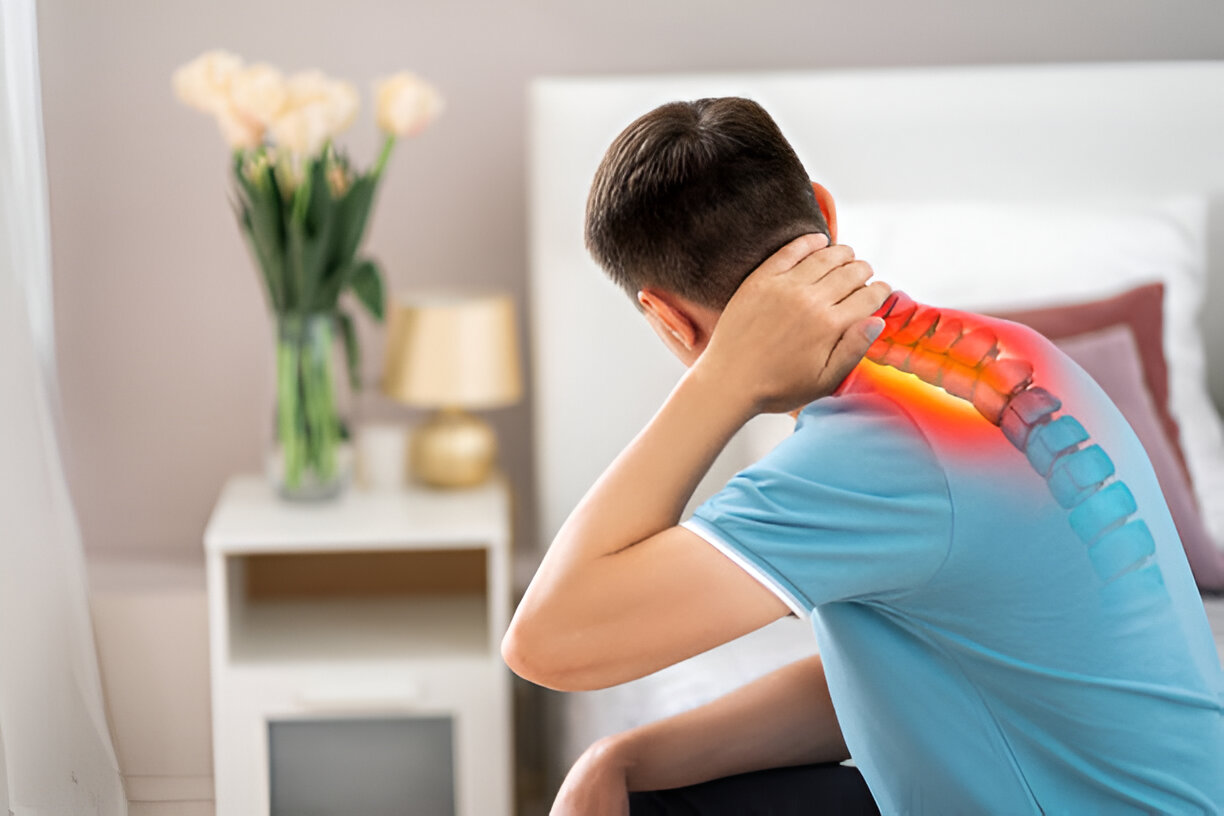
The typical symptom is severe, stabbing pain at the back of the head, usually on one side. A pooled analysis of 579 patients found the pain was unilateral in 81%, stabbing in 59% and severe in 54%, and about three quarters also had reduced sensation in the area.[3]
Some people also have a tender scalp or a dull ache between attacks. Many people also have a history of migraine.[3]
Causes and risk factors
Occipital neuralgia results from irritation or injury of the greater, lesser or third occipital nerve.[1] The same pooled analysis found it most often affects women in their fifties, that about 30% of patients had a history of neck trauma, and that a history of migraine was common. The authors noted that the studies varied widely and that no population-based studies exist.[3]
Occipital neuralgia and cervicogenic headache, which arises from structures in the upper neck, overlap in how they present.[4] It can also follow head injury.[5]
How it is diagnosed and treated conventionally
Diagnosis rests on the headache history and an examination of the neck and tender points, using criteria from the International Headache Society.[4] A nerve block with local anesthetic can help confirm the diagnosis, although blocks also relieve migraine, so a result needs careful reading.[6]
Treatment often starts with physical therapy and preventive medicines such as antiepileptic drugs or tricyclic antidepressants.[6] Occipital nerve blocks are the usual first minimally invasive step, though relief may be short. Pulsed radiofrequency, botulinum toxin injection and occipital nerve stimulation are options for people who do not improve, and surgery is a last resort.[2, 4]
Why Occipital Neuralgia calls for a whole-person approach
Occipital neuralgia is a nerve problem, but several other factors can shape how severe it feels. Reviews describe overlap with migraine, cervicogenic headache and tension in the neck muscles, and they describe care aimed at posture and muscle tension alongside nerve-directed treatment.[2, 4]
Because causes differ from person to person, care is most useful when it looks at the whole picture rather than the painful spot alone.
Neck muscles and posture
Non-pharmacological care for occipital neuralgia aims to ease muscle tension and improve posture.[2] Physical therapy that reduces secondary muscle tension in the neck is part of conservative treatment.[4]
Previous neck or head injury
Neck trauma was reported in about 30% of patients with occipital neuralgia in one pooled analysis.[3] After a head injury, occipital neuralgia is one of several headache types that can develop, along with migraine-like and tension-type headache.[5]
Migraine and other headache disorders
A history of migraine is common in people with occipital neuralgia.[3] Nerve blocks can also help migraine, which is one reason misdiagnosis happens.[6] A careful diagnosis separates these conditions, and treatment can differ.
Nerve sensitization
Pain that continues can lead to central sensitization, an amplification of pain signaling in the spinal cord and brain.[7] This is a general feature of long-lasting nerve pain and has not been specifically measured in occipital neuralgia.
Mood and stress
Anxiety and depression are listed as risk factors for headache after head injury.[5] In a trial of occipital neuralgia, anxiety and depression scores fell along with pain after treatment, although that study tested a combination of therapies.[8]
Acupuncture for Occipital Neuralgia
What the research shows
Acupuncture may reduce occipital neuralgia pain, but the evidence is limited. Two meta-analyses have looked at it. One pooled 11 randomized trials and found lower pain scores and higher effective rates with acupuncture than with control treatment, mostly medication. The authors called their results inconclusive and asked for larger, more rigorous trials. None of the studies reported severe adverse effects.[9] The other pooled 15 studies, found a similar direction of benefit with fewer adverse events than medication, and also asked for further studies.[10]
The individual trials described here are small, and all three were published in Chinese journals. In one trial of 84 patients, acupuncture plus acupoint injection had a higher effective rate than the antiepileptic drug carbamazepine.[11] In a trial of 62 patients, electroacupuncture, neural mobilization of the neck, and the two combined all lowered pain, with the combination working best.[12] In 90 patients, adding scraping and bleeding therapy to electroacupuncture lowered pain further than electroacupuncture alone.[8]
For nerve pain in general, a Cochrane review found too little high-quality evidence to support or refute acupuncture.[13] A review of occipital neuralgia describes acupuncture as showing some promise.[2] A network meta-analysis of 42 trials in tension-type headache, a related condition, found electroacupuncture among the most effective acupuncture-type approaches, but that is a different condition.[14]
How acupuncture may work
Researchers propose that acupuncture strengthens the body's own pain-dampening pathways. A review describes segmental inhibition, activation of opioid and other chemical pathways, and lower local inflammatory mediators, and suggests this may ease central sensitization.[7] These are proposed mechanisms from laboratory and clinical research, and they have not been confirmed in occipital neuralgia itself.
What treatment involves
Treatment uses fine, sterile, single-use needles placed at points on the neck, back of the head, shoulders and sometimes the hands or feet, often left in for about 20 to 40 minutes. Trials of electroacupuncture used points such as Fengchi and Tianzhu, sessions of about 30 minutes, and treatment three times a week for three weeks or daily for two weeks.[8, 12] We reassess after a short course of visits.
Serious problems are rare. In prospective studies, about 9 in 100 patients had a minor reaction such as brief bleeding, soreness or redness at a needle site, and serious events occurred in about 1 in 10,000.[15] Tell the practitioner first if you have a bleeding disorder, take blood thinners, are pregnant, or have a pacemaker (relevant to electroacupuncture).
Ayurvedic medicine for Occipital Neuralgia
The Ayurvedic view
Ayurveda has no classical diagnosis that matches occipital neuralgia exactly. Sharp, shooting, intermittent pain and neck stiffness are traditionally viewed as signs of aggravated Vata, the principle said to govern movement and the nervous system. This is a traditional framework used to choose treatment, not a biomedical diagnosis.
Therapies that may be used
Care is chosen for the individual and traditionally combines:
- Diet and daily routine intended to calm Vata, such as warm, regular meals and steady sleep hours
- Gentle warm oil massage of the neck and shoulders, or oil applied to the scalp
- Herbs prescribed individually by a qualified practitioner, covered in the herbal section below
- Stress-reduction practices such as gentle breathing exercises
Panchakarma procedures are not appropriate during pregnancy, acute illness or frailty, or before red-flag symptoms have been medically assessed. Reviews of occipital neuralgia describe easing neck muscle tension and improving posture as aims of non-drug care, which is the purpose of the massage and routine above, though these Ayurvedic methods were not themselves tested.[2]
Ayurvedic products need care in sourcing: about one fifth of Ayurvedic medicines bought online contained detectable lead, mercury or arsenic.[16]
What the research shows
There are no clinical trials of Ayurvedic medicine or Panchakarma for occipital neuralgia. A PubMed search for occipital neuralgia with Ayurveda, Panchakarma, curcumin and ashwagandha found no studies. Any benefit is therefore unknown. We offer these therapies for general comfort and relaxation, not as a treatment shown to work for this condition.
Herbal medicine for Occipital Neuralgia
Herbs and formulas that have been studied
No herbal formula has been tested in trials for occipital neuralgia that we could find. The nearest research covers headache in general. Chuanxiong Chadiao Powder, a classic Chinese prescription, has been studied for headache, and Chinese herbal medicines have been pooled in reviews of headache trials.[17, 18]
Transdermal medication therapy, in which herbal preparations are applied to the skin, may also be discussed, but we know of no trial of it for occipital neuralgia.
What the research shows
The evidence for occipital neuralgia is none; evidence for headache in general is limited. A meta-analysis of 30 higher-quality trials (3,447 participants, all in Asia) found Chinese herbal medicines reduced headache frequency and intensity more than placebo, but the authors urged caution because the trials differed so much.[18] A review of 37 studies of Chuanxiong Chadiao Powder found better results than conventional medicine or placebo for headache frequency and duration, but called the study quality generally poor, with only one high-quality trial.[17] These trials did not specifically study occipital neuralgia, so the findings may not apply to it.
Safety and herb-drug interactions
Herbs are active substances and can interact with medicines. A review of reported interactions describes bleeding when warfarin was combined with herbs such as danshen, and increased bleeding with ginkgo and aspirin.[19] Case reports also link warfarin with dang gui, ginger, ginseng and Boswellia.[20]
Many people with occipital neuralgia take antiepileptic drugs or tricyclic antidepressants, so tell us about every medicine you use. St John's wort in particular lowered the blood levels of several drugs and caused serotonin syndrome when combined with SSRI antidepressants.[19] In one study, about one fifth of Ayurvedic products bought online contained detectable lead, mercury or arsenic.[16] Herbs should come from tested sources and be prescribed individually. Tell us if you are pregnant or breastfeeding, or have liver or kidney disease.
Translating traditional medicine into modern biological language
The links drawn here are interpretation, not equivalence. Chinese medicine often describes this kind of pain as blocked flow of qi and blood in the channels of the neck and head, sometimes with wind or cold lodged in the neck. Researchers who study acupuncture for pain measure things that loosely parallel this picture: local muscle tension, inflammatory mediators and the amplification of pain signals in the spinal cord and brain.[7]
Ayurveda's aggravated Vata describes sharp, shooting, intermittent pain. No study has shown that a dosha corresponds to a specific biological process.
How this care fits with your medical care
Integrative care for occipital neuralgia is complementary. Keep your physician, neurologist or pain specialist, and do not stop or change prescribed medicines or planned nerve blocks without your prescriber. We do not diagnose the cause of head pain, so new or changing headaches should be evaluated by a physician first.
Please bring your diagnosis, any imaging reports, a full list of medicines and supplements, and details of any nerve blocks, injections or surgery, planned or past.
When to seek urgent medical care
Some headaches point to a serious cause that needs prompt evaluation, and occipital neuralgia can only be diagnosed after other causes are excluded.[2]
- A sudden, severe headache that is the worst of your life
- Headache with fever, stiff neck, confusion or a rash
- New weakness, numbness on one side of the body, trouble speaking, or loss of vision or double vision
- Headache after a fall, blow to the head or neck injury
- Headache with scalp tenderness or jaw pain on chewing, especially after age 50
- A headache pattern that is new, rapidly worsening or different from your usual pain
If any of these occur, call 911 or go to the nearest emergency department.
Frequently asked questions
What is occipital neuralgia?
Occipital neuralgia is a painful condition affecting the back of the head. It comes from irritation of one of the occipital nerves and causes attacks of stabbing or electric-shock pain lasting seconds to minutes, usually on one side. It is often mistaken for migraine or cervicogenic headache, so diagnosis by a physician matters.
Can acupuncture help with occipital neuralgia?
It may help. Two meta-analyses found lower pain scores with acupuncture than with control treatment, usually medication. One review called its results inconclusive and both asked for better trials. Acupuncture is used alongside medical care, not in place of it, and results vary.
Does Ayurvedic or herbal medicine work for occipital neuralgia?
Nobody knows. We found no clinical trials of Ayurvedic medicine or herbal medicine in occipital neuralgia. Chinese herbal formulas have been studied for headache in general, with limited and variable-quality evidence. Any herb would be prescribed individually and checked against your medicines first.
Can I stop my medicine or skip a nerve block if I have acupuncture?
No. Acupuncture, Ayurveda and herbal medicine are complementary care. Do not stop or change prescribed medicines, and follow your physician’s advice about nerve blocks or other procedures. If your headaches change or you have any warning symptoms, you need prompt medical assessment.
How soon might I notice a change with acupuncture?
It differs from person to person and no result can be promised. The trials of electroacupuncture used treatment from daily for two weeks to three times a week for three weeks. We reassess after a short course of visits to see whether treatment is helping.
Does insurance cover acupuncture for occipital neuralgia?
It may. Netra Integrative Health Clinic accepts most major insurance plans that include out-of-network acupuncture benefits, for example Aetna, Blue Cross Blue Shield, Cigna and UnitedHealthcare, and offers a free benefits check. HSA and FSA cards and CareCredit are also accepted. Call (908) 402-7301 to ask about your plan.
References
- Djavaherian DM, Guthmiller KB. Occipital Neuralgia. StatPearls [Internet]. 2023. PMID 30855865. StatPearls chapter on occipital neuralgia covering the nerves involved, the paroxysmal stabbing pain, differential diagnosis and treatment options.
- Pan W, Peng J, Elmofty D. Occipital Neuralgia. Curr Pain Headache Rep. 2021;25(9):61. PMID 34287719. Review of occipital neuralgia covering anatomy, diagnosis and management, noting that acupuncture shows some promise and that nerve blocks give short-term relief.
- Melchior AG, Al-Khazali S, Christensen RH, et al. Epidemiology and clinical features of occipital neuralgia: A systematic review and meta-analysis. Cephalalgia. 2025;45(2):3331024251317595. PMID 40017062. Systematic review and meta-analysis of 15 clinic-based studies (579 patients) describing who gets occipital neuralgia and its typical features, with links to migraine and neck trauma.
- Lefel N, van Suijlekom H, Cohen SPC, et al. 11. Cervicogenic headache and occipital neuralgia. Pain Pract. 2025;25(1):e13405. PMID 39219023. 2025 review of cervicogenic headache and occipital neuralgia covering diagnosis, conservative care, nerve blocks, pulsed radiofrequency and nerve stimulation.
- Mavroudis I, Ciobica A, Luca AC, et al. Post-Traumatic Headache: A Review of Prevalence, Clinical Features, Risk Factors, and Treatment Strategies. J Clin Med. 2023;12(13). PMID 37445267. Review of post-traumatic headache after mild head injury, listing its types including occipital neuralgia, risk factors and treatment strategies.
- Dougherty C. Occipital neuralgia. Curr Pain Headache Rep. 2014;18(5):411. PMID 24737457. Review of occipital neuralgia describing diagnosis with nerve blocks, the risk of misdiagnosis with migraine, and treatment with physical therapy, medicines and procedures.
- Lai HC, Lin YW, Hsieh CL. Acupuncture-Analgesia-Mediated Alleviation of Central Sensitization. Evid Based Complement Alternat Med. 2019;2019:6173412. PMID 30984277. Review of how acupuncture analgesia may work, including descending pain inhibition, opioid pathways and reduced local inflammatory mediators, possibly easing central sensitization.
- Lei T, Shi Y, Li Y, et al. [Guasha-fangsha therapy combined with electroacupuncture in treatment of greater occipital neuralgia: a randomized controlled trial]. Zhongguo Zhen Jiu. 2024;44(8):889-93. PMID 39111786. Randomized trial of 90 patients finding scraping and bleeding therapy added to electroacupuncture lowered pain, anxiety and depression scores more than electroacupuncture alone.
- Yun JM, Lee SH, Cho JH, et al. The effects of acupuncture on occipital neuralgia: a systematic review and meta-analysis. BMC Complement Med Ther. 2020;20(1):171. PMID 32493452. Meta-analysis of 11 randomized trials finding lower pain scores with acupuncture than controls in occipital neuralgia, with inconclusive results and no severe adverse events reported.
- Zheng H, Li C, Hu J, et al. Effects of acupuncture in the treatment of occipital neuralgia: A systematic review and meta-analysis. Medicine (Baltimore). 2022;101(48):e31891. PMID 36482655. Meta-analysis of 15 studies finding acupuncture improved effective rate and pain scores compared with control, with fewer adverse events than medication.
- Pan C, Tan G. Forty-two cases of greater occipital neuralgia treated by acupuncture plus acupoint-injection. J Tradit Chin Med. 2008;28(3):175-7. PMID 19004197. Randomized trial of 84 patients with greater occipital neuralgia finding acupuncture plus acupoint injection had a higher effective rate than carbamazepine.
- Wang Y, Guo ZN, Yang Z, et al. [Treatment of Occipital Neuralgia by Electroacupuncture Combined with Neural Mobilization]. Zhen Ci Yan Jiu. 2018;43(3):185-8. PMID 29560635. Randomized trial of 62 patients finding electroacupuncture, neural mobilization and their combination all lowered pain, with the combination working best.
- Ju ZY, Wang K, Cui HS, et al. Acupuncture for neuropathic pain in adults. Cochrane Database Syst Rev. 2017;12(12):CD012057. PMID 29197180. Cochrane review of acupuncture for chronic neuropathic pain finding too little high-quality evidence to support or refute its use.
- Wang Y, Lu W, Wang Y, et al. Efficacy of different acupuncture-related therapies for tension-type headache: a systematic review and network meta-analysis. Front Neurol. 2024;15:1481715. PMID 39703352. Network meta-analysis of 42 trials of acupuncture-related therapies for tension-type headache, finding electroacupuncture among the most effective for headache frequency and duration.
- Bäumler P, Zhang W, Stübinger T, et al. Acupuncture-related adverse events: systematic review and meta-analyses of prospective clinical studies. BMJ Open. 2021;11(9):e045961. PMID 34489268. Systematic review of 21 prospective studies finding minor acupuncture reactions in about 9 percent of patients and serious events in about 1 per 10,000.
- Saper RB, Phillips RS, Sehgal A, et al. Lead, mercury, and arsenic in US- and Indian-manufactured Ayurvedic medicines sold via the Internet. JAMA. 2008;300(8):915-23. PMID 18728265. JAMA study finding detectable lead, mercury or arsenic in about one fifth of Ayurvedic medicines purchased over the Internet.
- Li JH, Cao XP, Wei JJ, et al. Chuanxiong chadiao powder, a famous Chinese herbal prescription, for headache: A systematic review and meta-analysis. Complement Ther Med. 2015;23(4):577-90. PMID 26275651. Meta-analysis of 37 studies of Chuanxiong Chadiao Powder for headache finding benefit but generally poor study quality.
- Shi YH, Wang Y, Fu H, et al. Chinese herbal medicine for headache: A systematic review and meta-analysis of high-quality randomized controlled trials. Phytomedicine. 2019;57:315-330. PMID 30807986. Meta-analysis of 30 higher-quality trials in Asia finding Chinese herbal medicines reduced headache frequency and intensity more than placebo, with caution about heterogeneity.
- Hu Z, Yang X, Ho PC, et al. Herb-drug interactions: a literature review. Drugs. 2005;65(9):1239-82. PMID 15916450. Literature review of herb-drug interactions, including bleeding with warfarin, ginkgo and aspirin, and serotonin syndrome with St John's wort and SSRIs.
- Milić N, Milosević N, Golocorbin Kon S, et al. Warfarin interactions with medicinal herbs. Nat Prod Commun. 2014;9(8):1211-6. PMID 25233607. Review of reported interactions between warfarin and medicinal herbs, including bleeding events with dang gui, ginger, ginseng and Boswellia.
This page is for general education and is not medical advice. Acupuncture, Ayurvedic medicine and herbal medicine are complementary therapies; they do not replace diagnosis or treatment by your physician. Do not stop or change prescribed treatment without talking to your prescriber. In an emergency call 911.