

















- What it is: A non-cancerous growth of prostate tissue that squeezes the urethra and can obstruct urine flow.
- Common symptoms: Weak stream, hesitancy, frequent urination, urgency, getting up at night to urinate, and a feeling the bladder has not emptied.
- Conventional care: Watchful waiting and lifestyle changes, medicines such as alpha-blockers and 5-alpha-reductase inhibitors, and surgery or minimally invasive procedures when needed.
- How integrative care fits: Acupuncture, Ayurvedic therapies and individually prescribed herbs are used alongside medical care, mainly aiming at urinary symptoms and quality of life.
- Evidence at a glance: Limited for acupuncture, with small sham-controlled trials suggesting short-term symptom benefit; very limited for Ayurveda; limited and mixed for herbal medicine, where the widely used herb saw palmetto was no better than placebo in a Cochrane review.
What is Enlarged Prostate?
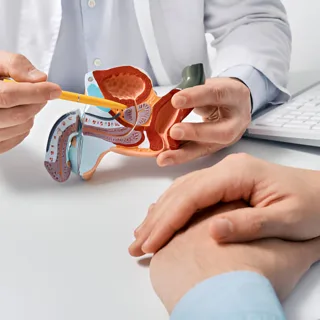
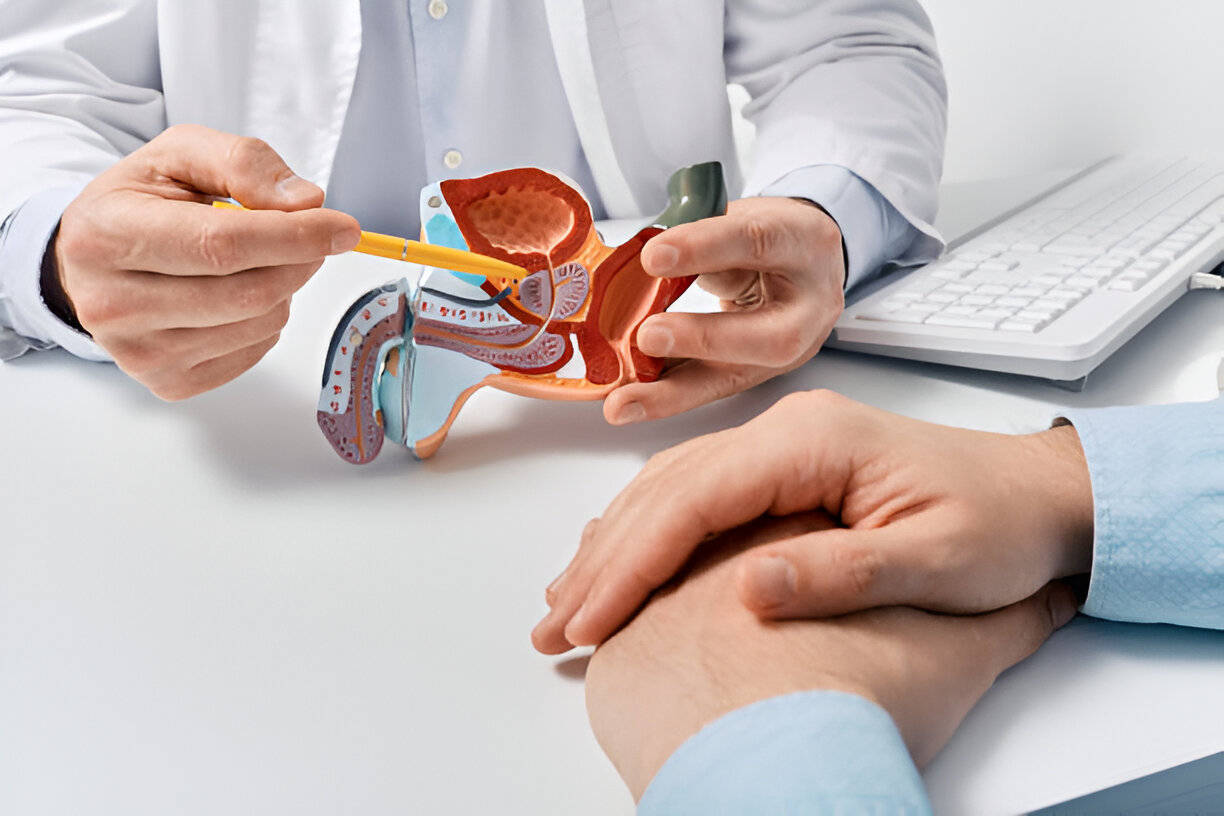
An enlarged prostate, medically called benign prostatic hyperplasia (BPH), is a non-cancerous growth of prostate tissue that is a common cause of lower urinary tract symptoms in older men.[1] The growth occurs in the part of the prostate that surrounds the urethra, so it can squeeze the urethra and block the flow of urine from the bladder.[1]
Common symptoms
BPH typically shows up as urinary symptoms rather than pain. These are grouped under the term lower urinary tract symptoms.[1]
- A weak or slow urine stream and difficulty starting
- Needing to urinate often, urgently, or more than once a night
- A feeling that the bladder is not completely empty
- In more advanced cases, inability to urinate (urinary retention) or repeated urinary infections[1]
Causes and risk factors
BPH develops from overgrowth of both gland and supporting tissue cells in the prostate, and its frequency rises with age. Autopsy studies find BPH tissue changes in 50% to 60% of men in their 60s and in 80% to 90% of men over 70.[1] Genetics, where a man lives and obesity also influence the risk.[1]
Researchers also point to long-lasting inflammation in the prostate as a contributor, along with hormonal changes and low oxygen in the tissue.[2]
How it is diagnosed and treated conventionally
Diagnosis rests on your symptoms and a physical examination, and treatment depends on how much the symptoms bother you and on objective findings.[3] Treatment ranges from watchful waiting to medicines and surgery.[1] Medicines in common use include alpha-blockers, 5-alpha-reductase inhibitors and tadalafil, and procedures are an option when medicines are not enough or complications develop.[2, 4]
Symptoms that overlap with BPH can also come from other conditions, including infection and prostate cancer, which is why a physician needs to evaluate new urinary symptoms. Untreated BPH can in time lead to chronic high-pressure urinary retention and lasting changes in the bladder muscle.[1]
Why Enlarged Prostate calls for a whole-person approach
BPH is not only a matter of gland size. Symptoms depend on pressure on the urethra, on bladder function, and on inflammation and other factors that vary from man to man.[2, 3]
Care that addresses these other factors can sit alongside medical treatment aimed at the prostate itself.
Inflammation in the prostate
Long-lasting prostate inflammation appears to play a central role in how BPH develops and progresses. Men with chronic inflammation often have more severe symptoms and may respond less well to standard medicines.[2]
Hormones and aging
The prostate is hormone-dependent, and BPH is closely tied to age.[1, 5] Medicines that block hormonal pathways are one standard treatment because of this.[2]
Diet, weight and activity
A systematic review found that moderate exercise and the type and amount of protein eaten influence BPH symptoms, and that zinc and vitamin D intake may also play a part.[5] Obesity is a recognized risk factor.[1]
Acupuncture for Enlarged Prostate
What the research shows
Small trials suggest acupuncture may ease urinary symptoms for a short time, but the evidence is limited. A 2017 meta-analysis of 8 trials with 661 men found that, in three trials against sham acupuncture, symptom scores improved more with real acupuncture at 4 to 6 weeks. No significant difference remained at 12 to 18 weeks, and the authors said the clinical importance of the changes was uncertain.[6]
A trial of 100 men with moderate to severe BPH compared electroacupuncture at a traditional acupuncture point with electroacupuncture at a non-acupoint. Symptom scores fell about 4 points more with acupoint treatment at 6 weeks, and about 3 points more at 18 weeks. Urine flow rate and residual urine did not differ between groups.[7]
A 2024 meta-analysis of 9 trials (1,045 men) found electroacupuncture improved symptom scores, urine flow and residual urine more than control treatments, with no difference in adverse events.[8] Results varied widely between trials, so this finding is less certain than the sham-controlled data. In a pilot trial of 28 men already taking an alpha-blocker, adding electroacupuncture and electronic moxibustion lowered symptom scores more than the alpha-blocker alone.[9] The trial was small and the authors called for larger studies.
How acupuncture may work
How acupuncture might affect BPH symptoms is not established. The trials above measured symptoms, not mechanisms. One trial reported a better result at an acupuncture point than at a non-acupoint, which does not show how the effect arises.[7] Prostate volume did not differ significantly between electroacupuncture and control groups in the pooled data.[8]
What treatment involves
Treatment uses fine, sterile, single-use needles, often placed on the lower back, lower abdomen, legs and sometimes with a mild electrical current attached, with sessions lasting about 20 to 40 minutes. Trials have used about 3 sessions a week for 6 weeks.[9] We reassess after a short course of visits.
Serious problems from acupuncture are rare. In prospective studies, about 9 in 100 patients had a minor reaction such as bleeding, soreness or redness at a needle site, and serious events occurred in about 1 in 10,000 patients.[10] Tell the practitioner first if you have a bleeding disorder, take blood thinners, or have a pacemaker (relevant to electroacupuncture).
Ayurvedic medicine for Enlarged Prostate
The Ayurvedic view
Ayurveda describes urinary obstruction in older men as Mootraghata, and some authors compare it with BPH.[11] In this traditional framework it is linked with disturbed Vata and Kapha in the urinary channels. These are traditional categories, not biomedical diagnoses.
Therapies that may be used
Care is chosen for the individual and traditionally combines:
- Diet and daily routine, including regular meals, adequate fluids earlier in the day and moderate activity
- Herbs such as gokshura (Tribulus terrestris) and guggulu-based formulas, which small clinical studies in Mootraghata have tested[11, 12]
- Medicated ghee preparations given as a small oil enema (Matra Basti), which the same studies tested[11, 12]
Basti and other Panchakarma procedures are not appropriate during acute illness, in frailty, or before urinary retention, blood in the urine or other red-flag symptoms have been medically assessed.
What the research shows
Research on Ayurveda for BPH is very limited. The studies found were small Indian trials of 30 to 32 patients, with groups of 10, treated for 21 days, and none had a placebo or untreated group. They reported symptom improvement with herbal compounds, Matra Basti, or both, and one reported a reduction in prostate size in the combined group.[11, 12] Because groups were so small and uncontrolled, these studies cannot show that the treatment caused the improvement.
Herbal medicine for Enlarged Prostate
Herbs and formulas that have been studied
Herbs studied for BPH include saw palmetto (Serenoa repens), Chinese herbal formulas, and curcumin from turmeric.[13, 14, 15] Some reviews also list pygeum extract and cernilton among plant products used for BPH symptoms.[5]
What the research shows
The evidence is mixed and for most herbs it is limited. A Cochrane review of 17 trials of saw palmetto alone found it no better than placebo for urinary symptoms or urine flow, even at double and triple doses.[13] A systematic review of Chinese herbal medicine for BPH included 31 trials. Herbal treatment looked better than Western medication for quality of life and prostate size, but the authors judged the evidence too weak to support efficacy because the trials were small and of poor quality.[14]
A 2026 meta-analysis of 6 studies (697 men) on curcumin in men already taking BPH medicines found larger symptom score improvements than with placebo. The authors noted large differences between studies and called for bigger trials.[15] An earlier review of turmeric or curcumin in prostate disease, mostly prostate cancer, found some favorable effects but mixed results.[16]
Safety and herb-drug interactions
Herbs are active substances and can interact with medicines. Case reports describe bleeding or other serious effects when warfarin was combined with several herbs, including saw palmetto, dang gui, dan shen, ginger and Boswellia.[17] A review of saw palmetto safety found its adverse events were mild and similar to placebo, but noted that reporting quality was low.[18]
People taking blood thinners, alpha-blockers or other blood-pressure medicines, or diabetes medicines need a practitioner's review before using herbs. Herbs and supplements can also affect prostate-specific antigen (PSA) blood tests, so tell your urologist what you take. In one study, about one fifth of Ayurvedic products bought online contained detectable lead, mercury or arsenic.[19] Herbs should come from tested sources and be prescribed individually. Tell us if you have liver or kidney disease or have surgery planned.
Translating traditional medicine into modern biological language
The links drawn here are interpretation, not equivalence. Chinese medicine often describes urinary difficulty in older men as weakness of kidney qi and a blocked flow of fluids and blood in the lower body. Researchers studying BPH measure things that loosely parallel this picture: prostate inflammation, hormonal signaling, and bladder and urethral muscle function.[2]
Ayurveda's disturbed Vata and Kapha in the urinary channels describes obstructed, dribbling flow.[11] No study has shown that a dosha corresponds to a specific biological process.
How this care fits with your medical care
Integrative care for BPH is complementary. Keep your urologist or physician, and do not stop or change prescribed medicines without talking to your prescriber. We do not diagnose the cause of urinary symptoms, so new or worsening symptoms should be medically evaluated first.
Please bring your diagnosis, recent PSA and other test results, a full list of medicines and supplements, and details of any procedure or surgery, planned or past.
When to seek urgent medical care
Some urinary symptoms point to a blocked bladder, infection or another serious problem.[1]
- Being unable to urinate at all, or painful swelling in the lower abdomen
- Blood in the urine
- Fever or chills with burning on urination or pain in the back or side
- Pain in the lower abdomen with a very weak or stopped stream
- Unexplained weight loss, bone pain or new back pain along with urinary symptoms
If any of these occur, call 911 or go to the nearest emergency department.
Frequently asked questions
What is an enlarged prostate?
An enlarged prostate, or benign prostatic hyperplasia (BPH), is a non-cancerous growth of the prostate gland. Because the prostate surrounds the urethra, growth can slow the urine stream and cause frequent or urgent urination, night-time urination and incomplete emptying. It becomes more common with age and is a leading cause of urinary symptoms in older men.
Can acupuncture help with an enlarged prostate?
It may help urinary symptoms for a time. Sham-controlled trials suggest short-term symptom improvement, but benefit was not clear at 12 to 18 weeks in pooled data, and trials were small. Pooled data showed no significant change in prostate volume. It is used alongside your urologist’s care, not in place of it.
Does Ayurvedic or herbal medicine work for an enlarged prostate?
The evidence is thin. Ayurvedic treatment has only been tested in very small studies without placebo groups. Saw palmetto was no better than placebo in a Cochrane review, Chinese herbal medicine trials were of poor quality, and curcumin shows promise but needs larger trials. Herbs can interact with medicines, so they should be prescribed individually.
Can I stop my prostate medicine if I have acupuncture or take herbs?
No. Acupuncture, Ayurveda and herbal medicine are complementary care. Do not stop or change alpha-blockers, 5-alpha-reductase inhibitors or other prescribed medicines without talking to your prescriber, and follow your urologist’s advice about procedures or surgery. Sudden inability to urinate needs emergency care.
How soon might I notice a change with acupuncture?
It differs from person to person and no result can be promised. In trials, men had treatment for about 6 weeks, and symptom score changes were measured at that point. We reassess after a short course of visits to see whether treatment is helping.
Does insurance cover acupuncture for an enlarged prostate?
It may. Netra Integrative Health Clinic accepts most major insurance plans that include out-of-network acupuncture benefits, for example Aetna, Blue Cross Blue Shield, Cigna and UnitedHealthcare, and offers a free benefits check. HSA and FSA cards and CareCredit are also accepted. Call (908) 402-7301 to ask about your plan.
References
- Ng M, Leslie SW, Baradhi KM. Benign Prostatic Hyperplasia. StatPearls [Internet]. 2024. PMID 32644346. StatPearls chapter on benign prostatic hyperplasia covering definition, age-related prevalence, anatomy, symptoms, complications, risk factors and the range of treatment from watchful waiting to surgery.
- Inamura S, Terada N. Chronic inflammation in benign prostatic hyperplasia: Pathophysiology and treatment options. Int J Urol. 2024;31(9):968-974. PMID 38934050. 2024 review of chronic prostatic inflammation in BPH, covering mechanisms, hormonal and other contributors, standard drug therapies and inflammation-targeted options.
- Infante Hernández S, Gómez Rivas J, Moreno Sierra J. Benign prostatic hyperplasia. Med Clin (Barc). 2024;163(8):407-414. PMID 39013719. 2024 review of BPH describing it as an enlargement causing urinary obstruction and symptoms, with diagnosis and treatment guided by quality of life and objective findings.
- Lerner LB, McVary KT, Barry MJ, et al. Management of Lower Urinary Tract Symptoms Attributed to Benign Prostatic Hyperplasia: AUA GUIDELINE PART I-Initial Work-up and Medical Management. J Urol. 2021;206(4):806-817. PMID 34384237. American Urological Association guideline on initial work-up and medical management of lower urinary tract symptoms attributed to BPH.
- Das K, Buchholz N. Benign prostate hyperplasia and nutrition. Clin Nutr ESPEN. 2019;33:5-11. PMID 31451276. Systematic review of lifestyle, diet and supplements in BPH, finding moderate exercise, protein intake, zinc, vitamin D and some plant extracts linked to symptom benefit.
- Zhang W, Ma L, Bauer BA, et al. Acupuncture for benign prostatic hyperplasia: A systematic review and meta-analysis. PLoS One. 2017;12(4):e0174586. PMID 28376120. Meta-analysis of 8 trials (661 men) of acupuncture for BPH, finding short-term symptom improvement versus sham but none at 12 to 18 weeks, with uncertain clinical importance.
- Wang Y, Liu B, Yu J, et al. Electroacupuncture for moderate and severe benign prostatic hyperplasia: a randomized controlled trial. PLoS One. 2013;8(4):e59449. PMID 23593139. Randomized trial of 100 men comparing electroacupuncture at an acupoint with a non-acupoint, finding greater symptom score improvement at 6 and 18 weeks but no difference in urine flow or residual urine.
- Chen R, Huang H, Zhan S, et al. Efficacy and safety of electroacupuncture for benign prostatic hyperplasia: A systematic review and meta-analysis. Medicine (Baltimore). 2024;103(8):e37324. PMID 38394501. 2024 meta-analysis of 9 trials (1,045 men) finding electroacupuncture improved symptom scores, urine flow and residual urine with high heterogeneity, and no significant difference in adverse events or prostate volume.
- Kim HB, Han CH, Jeon JH, et al. Effectiveness and safety of electroacupuncture and its cotreatment with electronic moxibustion in the treatment of patients with moderate benign prostatic hyperplasia using alpha blocker: An assessor-blinded, randomized, controlled pilot study. Medicine (Baltimore). 2022;101(36):e30386. PMID 36086755. Pilot randomized trial of 28 men finding that adding electroacupuncture and electronic moxibustion to an alpha-blocker lowered symptom scores more than the alpha-blocker alone.
- Bäumler P, Zhang W, Stübinger T, et al. Acupuncture-related adverse events: systematic review and meta-analyses of prospective clinical studies. BMJ Open. 2021;11(9):e045961. PMID 34489268. Systematic review of 21 prospective studies finding minor acupuncture reactions in about 9 percent of patients and serious events in about 1 per 10,000.
- Patel JK, Dudhamal TS, Gupta SK, et al. Efficacy of Kanchanara Guggulu and Matra Basti of Dhanyaka Gokshura Ghrita in Mootraghata (benign prostatic hyperplasia). Ayu. 2015;36(2):138-44. PMID 27011713. Small trial of 30 men with Mootraghata (BPH) given a guggulu formula, medicated ghee Matra Basti, or both for 21 days, with no placebo group.
- Bhalodia SG, Bhuyan C, Gupta SK, et al. Gokshuradi Vati and Dhanyaka-Gokshura Ghrita Matra Basti in the management of Benign Prostatic Hyperplasia. Ayu. 2012;33(4):547-51. PMID 23723674. Small trial of 30 men with Mootraghata given Gokshuradi Vati, medicated ghee Matra Basti, or both for 21 days, reporting symptom improvement and reduced prostate size in the combined group.
- MacDonald R, Tacklind JW, Rutks I, et al. Serenoa repens monotherapy for benign prostatic hyperplasia (BPH): an updated Cochrane systematic review. BJU Int. 2012;109(12):1756-61. PMID 22551330. Cochrane review of 17 trials of saw palmetto alone for BPH finding it no better than placebo for urinary symptoms or flow, with mild adverse events.
- Ma CH, Lin WL, Lui SL, et al. Efficacy and safety of Chinese herbal medicine for benign prostatic hyperplasia: systematic review of randomized controlled trials. Asian J Androl. 2013;15(4):471-82. PMID 23728585. Systematic review of 31 trials of Chinese herbal medicine for BPH, concluding evidence was too weak because of small trials and poor methodology.
- Santana DS, Porto BC, Cardoso RB, et al. Curcumin versus placebo in benign prostatic hyperplasia: a systematic review and meta-analysis. Eur J Clin Pharmacol. 2026;82(7). PMID 42247029. 2026 meta-analysis of 6 studies (697 men) of curcumin versus placebo in BPH patients on standard drugs, finding symptom improvement with substantial heterogeneity.
- Bagherniya M, Askari G, Alikiaii B, et al. Curcumin for the Treatment of Prostate Diseases: A Systematic Review of Controlled Clinical Trials. Adv Exp Med Biol. 2021;1291:345-362. PMID 34331700. Systematic review of controlled trials of curcumin or turmeric in prostate diseases, with mixed results and a call for further trials.
- Milić N, Milosević N, Golocorbin Kon S, et al. Warfarin interactions with medicinal herbs. Nat Prod Commun. 2014;9(8):1211-6. PMID 25233607. Review of reported interactions between warfarin and medicinal herbs, with case reports of bleeding or other serious events including with saw palmetto, dang gui, dan shen, ginger and Boswellia.
- Agbabiaka TB, Pittler MH, Wider B, et al. Serenoa repens (saw palmetto): a systematic review of adverse events. Drug Saf. 2009;32(8):637-47. PMID 19591529. Systematic review of saw palmetto adverse events finding them mild and similar to placebo, with no interactions reported but low-quality reporting.
- Saper RB, Phillips RS, Sehgal A, et al. Lead, mercury, and arsenic in US- and Indian-manufactured Ayurvedic medicines sold via the Internet. JAMA. 2008;300(8):915-23. PMID 18728265. JAMA study finding detectable lead, mercury or arsenic in about one fifth of Ayurvedic medicines purchased over the Internet.
This page is for general education and is not medical advice. Acupuncture, Ayurvedic medicine and herbal medicine are complementary therapies; they do not replace diagnosis or treatment by your physician. Do not stop or change prescribed treatment without talking to your prescriber. In an emergency call 911.