















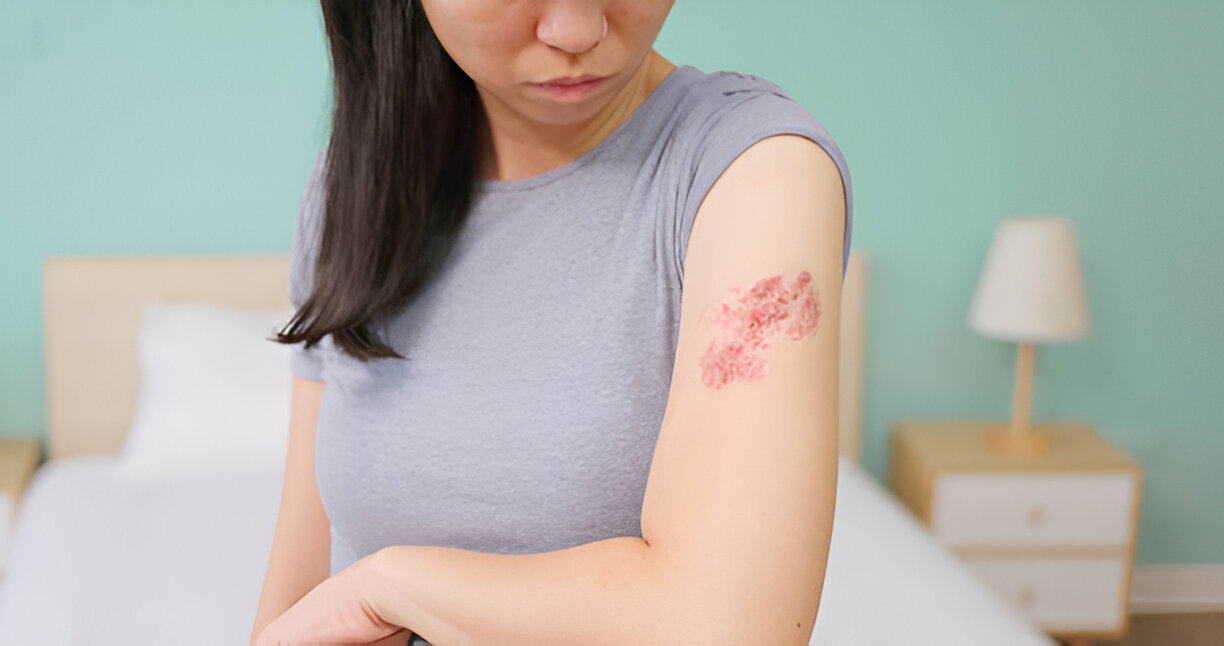
- What it is: Nerve pain lasting 3 months or longer after shingles, felt in the same band of skin where the rash appeared.
- Common symptoms: Burning, stabbing or electric-shock pain on one side of the body or face, with skin so sensitive that light touch or clothing can hurt.
- Conventional care: Nerve-pain medicines such as gabapentin, pregabalin or tricyclic antidepressants, lidocaine or capsaicin applied to the skin, and procedures for stubborn pain.
- How integrative care fits: Acupuncture and individually prescribed herbs are used alongside medical care to help with pain, sleep and mood.
- Evidence at a glance: Moderate for acupuncture, including one large sham-controlled trial with a modest effect; limited for herbal medicine; none found for Ayurveda in this condition.
What is Postherpetic Neuralgia?
Postherpetic neuralgia is nerve pain that lasts for 3 months or more after an episode of shingles (herpes zoster). It is the most common long-term complication of shingles, which is caused by reactivation of the varicella-zoster virus, the same virus that causes chickenpox.[1] It occurs in about one in five people who have shingles.[2]
Common symptoms
The hallmark is lancinating (stabbing) or burning pain in one band of skin on one side of the body, in the area of the earlier rash.[1] Many people also notice that light touch or clothing on the area hurts, and some have itching or numbness. Poor sleep and low mood often come with the pain.[3]
Causes and risk factors
Postherpetic neuralgia can only follow shingles, and the two strongest risk factors for shingles are increasing age and a weakened immune system, so older adults and people with immunosuppression are most often affected.[1] Damage to the nerve from the virus, inflammation, and sensitization of the spinal cord and brain all appear to play a part, although the exact mechanism is not fully understood.[4]
How it is diagnosed and treated conventionally
Diagnosis is made by a physician from the history of shingles and the persistent pain in the same area.[1, 2] Shingles itself is treated with antiviral medicines, ideally started within 72 hours of the rash. The shingles vaccine lowers the risk of shingles.[2]
Once postherpetic neuralgia is established, treatment focuses on controlling symptoms. First-line options include topical lidocaine or capsaicin and oral gabapentin, pregabalin or tricyclic antidepressants.[2, 5] Combination treatment often works better than one treatment alone, and nerve blocks or other interventional procedures are considered when pain is stubborn.[5] Many cases are hard to treat, which is why care is usually multimodal.[1]
Why Postherpetic Neuralgia calls for a whole-person approach
Postherpetic neuralgia involves more than the damaged nerve. Reviews describe nerve injury, inflammation and sensitization of the central nervous system working together, and treatment guidelines favor combining approaches.[4, 5]
Pain that lasts for months also affects sleep, mood and daily function, which can in turn make pain harder to bear.
Nerve injury and inflammation
The virus injures sensory nerves and triggers inflammation around them, and this nerve damage is thought to start the pain.[4]
Central sensitization
Long-lasting nerve pain can lead to central sensitization, in which the spinal cord and brain amplify pain signals, so that even light touch can hurt.[4, 6]
Sleep and mood
Sleep and mood problems often come with long-lasting nerve pain, and acupuncture studies in postherpetic neuralgia measure sleep and depression scores alongside pain.[3, 7]
Age and general health
Older age and a weakened immune system raise the risk of shingles and therefore of postherpetic neuralgia.[1] Because this is a condition of older adults, other illnesses and medicines need to be taken into account when any complementary therapy is chosen.
Acupuncture for Postherpetic Neuralgia
What the research shows
Research suggests acupuncture may reduce postherpetic neuralgia pain, though the effect in the best trial was modest. A 2026 multicenter trial in 7 Chinese hospitals randomized 448 adults to 20 sessions of real or sham electroacupuncture over 4 weeks. Pain scores fell by an average of 1.52 points on a 0 to 10 scale with real electroacupuncture and 0.99 with sham, and 47% of the real group had at least a 30% pain reduction compared with 24% of the sham group. The benefit lasted through the 1-month follow-up.[8]
Meta-analyses point the same way but rest on weaker studies. A review of 7 trials found acupuncture lowered pain scores more than medicine in the 2 trials that could be pooled, but all were done in China and of low quality, so the authors called the results inconclusive.[9] A network meta-analysis of 29 trials (1,973 patients) found that acupuncture-related treatments eased pain more than antiepileptic drugs, and electroacupuncture combined with antiepileptic drugs ranked best for sleep and depression scores, though the authors urged caution.[3] An overview of 7 systematic reviews concluded that acupuncture seems effective but rated the methodological quality of most reviews as low or critically low.[10] A review of 13 trials of moxibustion, a warming therapy using burning herb near the skin, found better pain scores than controls but called the studies too weak for firm conclusions.[11]
Results are not all positive. A small 1983 trial of 62 patients found no difference between acupuncture and placebo stimulation.[12] A systematic review of 67 trials of neuropathic pain treatments, including postherpetic neuralgia, rated acupuncture evidence as very low quality and found no clear benefit, whereas anticonvulsants and SNRI antidepressants had moderate-certainty evidence of benefit.[13]
How acupuncture may work
Researchers propose that acupuncture strengthens the body's own pain-dampening pathways and may ease central sensitization, along with lowering local inflammatory mediators.[6] These are proposed mechanisms from general pain research, and they have not been confirmed in postherpetic neuralgia itself.
What treatment involves
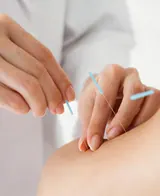
Treatment uses fine, sterile, single-use needles placed at points on the body and sometimes around the painful area, often with mild electrical stimulation, usually left in for about 20 to 40 minutes. The large trial gave 20 sessions over 4 weeks.[8] We reassess after a short course of visits.
Serious problems are rare. In prospective studies, about 9 in 100 patients had a minor reaction such as brief bleeding, soreness or redness at a needle site, and serious events occurred in about 1 in 10,000.[14] Needling is not done through active shingles blisters. Tell the practitioner first if you have a bleeding disorder, take blood thinners, are pregnant, or have a pacemaker (relevant to electroacupuncture). Because the skin in the painful area may be very sensitive, we adjust the technique to what you can tolerate.
Ayurvedic medicine for Postherpetic Neuralgia
The Ayurvedic view
Ayurveda has no classical name that matches postherpetic neuralgia exactly. Shingles is traditionally linked to Pitta, the principle said to govern heat and inflammation, and the long-lasting burning, shooting pain after it is viewed as aggravated Vata, the principle said to govern movement and the nervous system. These are traditional categories, not biomedical diagnoses.
Therapies that may be used
Care is chosen for the individual and traditionally combines:
- Diet and daily routine intended to calm Vata and cool Pitta, such as regular meals, steady sleep hours and avoiding very spicy foods
- Gentle oil massage near, but not directly over, hypersensitive skin, if tolerated
- Breathing practices as a general support for stress and sleep
- Herbs prescribed individually by a qualified practitioner, as covered in the herbal section
Panchakarma procedures are not appropriate during pregnancy, acute illness or frailty, and strong procedures are not appropriate for older or medically fragile people.
What the research shows
There are no clinical trials of Ayurvedic medicine or Panchakarma for postherpetic neuralgia. A PubMed search for postherpetic neuralgia and shingles with Ayurveda, Panchakarma, turmeric, ashwagandha and Boswellia found only a few case reports of shingles treated with Ayurvedic methods. Case reports cannot show that a treatment works, so any benefit is unknown.
Because nerve pain of this kind is hard to treat and usually needs combined care, an Ayurvedic approach here is limited to general comfort and stress support alongside your medical treatment.[5] About one fifth of Ayurvedic medicines bought online contained detectable lead, mercury or arsenic, so sourcing matters.[15]
Herbal medicine for Postherpetic Neuralgia
Herbs and formulas that have been studied
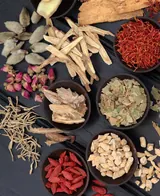
Most research on herbs for this condition is Chinese medicine, with trials of herbal formulas taken by mouth, herbal preparations applied to the skin, and combined treatments. An evidence map found 976 randomized trials of Chinese medicine in postherpetic neuralgia, most with 51 to 100 patients, and the most common traditional pattern treated was qi stagnation with blood stasis.[16] Acupoint herbal patching, in which herbal preparations are applied to the skin over acupuncture points, has been studied in 15 trials.[7] Transdermal medication therapy at our clinic is a related approach, though we make no claim of benefit beyond this research. Liu Shen Wan, a commercial Chinese herbal preparation, has been studied for shingles and postherpetic neuralgia.[17]
What the research shows
The evidence is limited and of low quality. The evidence map found that Chinese medicine shows potential benefit but that study design was often weak and outcomes inconsistent.[16] A meta-analysis of 15 studies (1,362 participants) of acupoint herbal patching found better pain, sleep and depression scores than control, but only 2 studies reported adverse reactions, and the abstract does not rate study quality.[7] A meta-analysis of 21 trials found that adding Liu Shen Wan to usual care shortened pain duration and lowered the rate of postherpetic neuralgia, and the authors said the study quality needs further investigation.[17]
For herbs in neuropathic pain generally, a Cochrane review of double-blind trials found only two small studies (nutmeg spray and St John's wort), with insufficient evidence to say either helps.[18]
Safety and herb-drug interactions
Herbs are active substances and can interact with medicines. A review of reported interactions describes serotonin syndrome when St John's wort was combined with SSRI antidepressants, and bleeding when warfarin was combined with danshen or ginkgo.[19]
Many people with postherpetic neuralgia take gabapentin, pregabalin or antidepressants, so tell us about every medicine you use. Herbs should come from tested sources and be prescribed individually. Tell us if you are pregnant or breastfeeding, have liver or kidney disease, or take immunosuppressant medicines. Herbal preparations applied to the skin should not be used on broken skin or open shingles blisters.
Translating traditional medicine into modern biological language
The links drawn here are interpretation, not equivalence. Chinese medicine most often describes postherpetic neuralgia as qi stagnation and blood stasis, sometimes with residual heat or toxin, which loosely parallels what researchers measure: nerve injury, inflammation and amplified pain signaling in the spinal cord and brain.[4, 16]
Ayurveda's aggravated Vata describes sharp, burning, shooting pain. No study has shown that a dosha or a Chinese pattern corresponds to a specific biological process.
How this care fits with your medical care
Integrative care for postherpetic neuralgia is complementary. For a condition like this, we ask that you are under a physician's care for it and that your treating team knows you are receiving complementary care. Do not stop or change prescribed medicines, patches or planned procedures without your prescriber.
We do not diagnose or treat shingles or the virus. Please bring your diagnosis, a full list of medicines and supplements, and details of any nerve blocks, injections or vaccination, so we can coordinate safely.
When to seek urgent medical care
Shingles needs prompt medical treatment, and some features signal a more serious problem.[2]
- A new shingles rash, especially within the first 72 hours, when antiviral medicine works best
- A rash or pain near the eye, or any change in vision
- Fever, confusion, severe headache or stiff neck with shingles
- Facial weakness, hearing loss, or dizziness with a rash near the ear
- Pain that is suddenly much worse, or spreading redness, pus or warmth in the affected skin
- Weakness in an arm or leg that is new
If any of these occur, call 911 or go to the nearest emergency department.
Frequently asked questions
What is postherpetic neuralgia?
Postherpetic neuralgia is nerve pain that continues for 3 months or more after shingles. It is felt in the band of skin where the rash appeared and is often burning, stabbing or very sensitive to touch. It affects about one in five people with shingles and is more common in older adults.
Can acupuncture help with postherpetic neuralgia?
It may help. A sham-controlled trial of 448 adults found that 20 sessions of electroacupuncture reduced pain more than sham, although the average difference was modest. Meta-analyses agree but rely on small, low-quality trials, and one older trial found no difference from placebo. Acupuncture is used alongside medical care, not in place of it.
Does Ayurvedic or herbal medicine work for postherpetic neuralgia?
Nobody knows for Ayurveda, because we found no clinical trials. Chinese herbal medicine, including herbal patches on acupuncture points, has been tested in many small trials with some positive results, but quality is low. Any herb would be prescribed individually and checked against your medicines first.
Can I stop my nerve pain medicine if I have acupuncture?
No. Acupuncture, Ayurveda and herbal medicine are complementary care. Do not stop or change prescribed medicines, patches or procedures without your prescriber, since stopping some nerve-pain medicines suddenly can cause problems. Tell your physician that you are receiving complementary care.
How soon might I notice a change with acupuncture?
It differs from person to person and no result can be promised. The large trial gave 20 sessions over 4 weeks and measured results at the end of that period. We reassess after a short course of visits to see whether treatment is helping.
Does insurance cover acupuncture for postherpetic neuralgia?
It may. Netra Integrative Health Clinic accepts most major insurance plans that include out-of-network acupuncture benefits, for example Aetna, Blue Cross Blue Shield, Cigna and UnitedHealthcare, and offers a free benefits check. HSA and FSA cards and CareCredit are also accepted. Call (908) 402-7301 to ask about your plan.
References
- Gruver C, Guthmiller KB. Postherpetic Neuralgia. StatPearls [Internet]. 2023. PMID 29630250. StatPearls chapter on postherpetic neuralgia covering its definition, symptoms, risk factors and multimodal treatment.
- Saguil A, Kane S, Mercado M, et al. Herpes Zoster and Postherpetic Neuralgia: Prevention and Management. Am Fam Physician. 2017;96(10):656-663. PMID 29431387. Review of herpes zoster and postherpetic neuralgia covering diagnosis, antiviral timing, frequency of neuralgia, first-line drugs and vaccination.
- Cui Y, Zhou X, Li Q, et al. Efficacy of different acupuncture therapies on postherpetic neuralgia: A Bayesian network meta-analysis. Front Neurosci. 2022;16:1056102. PMID 36704010. Network meta-analysis of 29 trials (1,973 patients) of acupuncture-related treatments for postherpetic neuralgia, with better pain, sleep and depression outcomes but cautious conclusions.
- Liu Q, Han J, Zhang X. Peripheral and central pathogenesis of postherpetic neuralgia. Skin Res Technol. 2024;30(8):e13867. PMID 39101621. Review of the peripheral and central mechanisms of postherpetic neuralgia, including nerve injury, inflammation and central sensitization.
- Tang J, Zhang Y, Liu C, et al. Therapeutic Strategies for Postherpetic Neuralgia: Mechanisms, Treatments, and Perspectives. Curr Pain Headache Rep. 2023;27(9):307-319. PMID 37493871. Review of treatment strategies for postherpetic neuralgia noting guideline first-line drugs, benefit of combination therapy and electroacupuncture as a potential option.
- Lai HC, Lin YW, Hsieh CL. Acupuncture-Analgesia-Mediated Alleviation of Central Sensitization. Evid Based Complement Alternat Med. 2019;2019:6173412. PMID 30984277. Review of how acupuncture analgesia may work, including descending pain inhibition, opioid pathways and reduced local inflammatory mediators, possibly easing central sensitization.
- Pu B, Lu X, Yu P, et al. Acupoint herbal patching for postherpetic neuralgia: A systematic review and meta-analysis. Medicine (Baltimore). 2024;103(4):e37029. PMID 38277557. Meta-analysis of 15 studies (1,362 patients) of acupoint herbal patching for postherpetic neuralgia finding better pain, sleep and depression scores.
- Chen L, Liu Q, Pei L, et al. Effect of Electroacupuncture on Postherpetic Neuralgia: A Randomized Clinical Trial. JAMA Neurol. 2026;83(7):667-676. PMID 42189557. 2026 multicenter sham-controlled trial of 448 patients finding 20 electroacupuncture sessions reduced postherpetic neuralgia pain more than sham, with a modest average difference.
- Wang Y, Li W, Peng W, et al. Acupuncture for postherpetic neuralgia: Systematic review and meta-analysis. Medicine (Baltimore). 2018;97(34):e11986. PMID 30142834. Meta-analysis of 7 trials finding acupuncture may relieve postherpetic neuralgia pain, with low-quality studies, all from China, and inconclusive results.
- Xia YF, Sun RH, Li SM, et al. Different Acupuncture Therapies for Postherpetic Neuralgia: An Overview of Systematic Reviews and Meta-analysis. Chin J Integr Med. 2025;31(1):55-67. PMID 38212497. Overview of 7 systematic reviews of acupuncture therapies for postherpetic neuralgia finding apparent benefit but low methodological quality.
- Wu Q, Hu H, Han D, et al. Efficacy and Safety of Moxibustion for Postherpetic Neuralgia: A Systematic Review and Meta-Analysis. Front Neurol. 2021;12:676525. PMID 34512502. Meta-analysis of 13 trials (798 patients) of moxibustion for postherpetic neuralgia with better efficacy and pain scores but weak study quality.
- Lewith GT, Field J, Machin D. Acupuncture compared with placebo in post-herpetic pain. Pain. 1983;17(4):361-368. PMID 6664681. Randomized trial of 62 patients from 1983 finding no difference between acupuncture and placebo stimulation for postherpetic pain.
- Falk J, Thomas B, Kirkwood J, et al. PEER systematic review of randomized controlled trials: Management of chronic neuropathic pain in primary care. Can Fam Physician. 2021;67(5):e130-e140. PMID 33980642. Systematic review of 67 trials of neuropathic pain treatments finding moderate-certainty benefit for anticonvulsants and SNRIs and very low-quality evidence that acupuncture was ineffective.
- Bäumler P, Zhang W, Stübinger T, et al. Acupuncture-related adverse events: systematic review and meta-analyses of prospective clinical studies. BMJ Open. 2021;11(9):e045961. PMID 34489268. Systematic review of 21 prospective studies finding minor acupuncture reactions in about 9 percent of patients and serious events in about 1 per 10,000.
- Saper RB, Phillips RS, Sehgal A, et al. Lead, mercury, and arsenic in US- and Indian-manufactured Ayurvedic medicines sold via the Internet. JAMA. 2008;300(8):915-23. PMID 18728265. JAMA study finding detectable lead, mercury or arsenic in about one fifth of Ayurvedic medicines purchased over the Internet.
- Luo Y, Yang T, Hong Z, et al. Clinical research on traditional Chinese medicine for Postherpetic neuralgia: an evidence map. Front Neurol. 2025;16:1633362. PMID 41132882. Evidence map of 976 trials and 24 reviews of Chinese medicine for postherpetic neuralgia, showing potential benefit but weak study design.
- Li Y, Zhang L, Wang W, et al. Efficacy and safety of the commercial Chinese polyherbal preparation Liu Shen Wan as an adjunctive treatment for herpes zoster and postherpetic neuralgia: a systematic review and meta-analysis. Front Pharmacol. 2025;16:1698753. PMID 41394132. Meta-analysis of 21 trials (1,478 patients) of the Chinese herbal preparation Liu Shen Wan as an add-on for shingles and postherpetic neuralgia, with benefit and limited study quality.
- Boyd A, Bleakley C, Hurley DA, et al. Herbal medicinal products or preparations for neuropathic pain. Cochrane Database Syst Rev. 2019;4(4):CD010528. PMID 30938843. Cochrane review of herbal medicines for neuropathic pain finding only two small studies of nutmeg and St John's wort, with insufficient evidence.
- Hu Z, Yang X, Ho PC, et al. Herb-drug interactions: a literature review. Drugs. 2005;65(9):1239-82. PMID 15916450. Literature review of herb-drug interactions, including serotonin syndrome with St John's wort and SSRIs and bleeding with warfarin and danshen or ginkgo.
This page is for general education and is not medical advice. Acupuncture, Ayurvedic medicine and herbal medicine are complementary therapies; they do not replace diagnosis or treatment by your physician. Do not stop or change prescribed treatment without talking to your prescriber. In an emergency call 911.